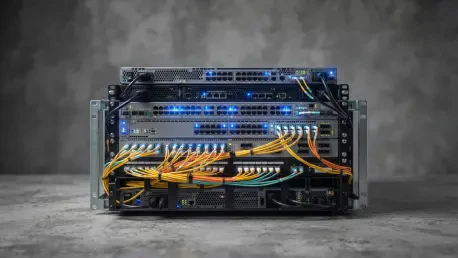

The dynamic switching engine serves as a powerful proof of concept for overcoming the overheads associated with hardware complexity and signal attenuation. The National and Kapodistrian University of Athens achieved a major milestone in 2026 by launching a functional, four-user reconfigurable quantum key distribution network. This achievement represents a fundamental shift from theoretical laboratory experiments toward practical, software-orchestrated architectures designed for real-world cryptographic demands. By merging polarization-based entanglement with a software-defined key management system, the research team created a decentralized mesh network capable of dynamic optical switching and real-time key provisioning. This architecture demonstrates that quantum security is no longer a niche curiosity but a viable solution for complex enterprise environments. The system provides a framework that allows for the allocation of keys across various nodes without the need for static, point-to-point hardware installations. This breakthrough sets a new standard for the industry.
Quantum Entanglement and Wavelength Multiplexing
Polarization Entangled Photon Pair Distribution
The physical foundation of this four-user network relies on the sophisticated distribution of polarization-entangled photon pairs. Unlike traditional quantum key distribution systems that often rely on weak coherent pulses or single-photon sources, this setup utilizes pairs of particles that share a quantum state. This entanglement ensures that the measurement of one particle instantaneously correlates with its partner, regardless of the distance between them, creating an inherently secure basis for cryptographic keys. To manage these delicate signals effectively, the Athens team implemented wavelength division multiplexing at the standard 1550.12nm telecommunications wavelength. This technology allows multiple quantum channels to travel simultaneously through a single fiber-optic cable by utilizing different colors of light. By leveraging existing telecommunications standards, the researchers have ensured that their quantum hardware can operate within the physical constraints of modern fiber networks.
Low Loss Optical Switching Mechanisms
To navigate the complex routing requirements of a multi-user mesh, the researchers utilized low-loss optical switches that function as high-precision railroad switches for individual photons. These switches are capable of directing particles to specific users based on the real-time demands of the network, providing the mechanical flexibility required for a truly reconfigurable setup. This design allows the paths between the four users to be altered instantly, eliminating the need to physically rewire the existing fiber infrastructure whenever a new connection is required. The ability to dynamically reconfigure the network topology is a significant step forward, as it addresses the limitations of static link configurations that have historically hindered the scalability of quantum communications. By automating the physical layer of the network, the researchers have created a system that can adapt to changing user priorities and traffic patterns while maintaining the highest levels of security.
Software Orchestration and Hardware Integration
Software-Defined Key Management Systems
A vital component of this research is the integration of the physical hardware layer with a robust software-defined key management system that acts as a central orchestrator. This software layer is responsible for managing the entire lifecycle of the generated cryptographic keys while simultaneously coordinating the physical switching of the optical devices. Through this dynamic provisioning approach, the network can allocate security keys to specific users on demand, ensuring that resources are managed efficiently across the entire decentralized mesh. The SD-KMS provides a user-friendly interface for network administrators, allowing them to monitor key generation rates and adjust distribution protocols without needing a deep understanding of the underlying quantum physics. This abstraction of complexity is essential for the commercialization of quantum technologies, as it allows standard IT professionals to manage advanced cryptographic systems without requiring specialized doctoral training.
Integrating Commercial Firewalls and Protocols
The researchers demonstrated the practical utility of their system by using the standardized ETSI 014 protocol to deliver quantum-generated keys to commercial FortiGate Next-Generation Firewalls. These firewalls then used the keys to establish secure IPsec tunnels, effectively bridging the gap between cutting-edge quantum physics and standard enterprise networking equipment. This integration proves that quantum security solutions can be deployed within existing infrastructure without requiring a complete overhaul of current security protocols. By feeding quantum keys directly into established VPN and firewall systems, the team showed that the industry is ready to move beyond laboratory prototypes toward actual operational deployment. The successful creation of secure communication tunnels for real-time data transmission highlights the readiness of this technology for sectors requiring extreme data protection, such as finance, healthcare, and government communications.
Performance Metrics and Security Advantages
Empirical Success and Key Generation Rates
During the experimental trials, the system demonstrated exceptional stability and throughput, achieving secret key rates ranging from 4,060 to 7,081 bits per second. This performance marks a significant improvement over previous multi-user configurations and ensures that there is a sufficient supply of keys for high-frequency cryptographic operations. The quantum bit error rate remained consistently low, fluctuating between 0.5% and 3%, which is well within the safety thresholds required for secure communication. These results were further supported by high coincidence rates, which reached up to 17,000 successful detections per second, indicating a highly efficient detection system. The accuracy of these measurements was maintained through the use of extremely low detector jitter and narrow timing windows measuring between 100 and 150 picoseconds. This level of precision ensures that the system can distinguish between signal and noise, even in a complex environment with multiple users.
Strategic Benefits of Removing Trusted Nodes
One of the most significant strategic advantages of this architecture was the total elimination of trusted nodes, which traditionally presented a major vulnerability in long-distance quantum networks. By maintaining the quantum state from end to end through direct optical switching and entanglement distribution, the researchers successfully minimized the attack surface of the entire network. This approach ensured that no intermediate hardware station had access to the raw key material in a classical form. Looking forward, the success of this four-user demonstration suggested that the next logical step involves addressing the hardware overheads associated with expanding to metropolitan-scale infrastructures. Stakeholders should consider investing in more advanced resource management software and low-loss switching components to support higher node densities. Future implementations should focus on integrating these protocols into standard fiber infrastructures to provide widespread access to quantum-secured communications.