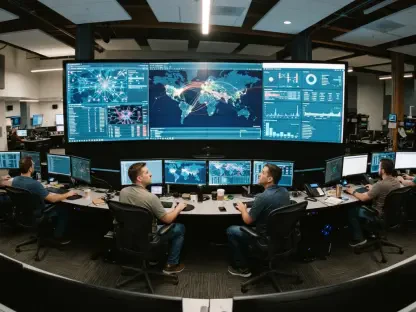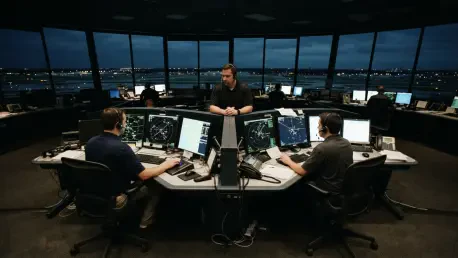

The FAA’s reliance on equipment that had exceeded its intended operational lifespan by twenty years created a bottleneck that finally snapped during a routine upgrade. On Friday, November 13, 2026, the Federal Aviation Administration (FAA) experienced a catastrophic network failure that forced a nationwide ground stop for over four hours. This unprecedented event disrupted 77% of the critical air traffic control centers responsible for high-altitude flight guidance across the United States. The outage was not the result of adverse weather conditions or external malicious attacks, but rather a profound technical breakdown that occurred during a scheduled hardware transition. The resulting paralysis of the National Airspace System highlighted a systemic vulnerability that had been mounting for decades. As the aviation industry grapples with the aftermath, a high-stakes investigation has been launched involving the Department of Transportation, hardware manufacturer Hewlett Packard Enterprise (HPE), and the prominent federal contractor L3Harris. At the heart of this crisis is the replacement of 25-year-old Cisco routers with modern Juniper Networks equipment—a process that should have been a standard improvement but instead triggered a “data flood” that the aging infrastructure could not withstand.
Chronology: The Timeline of the National Outage
The disruption originated during a planned maintenance window at a critical radio communications site in El Dorado, Arkansas, where technicians were working to modernize the facility’s networking backbone. What began as a localized hardware upgrade quickly and unexpectedly propagated across the entire Federal Telecommunications Infrastructure (FTI) network, creating a cascading failure that baffled regional operators. Because the fault could not be isolated or contained within the local Arkansas sector, the FAA was forced to issue a nationwide ground stop, a drastic measure that prevents all aircraft currently on the ground from departing. This action was taken to ensure that the safety of the thousands of passengers already in the air would not be compromised by the loss of reliable communication and tracking data. The speed at which the failure spread suggested that the internal safeguards designed to prevent such a widespread collapse were insufficient against the specific type of traffic surge generated by the new equipment.
This event was particularly notable for its unprecedented scope, as most equipment failures in the aviation sector are typically restricted to a single regional center or a specific frequency band. The FAA confirmed shortly after the incident that the stoppage was a direct response to issues encountered during “planned network maintenance” rather than any form of external cyberattack or environmental catastrophe. However, the admission did little to soften the impact on the global aviation market, which faced a massive backlog of flights that took days to resolve. The ripple effect touched every major hub in North America and stretched to international flight schedules, exposing the extreme sensitivity of the national airspace to even minor fluctuations in hardware performance. The incident served as a stark demonstration of how a single point of failure in a modernized node can interact with an aging network to bring a multibillion-dollar industry to a complete standstill in a matter of minutes.
The Technical Nature of the Data Flood
Technical data subsequently provided by the FAA revealed that the network was paralyzed by an overwhelming surge of approximately 1,000 connection attempts every few seconds. While this specific rate of traffic is generally manageable for modern enterprise data centers or high-capacity commercial servers, it proved to be a fatal load for the FAA’s complex, hybrid infrastructure. The surge functioned as an unintentional internal denial-of-service event, effectively drowning out the legitimate communication protocols required for air traffic management. The aging nodes in the system, which were never designed to process such high-frequency connection requests, were unable to filter or respond to the data, leading to a state of total operational lockup. This specific failure mode suggests that the transition to modern high-speed networking requires more than just new hardware; it requires a complete overhaul of the foundational logic that governs how different generations of technology interact with one another.
The FAA specifically noted that its legacy equipment became fundamentally unstable under this load, implying that even “legitimate” traffic from a modern router could inadvertently crash the entire system if not properly throttled. This instability prevented en route centers from communicating vital flight data, such as altitude changes, heading corrections, and weather deviations, between different air traffic control sectors. Consequently, the agency determined that the risk to flight safety was too great to continue normal operations, leading to the decision to halt all departures. This highlighted a critical flaw in the agency’s modernization strategy: the assumption that legacy systems could continue to function as a reliable bridge during the rollout of 2026-era technology. The mismatch in processing ceilings between the old and new equipment meant that the system had no headroom to handle the bursts of data that characterize modern fiber-optic communications.
The Vendor Dispute: HPE Versus L3Harris
A significant conflict has emerged regarding the ultimate responsibility for this failure, creating a rift between the primary technology provider and the service contractor. HPE, the parent company of Juniper Networks, has maintained a firm stance that its hardware functioned exactly as it was configured to perform by the installation team. Its defense rests on the technical principle that if a router is programmed to broadcast data or seek connections at a specific interval and it successfully executes those commands, the fault lies with the configuration logic rather than a defect in the physical device itself. HPE representatives have emphasized that Juniper routers are high-performance tools that require precise calibration when integrated into sensitive environments like the Federal Telecommunications Infrastructure. By framing the issue as a configuration error, the manufacturer is attempting to shield itself from liability while shifting the focus back to the implementation process.
In contrast, the contractor L3Harris has remained more guarded in its public statements while actively cooperating with the ongoing federal investigation. Transportation Secretary Sean Duffy has publicly described the inquiry as a choice between “incompetence” in the installation phase and a “faulty piece of equipment” provided by the manufacturer. This dispute is far from academic, as it carries heavy financial and reputational implications for both the hardware manufacturer and the primary service provider. If the investigation proves that the installation protocols were flawed, L3Harris could face significant contractual penalties and a loss of trust from federal oversight bodies. Conversely, if a hardware defect is discovered, it would call into question the reliability of the Juniper product line at a time when the government is heavily investing in these specific solutions. This high-stakes “blame game” continues to unfold as forensic teams analyze the configuration scripts used during the El Dorado upgrade.
The Legacy Gap: Relying on 2001-Era Hardware
The investigation into the ground stop brought to light a startling and uncomfortable technological gap that has existed within the agency for years. It was revealed that new Juniper routers were being installed to replace Cisco units that were manufactured in 2001. More importantly, these older units were originally scheduled for retirement in 2006, meaning that the FAA was relying on critical national infrastructure hardware that had exceeded its intended operational lifespan by exactly two decades. This “legacy gap” created a profound and invisible vulnerability in the national airspace system that only became apparent when it was subjected to the demands of modern data throughput. The reliance on hardware from a previous era meant that the foundational components of the air traffic network were essentially digital antiques, struggling to keep pace with the requirements of the high-speed aviation environment of the mid-2020s.
Modern routers are designed for high-bandwidth communication and rapid-fire data exchange that legacy gear from the early 2000s simply cannot process or buffer. The failure at El Dorado was a clear symptom of a 20-year delay in modernization, a period during which the older equipment lacked the updated memory management and processing protocols necessary to handle 2026-era data volumes. This mismatch in technological eras essentially turned a standard upgrade into a system-wide crash, as the older nodes were effectively “blinded” by the speed and frequency of the signals coming from the new Juniper units. The crisis has forced a conversation about the dangers of deferring infrastructure maintenance, proving that the cost of delay often far exceeds the cost of timely replacement. The agency now faces the daunting task of identifying exactly how many other “ticking time bombs” of outdated hardware remain active in the system.
Institutional Actions: The Immediate Safety Response
Following the lifting of the ground stop, the FAA took immediate and aggressive measures to prevent a repeat of the November 13 disaster. Secretary Duffy ordered the “broadcast” feature to be disabled on all 69 Juniper routers of the same type currently deployed across the country. This action served as a digital “tourniquet,” ensuring that the routers could no longer send the specific type of high-frequency traffic that had overwhelmed legacy systems during the initial failure. While this maneuver limited some of the advanced functionality of the new routers, it was deemed a necessary trade-off to maintain the immediate stability of the National Airspace System. This move also indicated a lack of confidence in the default operational settings of the new hardware, suggesting that the agency was prioritizing basic connectivity over the advanced features that the modernization project was supposed to provide.
The specific routers involved in the El Dorado incident were quickly removed from the site and transported to a specialized L3Harris laboratory in Florida for exhaustive forensic analysis. While official reports have consistently stated that there is no evidence of criminal intent or a cyberattack, the FBI and other federal law enforcement agencies were involved in the review process as a matter of standard protocol for national infrastructure failures. This high level of scrutiny ensures that every single configuration script, log file, and hardware component is analyzed to rule out tampering and to pinpoint the exact sequence of events that led to the network flood. The data recovered from these units is expected to provide the definitive answer to the ongoing dispute between the manufacturer and the contractor, potentially reshaping how future infrastructure projects are audited and managed.
Evaluating the El Dorado and Amarillo Sites
In the early stages of the crisis, the FAA investigated two separate locations that appeared to be experiencing simultaneous issues: the radio site in El Dorado, Arkansas, and a radar site in Amarillo, Texas. While El Dorado eventually became the primary focus of the investigation due to the ongoing router replacement work occurring there at the precise time of the crash, the mention of Amarillo suggested that investigators were looking for a pattern of systemic failure. The possibility that two separate sites could experience similar disruptions at the same time raised fears that the issue was not isolated to a single technician’s mistake but was instead a flaw in the master configuration template being used across the region. This regional focus was vital for understanding how a local fault could bypass the network’s built-in redundancies to affect the broader national network.
The decision to modify the settings on 69 separate units nationwide, rather than just at the two suspected sites, indicates that the FAA perceived a universal risk whenever these modern routers interfaced with the aging FTI backbone. This precautionary approach highlights the agency’s struggle to balance the urgent need for modernization with the absolute requirement for immediate operational stability. By treating every new router as a potential source of instability, the FAA has effectively slowed down the modernization process to a crawl, ensuring that each subsequent upgrade is monitored with an extreme level of caution. This shift in strategy reflects a newfound awareness that the transition from legacy systems to modern fiber-optic networks is far more volatile than previously estimated, requiring a more nuanced approach to integration than simply swapping out old boxes for new ones.
Commercial Fallout: Market and Strategic Transitions
The fallout from the ground stop has extended far beyond the cockpit, impacting the market standing and strategic directions of the major corporations involved in the project. For HPE, the possibility of a confirmed hardware defect could significantly damage its long-term efforts to market Juniper networking solutions to other government agencies and international aviation bodies. The company had positioned the Juniper acquisition as a premier solution for critical infrastructure, and any link to a national ground stop creates a challenging narrative for its sales and engineering teams. For L3Harris, the stakes involve its continued status as a primary partner for federal infrastructure projects, a role that requires an unblemished reputation for technical precision and operational reliability. The outcome of the Department of Transportation’s investigation will likely dictate the future of several multi-year contracts currently held by both companies.
Furthermore, the industry is closely watching the FAA’s overall transition from traditional copper lines to high-speed fiber-optic cables, a process that is central to the NextGen air traffic system. This transition is intended to provide the bandwidth and low latency required for more efficient flight routing and increased airspace capacity. However, as the November incident proved, the period during which old and new systems must coexist is the point of maximum danger for national infrastructure. The challenges of “hot-swapping” components in a live, 24/7 environment have been laid bare, leading some analysts to suggest that the FAA may need to build parallel “shadow networks” to test new hardware before it ever touches the live flight data stream. This shift in thinking marks a move away from incremental upgrades toward a more robust, but significantly more expensive, model of infrastructure evolution.
Common Inquiries: Understanding the Incident Details
One of the most persistent questions following the outage was whether the system had been compromised by a foreign adversary or a domestic hacking group. The FAA and the Department of Transportation have been categorical in their stance that the 2026 outage was not the result of a cyberattack or any form of external threat. Instead, it was an internal technical failure, a “self-inflicted wound” caused by the unexpected interaction between different generations of networking technology. This clarification was essential for maintaining public confidence in the security of the airspace, even as it raised difficult questions about the agency’s internal management of its technological roadmap. By identifying the problem as a “data flood” generated by its own equipment, the FAA pointed toward a need for better internal testing rather than enhanced perimeter security.
The scale of the disruption also prompted questions regarding the exact number of flights and centers affected by the failure. Data confirmed that 17 of the 22 en route air traffic control centers became unstable, representing a massive failure of the network’s intended redundancy. While the ground stop lasted for approximately four hours, the impact on the traveling public was felt for several days as airlines worked to reposition aircraft and crews that had been stranded by the sudden halt. The incident proved that even a relatively short disruption in the modern aviation environment can trigger a global ripple effect, as international flights bound for the United States were held at their points of origin or diverted to secondary hubs. This interconnectedness means that a single router in Arkansas can, in a very real sense, disrupt the travel plans of a passenger halfway around the world.
Building a Resilient Airspace for the Coming Years
To prevent a recurrence of the technical instability observed during the transition, the Federal Aviation Administration established a comprehensive legacy simulation lab designed to stress-test new hardware. This initiative required all future networking components to undergo a rigorous validation process that mimicked the exact configuration of the 2001-era Cisco environment before they were cleared for field deployment. By creating a controlled environment where modern routers could interact with antiquated protocols, engineers identified specific data-shaping requirements that prevented the “flood” scenario from repeating. This proactive testing phase became a mandatory step in the procurement process, ensuring that the mismatch in technological eras was addressed before it reached the operational network. These measures successfully prevented further ground stops during the subsequent phases of the fiber-optic migration.
The agency also accelerated its timeline for the total decommissioning of all remaining hardware that had surpassed its original operational lifespan. Recognizing that the “legacy gap” was the primary driver of systemic risk, officials secured emergency funding to replace the remaining outdated nodes within a two-year window rather than the previously planned five-year track. This shift in strategy represented a fundamental change in how the government prioritized infrastructure resilience, moving away from a “run-to-fail” mentality toward a more aggressive life-cycle management model. The resulting upgrades provided the necessary processing headroom to support the high-frequency data demands of the NextGen system, finally bringing the national airspace into a unified technological era. These actions restored the necessary stability to the FTI network and set a new standard for how critical infrastructure should be modernized in a multi-vendor environment.