
By partnering with AMD, Google has integrated security directly into the silicon layer of the TPU 8tx to protect sensitive model weights during inference. This fundamental shift in hardware design acknowledges that the artificial intelligence landscape is no longer dominated by simple, reactive systems that merely provide text-based responses to human prompts. Instead, the industry is moving rapidly toward a sophisticated era of autonomous agents capable of independent reasoning, multi-step planning, and complex execution across diverse digital environments. As these models become more autonomous, they place unprecedented demands on the physical infrastructure of data centers, requiring significant advancements in memory capacity and data processing speed. Google Cloud’s expansion of its eighth-generation Tensor Processing Unit portfolio represents a targeted effort to dismantle the structural bottlenecks currently hindering the deployment of these advanced agentic systems at a global enterprise scale.
Securing the Frontier: The Role of the TPU 8tx
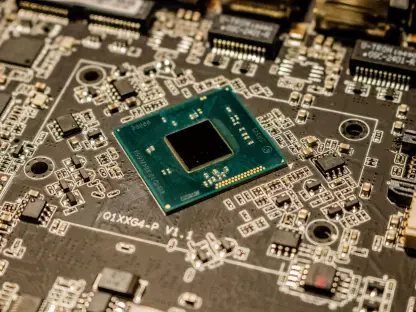
The introduction of the TPU 8tx marks a significant milestone in the development of hardware-level confidential computing for artificial intelligence. By building security directly into the silicon in collaboration with AMD, the system ensures that proprietary data and sensitive model weights remain encrypted even while they are actively being processed during inference. This is a critical development for organizations operating within highly regulated sectors, such as international finance or healthcare, where data privacy and intellectual property protection are non-negotiable requirements for any cloud-based implementation. Traditional security measures often focused on data at rest or in transit, but the TPU 8tx provides a comprehensive “root of trust” that extends throughout the entire execution cycle. This ensures that the computational environment remains isolated from the underlying host machine, preventing unauthorized access or data leakage during the most vulnerable stages of high-intensity model operation.
Beyond providing robust encryption, the TPU 8tx architecture manages to maintain exceptional performance metrics that were previously sacrificed in the pursuit of high security. Historically, adding layers of encryption and verification protocols created significant latency that could derail real-time AI applications. However, the TPU 8tx utilizes a specialized low-latency networking framework originally developed for the TPU 8i, which effectively halves the communication delays compared to standard training-focused chips. This architectural refinement allows enterprises to run complex, secure workflows without experiencing the performance degradation typically associated with confidential computing environments. By integrating these security features directly into the hardware path, the system offers a seamless experience where data integrity and processing speed are no longer at odds with one another. This allows for the deployment of agents that can handle sensitive customer information or proprietary codebases with both speed and total confidentiality.
Breaking the Memory Wall: Advancements in TPU 8i Max
As autonomous agents transition from processing short snippets of text to analyzing massive datasets, such as entire repositories of source code or long-form video files, they encounter a significant physical limitation known as the “memory wall.” The TPU 8i Max was specifically engineered to overcome this hurdle by providing a substantial increase in High Bandwidth Memory capacity, reaching 384 gigabytes. This represents a 33% improvement over previous iterations, directly addressing the need for larger Key-Value caches that store the context of long-running conversations and intricate tasks. Without this additional memory, models are often forced to truncate information or re-process data, leading to inefficiencies and lost context during complex multi-stage reasoning. By expanding the available memory on each chip, the TPU 8i Max enables models to maintain a much larger context window, allowing for more coherent and accurate performance over extended periods of operation.
The physical throughput of the TPU 8i Max is further enhanced by doubling the memory bandwidth to an impressive 17.2 terabytes per second. This massive increase in data movement capability is paired with a doubling of on-chip Static Random Access Memory to 768 megabytes, ensuring that data can flow into the processing cores without causing congestion. One can think of this upgrade as significantly increasing the number of lanes on a major highway; the goal is not just to make the individual data packets travel faster, but to ensure that a much higher total volume of traffic can move through the system simultaneously. This high-throughput design is particularly vital for agentic operations where a single user request might trigger dozens of sub-agents working in parallel. These sub-agents must frequently exchange large amounts of data, and the expanded bandwidth of the TPU 8i Max ensures that these parallel workflows can proceed without the hardware becoming a restrictive bottleneck for the software.
Orchestrating Logic: The Efficiency of TPU Sync Software
The behavioral patterns of autonomous agents differ significantly from traditional AI interactions, often characterized by “bursty” cycles of high-intensity computation followed by long periods of inactivity. An agent might perform a series of complex calculations to solve a programming bug, call an external tool, and then wait minutes for a response or a human approval. To prevent expensive hardware resources from sitting idle during these pauses, Google developed TPU Sync, an open-source software layer that unifies memory and storage into a single, manageable hierarchy. This tool allows for the dynamic reallocation of hardware resources, ensuring that the infrastructure is utilized at its maximum potential regardless of the individual agent’s current state. By abstracting the memory layer, TPU Sync creates a more flexible environment where the physical location of data is optimized based on the immediate needs of the active computational workload.
Functionally, TPU Sync operates by automatically tiering data based on the agent’s activity level, moving context caches from expensive on-chip memory to cheaper host storage during idle periods. When the agent is triggered to resume its task, the software streams the necessary context back onto the TPU in a matter of milliseconds. This process has demonstrated the ability to reduce the time required to resume a task by over 90%, virtually eliminating the perceived delay for the end-user or the calling system. This intelligent orchestration means that a single cluster of TPUs can support a much larger number of active agents than was previously possible, as the hardware is only occupied when actual processing is occurring. This software-defined approach to memory management transforms the TPU from a static resource into a highly agile component of a broader cloud ecosystem, allowing organizations to scale their agentic deployments while maintaining strict control over their operational costs.
Beyond Simple Response: The Path to Agentic Scale
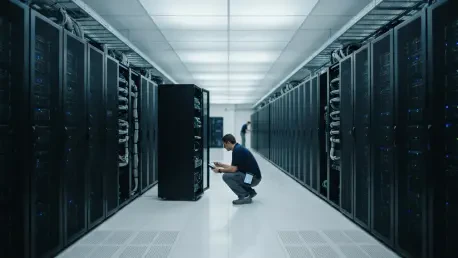
The fundamental shift toward agentic AI reflects a transition from “human scale” digital interactions to “agentic scale” operations, where computational demands increase by several orders of magnitude. In this new paradigm, a single prompt is no longer just a request for information but the starting point for a cascade of independent actions that may involve hundreds of sub-tasks. This evolution requires a rethink of how systems are constructed, moving away from simple data retrieval and toward “systems-of-action” that can interact with third-party software and execute complex workflows. Google’s current infrastructure expansion was designed specifically to facilitate this transition, providing the necessary compute density and networking speed to handle the massive parallelism inherent in large-scale agentic deployments. This ensures that as organizations move from experimental prototypes to production-grade autonomous systems, the underlying hardware can scale to meet the increased demand.
The strategic integration of specialized hardware like the TPU 8tx and TPU 8i Max with intelligent software orchestration demonstrated that the future of AI performance depended on a holistic system approach. The findings from these deployments showed that addressing individual components in isolation was no longer sufficient for the needs of modern autonomous agents. Organizations that adopted these integrated solutions reported significant improvements in both the security of their model weights and the overall cost-efficiency of their inference workloads. As the industry moved toward more complex and long-running AI processes, the coordination between silicon speed, memory bandwidth, and software-driven resource management became the primary determinant of success. These developments suggested that future infrastructure must continue to evolve as a unified entity, ensuring that physical constraints never hindered the creative potential of autonomous intelligence. Organizations should now focus on migrating to these tiered memory architectures to maximize their agentic throughput.