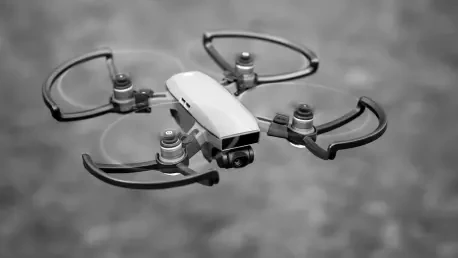

Commanders are prioritizing the removal of physical cables to increase the mobility and survivability of the Army’s only forward-deployed Stryker brigade in Germany. This initiative represents a fundamental shift in how the 2nd Cavalry Regiment approaches communications in high-threat environments where electronic signatures are easily tracked. For decades, command posts were tethered by thousands of feet of copper and fiber-optic cables, creating a massive logistical burden and anchoring soldiers to high-heat equipment. In the modern era, however, these static positions have become prime targets for enemy drones equipped with thermal imaging. The necessity of “cutting the cord” has become a matter of life and death, as commanders look to separate personnel from the hardware that inevitably attracts enemy fire. By moving toward high-capacity wireless networks, the Army aims to enhance its tactical agility, allowing units to establish and dismantle communication hubs with unprecedented speed while maintaining a much smaller and more elusive footprint.
Overcoming Electronic Vulnerabilities on the Modern Battlefield
Technical Integration: Replacing Cables With Silvus Radios
The Signal Troop within the 2nd Cavalry Regiment recently executed a series of validation courses at the Grafenwoehr Training Area to prove the effectiveness of wireless bridging. This process involves replacing traditional local area network cables with Silvus radios, which are capable of handling the heavy data loads required for modern battlefield management systems. During these tests, signal specialists focused on the seamless transition of both classified and unclassified data across wireless frequencies, ensuring that the absence of physical wires did not compromise security or speed. The success of these trials showed that a Stryker brigade could maintain full situational awareness while drastically reducing the time required to “jump” or move a command post. This speed is essential in 2026, where the window of time between a unit being detected and being targeted has shrunk to mere minutes. By mastering these wireless protocols, the regiment has ensured that its communication lines are as mobile and adaptive as the combat vehicles they support.
Hardware Coordination: Linking Tactical Communications Nodes
A central component of this wireless architecture is the synchronization between Silvus radios and Tactical Communications Nodes, commonly referred to as TCNs. These nodes serve as the primary hubs for satellite and terrestrial data, but their operation generates significant heat and electronic noise, making them visible to sophisticated enemy sensors. In previous configurations, operators had to sit within a few dozen yards of these nodes to remain connected via physical cables. The new wireless method allows the TCN to be positioned in an isolated area while the soldiers remain in a concealed location a significant distance away. This setup effectively turns the communication hardware into a defensive decoy; if an enemy drone identifies and strikes the heat signature of the TCN, the human operators are far enough away to avoid the blast. This tactical separation requires a deep understanding of signal propagation and interference, forcing signal specialists to become more involved in the tactical planning of site selection and camouflage than ever before.
Strategic Implications of Signature Management and Mobility
Tactical Range: Extending the Defensive Buffer Zone
During the latest field exercises, the 3rd Squadron demonstrated that secure wireless connections could be maintained from a distance of roughly half a mile, with the potential to reach over three miles with specific configurations. This range extension is achieved through the use of portable relay systems and dedicated power sources that amplify the signal without significantly increasing the electronic footprint of the user. By spreading out the components of a command post over such a wide area, the brigade effectively dilutes its signature, making it much harder for an adversary to identify a “center of gravity” to attack. Furthermore, this distance provides a critical reaction buffer, allowing soldiers to displace or engage in defensive maneuvers the moment an aerial threat is detected. The shift toward “signature management” reflects a broader strategic realization that in an era of ubiquitous surveillance, being invisible is often more effective than being armored. The ability to hide in plain sight through geographic dispersion is now a core tenet of the regiment’s survival.
Long-Term Readiness: Standardizing Resilience and Training
The Signal Troop successfully finalized the transition to these wireless protocols, establishing a new standard for training that will be implemented across all squadrons by the end of the year. This effort elevated the role of signal specialists, who transitioned from technical support to frontline tacticians responsible for the regiment’s primary defensive signature. By the conclusion of the validation phase, the 2nd Cavalry Regiment had developed a more resilient, mobile force capable of maintaining secure communications while remaining nearly invisible to drone-based thermal sensors. Military leaders observed that the lessons learned in Germany provided a viable roadmap for other forward-deployed units to enhance their survivability in contested environments. The Army then began the process of integrating these high-capacity wireless solutions into its broader multi-domain operations strategy, focusing on further extending relay distances and hardening encryption. These actions ensured that the brigade remained prepared for the realities of modern warfare, where mobility and distance were the most reliable defenses against the constant threat of aerial surveillance.