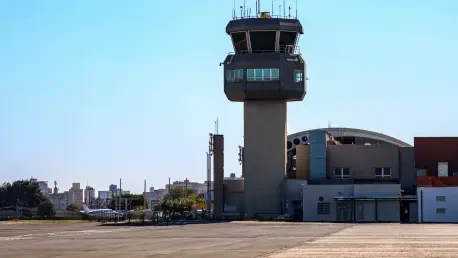

The FAA stopped takeoffs nationwide for about five hours Friday because communications failed at air traffic control centers around the country, and thousands of flights ended up delayed or canceled. The restriction came off at about 8:30 PM, Eastern Time. Sean Duffy, the US transportation secretary, later said copper wiring problems were behind the interruption while L3Harris was upgrading its network, though the cause was still being investigated.
FAA Ground Stop Disrupted Departures Nationwide
Duffy said Friday that a communications problem had affected all Air Route Traffic Control Centers, which coordinate aircraft movements. FAA technicians were investigating. At that point, an FAA press spokesperson could offer no further details, and an emailed response repeated the information in Duffy’s statement. The FAA’s advisory stopped departures at US airports on safety grounds. International arrivals were to receive individual handling.
| Flight traffic | Area covered | Handling during stop | Reported by |
|---|---|---|---|
| Departures | US airports | Takeoffs halted | FAA advisory |
| International arrivals | Inbound to US | Individual handling | FAA advisory |
Aircraft already in flight could still land at San Francisco International Airport. Doug Yakel, public information officer for San Francisco International Airport, said planes heading to SFO continued landing while departures remained stopped.
An update at 2:02 pm PT characterized the interruption as a temporary outage of telecommunications service. For airlines and passengers, the effects continued through hours of canceled and delayed flights, with travelers left stranded.
Investigators Look At Copper-To-Fiber Upgrade
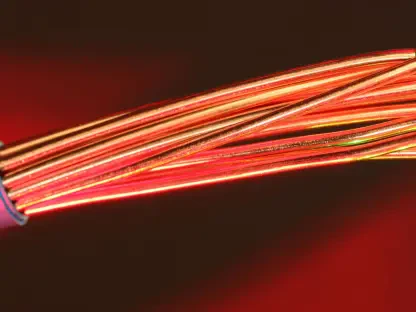
Duffy said at a press briefing on Saturday that copper wiring caused trouble while work was being done on the L3Harris network. Investigators still had to establish whether a faulty router or incompetence was to blame, Duffy said. Routers direct traffic from one network connection to another. L3Harris runs the FAA Telecommunications Infrastructure, or FTI, which links over 4,400 facilities and keeps communications secure. The network’s size means the problem extended beyond the local systems at any one airport.
L3Harris said in its statement Saturday that the company, the FAA and telecommunications partners were replacing old copper connections with fiber optic links, which use light to carry information.
The company said over 70 percent of the planned changeover had been completed, and L3Harris was helping the FAA investigate what had led to the interruption. L3Harris also acknowledged what the disruption meant for passengers and airlines, as well as air traffic operations. But the company did not say that a technical cause had been confirmed.
Media reports said an update prompted the private network linking air traffic control systems to reboot, and the infrastructure then crashed, cutting off communications. That gives a possible account of how the failure happened, but Duffy’s comments still left open the question of what caused it in the first place. Neither account settled whether the wiring was ultimately responsible, whether a router was responsible or whether the upgrade process itself was the problem.
Another Supplier Says Its Systems Were Not Involved
Air Space Intelligence (ASI) responded as well after flights were stopped. ASI has a 12-year contract worth $875 million with the FAA for the Strategic Management of Airspace, Routes and Trajectories (SMART) system. ASI said neither SMART nor any other ASI product caused the stop, and neither did its work integrating with FAA and air traffic control. That was ASI’s explanation, which was separate from the investigation looking into the communications network managed by L3Harris. The reports describe several different parts of what happened.
- According to the FAA, the communications problem affected every Air Route Traffic Control Center.
- L3Harris put progress on the conversion from copper to fiber at over 70 percent.
- Duffy said the cause remained undetermined, including whether the problem involved a faulty router.
For people running networks, the issue is keeping a communications service working while changes are made, especially when that service is widely shared. The FAA did lift the restriction on flights, but the explanations reported so far had not established how the upgrade resulted in an interruption across the country.