


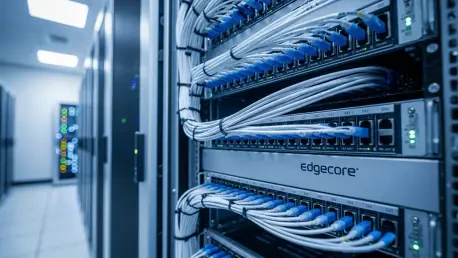

The rapid expansion of artificial intelligence from centralized hyper-scale data centers into the distributed fabric of the local network edge is fundamentally rewriting the requirements for enterprise connectivity and hardware reliability. As modern organizations move away from a total reliance on cloud-based processing to mitigate latency and bandwidth costs, the pressure on local networking equipment has reached an unprecedented peak, demanding a paradigm shift in how silicon and software interact. The strategic partnership between MaxLinear and Edgecore Networks represents a critical response to this shift, aiming to bridge the widening gap between traditional networking hardware and the rigorous computational demands of real-time AI inference at the network periphery. By integrating high-performance semiconductor designs with versatile open-network systems, these two industry leaders are providing a blueprint for the next generation of enterprise and small-to-medium business infrastructure. This collaboration is not merely about increasing raw speeds but about building an intelligent, scalable foundation that allows data to flow seamlessly between wireless access points, fiber-optic uplinks, and localized processing units, ensuring that the edge remains a viable platform for innovation.
Engineering the Backbone for Edge Intelligence
Technological Synergies: Sustained Throughput and Fiber Integration
The core philosophy of this alliance rests on the premise that artificial intelligence must transition from centralized cloud environments to distributed locations closer to the end-user. As these intensive workloads migrate to the network edge, the underlying hardware must be capable of handling massive data throughput while maintaining minimal latency and rigorous security standards. This partnership bridges the gap between the silicon-level physical layer and system-level implementation, creating a comprehensive “full-stack” approach to edge intelligence that ensures the network remains a facilitator rather than a bottleneck for AI adoption. To achieve this level of performance, MaxLinear provides a multi-interface Wide Area Network platform that integrates XGS-PON fiber-optic technology and Wi-Fi 7 or Wi-Fi 8 capabilities. This foundation allows for a seamless transition between external high-speed fiber networks and the internal wireless ecosystem of an office or industrial facility, providing the raw capacity necessary to support dozens of high-bandwidth devices simultaneously.
A standout feature of this foundational technology is its ability to maintain a sustained 10Gbps throughput regardless of the specific data packet size being processed by the system. This consistency is vital for AI applications, which frequently involve a complex mix of small control packets for synchronization and massive data streams for model updates or video feeds. In standard networking environments, a flood of small packets can often lead to processing overhead that slows down the entire system, but the specialized architecture developed by MaxLinear ensures that performance remains stable under heavy load. This reliability is essential for maintaining the accuracy of AI-powered services, such as real-time language translation or automated security monitoring, where even a slight delay in data transmission can result in a loss of functionality. By providing a stable and high-speed environment, the partnership allows enterprises to deploy advanced computational tools without the performance degradation typically associated with traditional multi-purpose networking gear.
Disaggregated Systems: Hardware-Accelerated Security and Open Standards
Edgecore Networks complements this silicon foundation by championing an open philosophy through solutions such as OpenWiFi, OpenLAN, and the CloudSDK management framework. This approach focuses on disaggregated systems, where networking hardware is intentionally separated from its management software to provide enterprises with the flexibility to scale and upgrade components independently. By avoiding proprietary vendor lock-in, businesses can build interoperable, standardized networking environments that are more cost-effective and easier to manage over the long term. This modularity is particularly important for small-to-medium businesses that may need to expand their infrastructure incrementally as their data needs grow. The use of open standards also fosters a broader ecosystem of software developers and security researchers, who can contribute to the robustness and versatility of the networking platform, ensuring it remains at the cutting edge of technological development.
Security is treated as a non-negotiable pillar of the partnership, with protection integrated directly into the hardware through dedicated acceleration engines. These engines provide line-rate encryption and intrusion prevention, ensuring that data is protected in real-time without compromising the overall speed of the network or placing an undue burden on the main processor. Additionally, the inclusion of the Edgecore Edge AI Box provides localized computational power, allowing for immediate data processing and AI-powered service delivery directly at the point of use. This reduction in the distance that data must travel significantly reduces reliance on distant data centers, which in turn lowers latency and enhances the overall privacy of the network. By keeping sensitive data within the local perimeter and processing it using hardware-optimized security protocols, the partnership provides a secure environment for industries such as healthcare and finance, where data integrity and confidentiality are paramount.
Market Dynamics and Strategic Execution
Global Trends: Responding to Institutional Infrastructure Goals
This collaboration is a direct response to the projected 7% to 11% annual growth in the enterprise edge networking market, driven largely by the proliferation of Internet of Things devices across various sectors. As industry consensus points toward a future where AI workloads live primarily at the edge, there is an urgent need for wired infrastructure that can support the transition to newer wireless standards. The partnership ensures that as wireless speeds increase through the adoption of Wi-Fi 7 and Wi-Fi 8, the underlying wired network remains robust enough to handle the resulting explosion in data traffic. Institutional goals are shifting toward sustainability and long-term viability, and by providing hardware that is designed to handle the traffic of 2026 and beyond, MaxLinear and Edgecore are helping organizations future-proof their investments. This alignment of wireless and wired technologies is critical for maintaining a cohesive digital strategy in an era where connectivity is the lifeblood of business operations.
Leadership from both organizations views the partnership as a necessary alignment of silicon innovation and system-level mastery that addresses the complex challenges of the modern digital landscape. From the perspective of semiconductor design, the goal is to provide organizations with the confidence to scale their infrastructure alongside their increasing AI ambitions without fearing a loss in performance. Edgecore mirrors this sentiment, aiming to utilize the most advanced chipsets available to redefine traditional networking architecture and provide a more versatile platform for service providers. Together, they are delivering an integrated ecosystem that addresses the challenges of scalability and intelligence, allowing businesses to focus on their core operations rather than the limitations of their hardware. This strategic execution is intended to simplify the deployment of complex AI services, making advanced technology more accessible to a wider range of industries and helping to close the digital divide between large corporations and smaller enterprises.
Strategic Roadmap: Implementation and Navigating Industrial Risks
The practical results of these technological efforts were slated for a major showcase at Computex Taipei, where the partners intended to demonstrate a high-availability security gateway. This proof-of-concept highlighted how hardware-accelerated security and high-throughput connectivity function in a real-world enterprise scenario characterized by high traffic and frequent security threats. By focusing on the continued evolution of XGS-PON and planning for the eventual wide-scale adoption of Wi-Fi 8, the two companies positioned themselves as long-term partners for service providers looking to deliver intelligent 10Gbps services. This showcase served as a vital validation of their integrated approach, proving that high-performance networking could be both open and incredibly secure. The roadmap for these products emphasizes a gradual rollout that allows for feedback from early adopters, ensuring that the final versions of the hardware meet the specific needs of different market segments, from industrial manufacturing to high-density office environments.
The realization of this technological vision required careful navigation of the inherent risks present within the global semiconductor and high-performance networking industries. Market volatility, shifting geopolitical factors, and the blistering pace of technological innovation presented constant challenges to the timely execution of the product roadmap and the delivery of finalized hardware. Stakeholders recognized that the ultimate success of the partnership depended on an ability to maintain a competitive edge while managing complex supply chain dynamics and meeting the high expectations of a global market hungry for AI-ready infrastructure. Moving forward, organizations were encouraged to prioritize the adoption of open-standard architectures to avoid the limitations of closed systems while investing in hardware capable of supporting future data standards from 2026 through 2030. Companies that implemented these integrated 10Gbps solutions gained the flexibility to pivot their AI strategies without the need for frequent physical hardware replacements. By grounding their network strategy in hardware-accelerated security and high-capacity fiber, businesses ensured they remained prepared for the next wave of computational demands.







