
While the outage reached its peak during the early hours of Monday in the United States, users in the United Kingdom were already reporting a total loss of service by 6:00 a.m. local time. This sudden blackout in the digital ecosystem represents a critical failure in the infrastructure of the modern connected residence. For many families, the simple act of turning on a lamp or checking a nursery camera became an impossible task as the server-side architecture collapsed globally. This event was not merely a localized glitch but a systemic breakdown affecting millions of users across North America, Europe, and Australia. The disruption highlights a significant paradox of 2026: as our dwellings become increasingly sophisticated, they also become more fragile, tethered to remote data centers that can fail without warning. The inability of high-end hardware to perform basic offline tasks raises serious questions about the long-term viability of entirely cloud-dependent smart home systems in an era where digital reliability is paramount.
The Impact: How Daily Digital Routines Collapsed
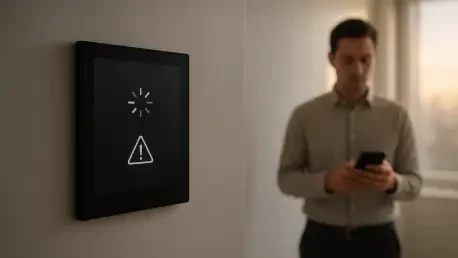
The scope of the failure was remarkably wide, hitting almost every category within the Google smart home portfolio. Users who attempted to use voice commands through their Nest Mini speakers were met with a “something went wrong” response, while those with Nest Hub smart displays found their screens frozen or entirely unresponsive. The breakdown extended beyond voice control to the mobile interface, as the Google Home smartphone application struggled to establish a secure handshake with registered devices. This failure meant that even manual overrides, which are typically the fail-safe for voice command errors, were largely inaccessible. Smart locks remained jammed, thermostats could not be adjusted to accommodate shifting temperatures, and security cameras failed to provide live feeds. This experience transformed expensive technological investments into dormant objects, illustrating how heavily the modern user relies on an invisible backbone of server stability to maintain basic comfort and safety.
Perhaps the most frustrating aspect for long-term users was the total failure of automated routines designed to simplify life. These pre-programmed sequences, which manage everything from complex morning wake-up calls to evening security lighting, require constant communication with Google’s servers to execute. When the cloud went offline, these sequences simply vanished, leaving homes in a state of suspended animation. Without the logic provided by the remote infrastructure, the hardware lacked the “brain” needed to follow through on scheduled tasks. This breakdown proved that current smart home architectures often treat the physical device as a mere peripheral rather than a standalone computer. When the connection to the central server is severed, the internal logic of the home ceases to function, regardless of how much power is flowing through the outlets. This vulnerability essentially penalized those who had most deeply integrated automation, forcing a sudden and inconvenient return to manual habits.
The Technical Barriers: Why Traditional Troubleshooting Failed
Throughout the duration of the outage, countless consumers attempted to resolve the issue using standard troubleshooting techniques, such as power-cycling their routers or performing factory resets on their devices. However, because the problem originated deep within Google’s cloud infrastructure rather than at the hardware level, these local interventions were entirely useless. The physical devices remained in perfect working order, but they were effectively lobotomized by the lack of a server response. This highlights a fundamental flaw in the way many consumer electronics are built today; they are designed to be “thin clients” that offload the vast majority of their processing power to the cloud. While this allows for cheaper and more compact hardware, it creates a single point of failure that bypasses any local network stability. As long as the primary server remains unreachable, the most advanced smart home in the world remains as functional as a house built several decades ago, highlighting the persistent dependency.
This recent event is far from an isolated incident, fitting into a broader historical pattern of instability for the Nest brand. As of 2026, industry analysts have tracked a concerning number of service interruptions, noting a cumulative history of over 160 documented outages that have left users in various states of technological paralysis. This track record has sparked intense debate among security experts and tech enthusiasts regarding the safety of using such volatile systems for critical home functions. When a baby monitor or a front-door security camera depends on a stable internet connection to function, every server hiccup becomes a potential safety liability. The recurring nature of these failures suggests that the current cloud-centric model may be reaching its limit in terms of reliability. For many, the convenience of remote access no longer outweighs the risk of being unable to monitor their property or secure their entrances, leading to a significant shift in consumer sentiment.
Evaluating the Risks: Moving Toward Localized Intelligence
The timing of this global service collapse was particularly poor, occurring just as the company was rolling out a major software update intended to improve the user interface for mobile platforms. Instead of enjoying new features, users were left wondering why their existing systems had become paperweights without any official explanation from the service provider. Google has historically been reticent to provide deep technical post-mortems regarding these outages, often leaving the community to speculate on the root causes. This lack of transparency often compounds the frustration of the user base, as it prevents people from understanding if the issue was a cyberattack, a coding error, or a physical hardware failure in a data center. Without a clear understanding of what went wrong, it becomes difficult for consumers to trust the system with even more sensitive tasks, such as integrated home health monitoring or energy management, which are expected to become standard in our lives as we look toward more automated futures.
The resolution of the outage eventually restored functionality, but the lessons learned pointed toward a necessary evolution in smart home design. Analysts recommended that homeowners began prioritizing “local-first” architectures, where devices could communicate with each other over a local area network without needing to ping a remote server for every command. This approach ensured that even if the internet connection was severed, basic functions like lighting, climate control, and physical security remained operational. Moving forward, the industry was encouraged to adopt open standards that allowed for cross-brand compatibility and offline processing capabilities. Consumers were advised to invest in hubs that featured onboard storage and local processing chips, effectively decentralizing the intelligence of the home. By shifting the focus away from total cloud dependency, the smart home industry moved toward a more resilient future where convenience did not have to come at the expense of reliability, ensuring that the sanctuary of the home was protected.