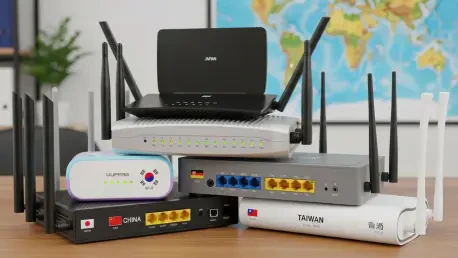

The global interconnectedness of modern telecommunications infrastructure has reached a point where the distinction between domestic and foreign hardware is increasingly blurred by complex manufacturing cycles. As major internet service providers navigate a landscape defined by rapid technological shifts and heightened security concerns, the necessity for a flexible yet secure supply chain has become a primary focus for industry leaders. The National Cable & Telecommunications Association has stepped forward to challenge existing federal restrictions, arguing that the current categorical prohibitions on foreign-made equipment are poorly suited to the realities of modern electronics production. By filing a formal petition with the Federal Communications Commission, the organization aimed to highlight the friction between broad security mandates and the practical requirement for a diverse, high-volume supply of networking hardware. This move signaled a significant shift in how the industry views the balance between protecting national interests and maintaining the functional efficiency of the digital economy, especially as households demand faster and more reliable connectivity across the country.
Navigating the Complexities of Global Hardware Procurement
The Regulatory Burden: Evaluating the Impact of Equipment Prohibitions
Broad federal restrictions often rely on a “covered list” of manufacturers, which effectively bars service providers from utilizing equipment that contains components from specific international origins. While these measures were designed to safeguard the integrity of the national network, the National Cable & Telecommunications Association pointed out that such an approach lacks the nuance required for a globalized manufacturing environment. Most high-performance routers and modems are assembled using a mosaic of parts sourced from dozens of different countries, making it nearly impossible to trace every single capacitor or circuit board back to a single “safe” location. When the government imposes a total ban on certain vendors, it often removes the most cost-effective and technically advanced options from the market, forcing providers to rely on a limited number of approved suppliers. This lack of competition not only slows down the procurement process but also creates a single point of failure in the supply chain, where a disruption at one domestic-aligned manufacturer could halt the rollout of broadband services for millions of American consumers.
Market Consequences: Economic Constraints and Consumer Pricing
The financial implications of restricted equipment sourcing extend far beyond the balance sheets of large telecommunications companies and eventually impact the monthly bills of everyday internet users. When the pool of available hardware is artificially constrained by regulatory mandates, the cost of acquiring compliant devices naturally rises due to reduced market competition and higher demand for a smaller inventory. These increased operational expenses often force service providers to delay the introduction of next-generation standards, such as Wi-Fi 7, because the necessary hardware is either too expensive or simply unavailable in the required quantities. Industry analysis indicated that without a more flexible approach to foreign-made hardware, the cost of maintaining and upgrading residential networks could climb significantly over the next several years. Furthermore, the administrative burden of verifying every sub-component in a complex networking gateway adds layers of bureaucratic overhead that further inflate the final price of the technology. These economic pressures suggested that a more nuanced vetting process would be essential for keeping high-speed internet affordable for all demographics.
Strategic Alternatives for Enhancing Network Integrity
Security Innovation: Implementing Robust Software-Based Verification
Rather than relying on geographic origin as a proxy for security, many technology experts suggested that the focus should shift toward the integrity of the software and firmware that control the hardware. Modern networking equipment relies heavily on sophisticated code, and the National Cable & Telecommunications Association proposed that the Federal Communications Commission consider rigorous auditing and digital signing processes as a viable alternative to flat bans. By requiring manufacturers to submit their source code for independent verification or by mandating the use of secure, domestic-developed firmware on foreign-made hardware, the industry could mitigate potential risks without sacrificing the benefits of global hardware production. This technical approach aligned with the principles of zero-trust architecture, where the security of a device is determined by its behavior and code integrity rather than its physical point of assembly. Implementing these advanced validation protocols would provide a higher level of actual security than a simple geographic ban, as it would address the specific vulnerabilities that could be exploited by malicious actors regardless of where the plastic and metal were formed.
Collaborative Solutions: Establishing Standardized Security Certifications
Industry advocates established a framework for future compliance that emphasized multi-layered auditing instead of simple geographic exclusion. They recommended the creation of an independent security clearinghouse to certify individual hardware models regardless of their assembly location, ensuring that every device met a rigorous baseline of safety and performance. This method allowed for a diverse and resilient supply chain while maintaining a high standard for national security requirements by focusing on measurable technical outcomes. Policymakers noted the importance of balancing industrial efficiency with technological sovereignty, ensuring that the next generation of networking tools remained both secure and accessible to the public. By adopting these flexible protocols, the commission ensured that the digital divide did not widen due to equipment scarcity or prohibitive costs. Stakeholders finalized these suggestions with a call for ongoing collaboration between the public and private sectors to update these standards as new cybersecurity threats emerged. This proactive stance helped stabilize the market and provided a clear roadmap for equipment vendors seeking to enter the domestic market under strict, data-driven oversight.