
The seamless integration of sophisticated cellular modems directly into the modern vehicle architecture has fundamentally transformed the contemporary automobile from a simple mechanical machine into an advanced mobile data center that facilitates constant communication with external infrastructure and cloud-based services. This structural evolution allows automakers to maintain a continuous digital relationship with the vehicle throughout its entire lifecycle, rather than concluding the customer interaction at the point of sale. As the industry advances from 2026 toward the end of the decade, the sheer volume of connected vehicles on global roads is expected to swell to 580 million units, driven by the ubiquity of high-speed 5G networks and the mass-market adoption of software-defined vehicle platforms. This trend is no longer exclusive to premium segments but has permeated entry-level models as a mandatory component for safety features, remote diagnostics, and increasingly complex driver-assistance systems.
Infrastructure Advancements: Scaling Beyond Basic Telematics
The migration from legacy 4G LTE connections to robust 5G infrastructure serves as the primary catalyst for this massive expansion in the automotive connectivity landscape. In the current environment of 2026, manufacturers are increasingly leveraging 5G RedCap technology to provide efficient, high-bandwidth communication without the excessive power consumption or hardware costs associated with full-scale 5G deployments. This technological compromise enables mid-range and budget-friendly vehicles to participate in the connected ecosystem, facilitating features like high-definition map streaming and real-time traffic coordination. Furthermore, the transition toward 5G allows for network slicing, where critical safety data is prioritized over infotainment traffic, ensuring that emergency braking alerts or hazard warnings receive the lowest possible latency. This level of reliability is essential for the eventual realization of higher levels of autonomous driving, where the vehicle must process immense data.
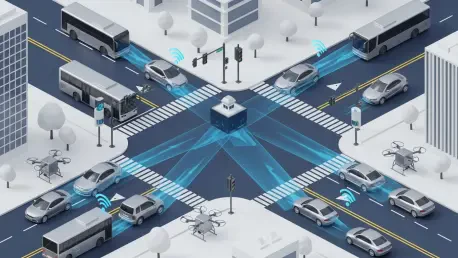
Beyond the internal capabilities of the car itself, the expansion of Vehicle-to-Everything (V2X) communication protocols is redefining how cars interact with the surrounding urban environment. Regulatory bodies in major markets, particularly across Europe and China, have begun mandating standardized communication interfaces to improve pedestrian safety and traffic flow efficiency. By the time the fleet reaches the projected 580 million connected units by 2030, these cars will be capable of talking to smart traffic lights, tolling gantries, and even the smartphones of nearby pedestrians. This pervasive connectivity creates a massive data loop that urban planners use to reduce congestion and carbon emissions. Manufacturers are now designing vehicle electrical architectures that treat the modem as a central gateway rather than a peripheral accessory. This shift ensures that every subsystem, from the powertrain to the climate control, can be monitored and optimized remotely, reducing physical service visits.
Revenue Models: Capitalizing on the Connected Fleet
The shift toward software-defined vehicles (SDVs) has fundamentally altered the financial landscape for global automotive manufacturers, moving them closer to a recurring revenue model similar to the consumer electronics and software industries. Embedded connectivity acts as the fundamental delivery mechanism for Over-the-Air (OTA) updates, which allow companies to deploy new features, fix software bugs, and enhance vehicle performance long after the car has left the showroom floor. Major players like Tesla, BMW, and Mercedes-Benz have already demonstrated the viability of feature-on-demand services, where owners can unlock heated seats, increased horsepower, or advanced navigation features through a mobile application. This capability not only extends the functional lifespan of the vehicle but also provides a high-margin revenue stream that persists for several years. Consequently, the value of the vehicle is no longer static; it evolves and improves over time, provided the connectivity remains active.
Strategic stakeholders across the automotive value chain recognized that the massive influx of connected cars required a paradigm shift in data management and cybersecurity protocols. Manufacturers invested heavily in robust encryption and multi-factor authentication to protect the vast streams of personal and telemetric data generated by hundreds of millions of vehicles. Industry leaders established cross-sector partnerships with telecommunications providers to ensure global roaming capabilities and consistent service quality across geographical borders. These collaborations ensured that the 580 million connected cars expected by 2030 functioned within a secure and interoperable framework. Decision-makers also prioritized the development of standardized data formats to facilitate smoother integration with third-party service providers, such as insurance companies and smart-city operators. By focusing on long-term scalability and user privacy, the industry successfully transformed the car into a vital node within the broader ecosystem.