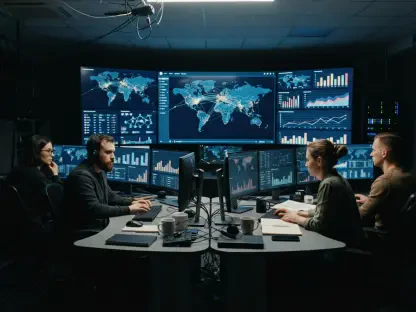

The public summary of the NGCN Strategy outlines a roadmap for turning information superiority into a cornerstone of the alliance’s collective defense posture. As military theaters become increasingly congested with sophisticated electronic warfare and high-speed threats, the shift toward a software-defined military infrastructure represents a fundamental departure from the hardware-centric paradigms of the previous century. This framework, recently endorsed by defense ministers across the 32-nation alliance, prioritizes the rapid integration of 5G, 6G, and advanced satellite communications into a unified, high-bandwidth backbone. By replacing aging legacy systems with next-generation communication networks (NGCN), NATO seeks to ensure that its forces can maintain a persistent and reliable connection across every possible domain, from the deep sea to the outer reaches of orbit. This technological leap is not merely an incremental upgrade but a strategic imperative necessitated by the blurring lines between civilian digital innovation and military operational requirements. The goal is to build a low-latency network capable of supporting the massive data throughput required for modern warfare, ensuring that connectivity remains uninterrupted even when faced with the most aggressive jamming and cyber-hybrid tactics currently employed by global adversaries.
Core Pillars of the Digital Strategy
Interoperability stands as a central requirement for a 32-nation alliance where diverse national systems must communicate without friction or delay. The NGCN Strategy focuses heavily on establishing common technical standards to eliminate the “technological silos” that often hinder collaborative efforts during high-intensity conflicts. When different member states deploy varying equipment, the risk of data fragmentation becomes a significant liability on the battlefield. To counter this, the strategy emphasizes a “plug-and-play” architecture where sensors, shooters, and command nodes from different countries can function as a single, cohesive unit. This approach not only strengthens the collective operational capacity of the alliance but also ensures that smaller member nations can contribute effectively to the larger defense network. By synchronizing these disparate systems into a unified digital fabric, NATO can maintain a coherent and comprehensive view of the operational environment, regardless of which nation provides the hardware or software for a specific mission or engagement.
Resilience is another vital component of this digital transformation, as NATO shifts its focus from traditional perimeter defense toward a comprehensive Zero Trust security architecture. This modern model assumes that potential threats may already be present within the network, necessitating multiple layers of verification and security at every point of contact to thwart sophisticated state-sponsored cyber actors. The NGCN Strategy incorporates advanced Artificial Intelligence to manage the massive data flows generated by 6G networks, allowing for real-time threat detection and autonomous network self-healing. Furthermore, the alliance is exploring the integration of quantum computing to future-proof its encryption methods against emerging decryption capabilities that could compromise sensitive communications. By embedding security into the very foundation of the network rather than treating it as an afterthought, the alliance ensures that its command and control structures remain resilient against even the most advanced persistent threats, providing a secure platform for the next generation of military operations and strategic planning.
Trends Driving Modern Defense
The push for next-generation networks is significantly accelerated by the rise of autonomous and robotic systems that require ultra-low latency to operate at peak efficiency. Modern technologies, such as the military humanoid robots currently being prototyped by Rheinmetall and the autonomous “Scout” aircraft developed by Dominion Dynamics, depend on the near-instantaneous data transmission provided by 5G and 6G to work effectively alongside human personnel. In the high-stakes environment of the tactical edge, even a few milliseconds of delay can mean the difference between mission success and failure. As warfare becomes more decentralized, the NGCN Strategy provides the reliable high-speed links necessary for remote sensors to pass targeting data to kinetic effectors in real time. This capability allows for a more agile and responsive force, where autonomous units can take on high-risk roles while maintaining constant, secure communication with their human commanders, thereby reducing the risk to personnel while increasing the overall lethality and reach of the alliance’s military assets.
The commercialization of space has also become a critical factor in the evolution of NATO’s communication fabric, reflecting a broader trend of leveraging civilian innovation for military gain. The alliance has recently launched a commercial space data marketplace to better utilize the vast arrays of private-sector satellite constellations providing intelligence and high-resolution imagery. By integrating this commercial data through the NGCN framework, frontline units can maintain superior situational awareness that was once reserved only for high-level command centers. This integration ensures that high-resolution imagery and signal intelligence from orbit are immediately available to decision-makers on the ground, allowing for more precise targeting and rapid response to emerging threats. The ability to pull data from a diverse range of orbital assets—whether they are government-owned or commercially operated—creates a redundant and robust intelligence network that is difficult for any adversary to fully disrupt, ensuring that NATO forces always have the high-ground advantage in terms of information and situational clarity.
Securing the Supply Chain
A major focus of the new strategy involves addressing the severe risks associated with “untrusted vendors” hailing from nations that do not share the alliance’s fundamental values or legal standards. NATO has been increasingly vocal about the fact that relying on such providers for critical infrastructure creates structural vulnerabilities that adversaries can easily exploit to degrade command and control during a crisis. These vulnerabilities could manifest as backdoors for espionage or kill-switches designed to disable communication networks at a pivotal moment. To mitigate these risks, the NGCN Strategy calls for a significant increase in technological sovereignty, urging member nations to prioritize domestic or allied providers for their core communication infrastructure. This shift is intended to ensure the long-term integrity of the alliance’s digital backbone, fostering a secure supply chain where every component—from the smallest microchip to the most complex software algorithm—can be verified and trusted. By reducing dependence on high-risk vendors, NATO strengthens its strategic autonomy and ensures that its networks remain under the full control of its member states.
To turn high-level policy into practical application, NATO established the NGCN Innovation Range in Finland and Sweden, creating a dedicated space to test 5G and 6G technologies in live military environments. This collaborative approach allows the alliance to adopt dual-use innovations at the rapid speed of the commercial market, bridging the gap between theoretical development and operational deployment. Such cooperation is already yielding tangible results in advanced training exercises, such as recent efforts by Lockheed Martin and the U.S. Navy to link F-35 simulators with live F/A-18 aircraft in flight. This level of synchronization requires the massive bandwidth and ultra-precise timing defined in the NGCN roadmap, illustrating the practical necessity of a modernized network for both training and active combat. By fostering a culture of innovation and direct partnership with the private sector, NATO ensures that it can continuously integrate the latest technological breakthroughs into its defense posture, maintaining a constant edge over adversaries who may be slower to adapt to the changing digital landscape.
Achieving Information Superiority
The ultimate objective of these vast technological advancements is to achieve a significantly faster “OODA loop,” the continuous cycle of observing, orienting, deciding, and acting. By combining Artificial Intelligence-based situational awareness with a unified next-generation network, commanders can make real-time decisions based on a high-definition, multi-domain picture of the battlefield. This capability is absolutely essential for coordinating complex modern air defense systems, such as the Arrow 3 or the Chunmoo missile system, and managing long-range precision fires across vast distances. When every platform—from a maritime frigate to a stealth fighter—is connected to the same high-speed data stream, they can share a common operational picture that updates in milliseconds. This level of connectivity prevents confusion in the heat of battle and allows for the simultaneous engagement of multiple threats with surgical precision. Information dominance thus becomes the force multiplier that enables NATO forces to outmaneuver and outthink adversaries, turning the network itself into one of the most potent strategic weapons in the alliance’s arsenal.
The alliance moved forward by establishing several concrete measures to ensure the long-term success of this digital overhaul. It prioritized the consolidation of space data procurement processes and fostered deeper, more transparent ties with leading technology firms to streamline the adoption of 5G and 6G capabilities. Member nations committed to a unified implementation schedule that aligned national defense budgets with the NGCN Strategy’s goals, ensuring that infrastructure upgrades remained consistent across the entire alliance. Furthermore, the development of the Innovation Range in Finland and Sweden provided a blueprint for how military and commercial entities collaborated on sovereign technology projects. These actions collectively ensured that the network stayed ahead of the evolving cyber threat landscape while providing the bandwidth necessary for future hypersonic and autonomous weapon systems. By treating the communication network as a primary combat system, the alliance successfully positioned itself to maintain unchallenged command and control capabilities, effectively deterring potential aggressors through a demonstration of technological unity and operational resilience that defined the next era of collective defense.