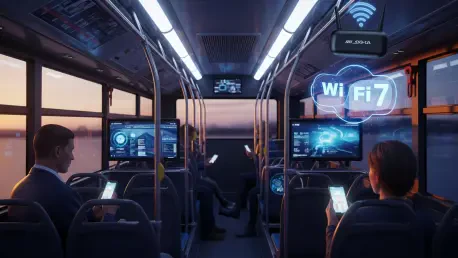

Commuters across South Korea are set to experience a radical transformation in mobile connectivity as LG Uplus secures a massive sixty billion won contract to overhaul the nation’s public transportation network with the latest wireless standards. LG Uplus emerged as the winner in a highly competitive bidding process facilitated by the Ministry of Science and ICT and the National Information Society Agency. This project targets the replacement of legacy networking hardware on approximately 30,000 public buses operating across the country. By implementing Wi-Fi 7, the carrier intends to solve chronic issues related to connection drops and slow speeds during peak hours. The initiative reflects a broader national strategy to ensure that high-speed internet remains a fundamental utility for all citizens regardless of their economic status. This contract represents one of the largest public sector telecommunications investments in recent history, signaling a shift toward ultra-high-definition streaming for passengers on the move.
Advancing Network Standards: Technical Superiority of Wi-Fi 7
Wi-Fi 7, also known as IEEE 802.11be, introduces several groundbreaking features that make it ideal for high-density environments like city buses. The most significant advancement is the support for 320 MHz channel widths, which effectively doubles the throughput compared to the previous generation. LG Uplus intends to utilize Multi-Link Operation, a feature allowing devices to transmit and receive data across different frequency bands simultaneously. This capability ensures that even if one frequency faces interference from urban obstacles or other signals, the connection remains stable and fast. Furthermore, the integration of 4096-QAM technology allows for a higher density of data in each signal, translating to a theoretical peak speed that is four times faster than Wi-Fi 6. For passengers, this means the ability to stream 8K video content or participate in lag-free video conferences while traveling through heavy traffic. The implementation involves installing ruggedized access points designed to withstand the vibrations and temperature fluctuations common in public transit.
Beyond raw speed, the reliability of the backhaul connection remains a critical component of the LG Uplus strategy for this national project. Each bus will be equipped with high-performance terminals that connect to the provider’s nationwide 5G network, ensuring a seamless bridge between cellular signals and the local Wi-Fi 7 broadcast. This architecture is specifically designed to handle the “handover” process as buses move between different cell towers, preventing the common frustration of dropped sessions. Advanced traffic management software will prioritize bandwidth allocation based on real-time usage, ensuring that basic browsing remains responsive even when several users are consuming high-bandwidth media. Security is another major pillar of this upgrade, with the new systems employing WPA3 encryption to protect user data from potential eavesdropping on these open networks. By centralizing the management of these 30,000 nodes, the carrier can proactively identify and resolve hardware failures before they impact the public.
Socioeconomic Implications: Digital Equity and Smart Infrastructure
The sixty billion won investment by the government serves as a cornerstone for digital equity, ensuring that high-speed connectivity is accessible to everyone. In many urban centers, the cost of unlimited data plans remains a barrier for certain demographics, making public Wi-Fi an essential service for accessing educational resources and employment opportunities. By choosing LG Uplus for this massive rollout, the state is betting on a partner that can deliver consistent quality across both metropolitan and rural bus routes. The project, spanning from 2026 to 2028, is expected to stimulate local economies by supporting the development of new mobile applications that utilize the increased bandwidth for augmented reality tourism or hyper-local advertising. Additionally, the improved network allows the government to collect anonymous transit data more effectively, which can be used to optimize bus schedules and reduce congestion. This data-driven approach is a key component of the current push toward smarter cities.
The successful transition to Wi-Fi 7 on national buses established a clear precedent for how public utilities evolved to meet the demands of a hyper-connected society. It demonstrated that large-scale infrastructure projects could be executed with minimal disruption while providing immediate benefits to millions of daily users. Moving forward, the focus shifted toward integrating these transit networks with other smart city systems, such as autonomous traffic signals and emergency response coordinates. Stakeholders recognized that maintaining this hardware required ongoing investment in cybersecurity and software updates to keep pace with emerging threats. Future considerations included the expansion of similar high-speed standards to regional trains and ferries to create a truly unified national digital corridor. Policymakers utilized the data gathered during this rollout to refine digital inclusion strategies for underserved populations. Ultimately, the partnership proved that technological advancement served as a tool for social cohesion.