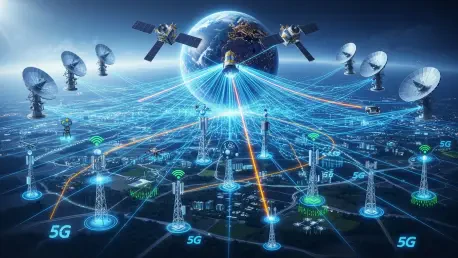

Remote sensing and global asset tracking have long been plagued by the inherent limitations of isolated terrestrial networks that fail to cover vast stretches of the Earth’s surface. Myriota, a pioneer in the low-power satellite Internet of Things market, has officially addressed this significant barrier by launching its hybrid 5G satellite-cellular connectivity solution. This new offering represents a monumental shift for industries requiring persistent data streams across borders and through extreme environments where cellular towers are non-existent. By merging the high-speed advantages of terrestrial 5G with the ubiquitous coverage of orbital satellites, the company provides a fail-safe communication layer for mission-critical applications. This integration ensures that even if an asset moves from a dense urban center to the middle of the Pacific Ocean, the data flow remains uninterrupted and secure, effectively eliminating the geographical boundaries that previously restricted the growth of large-scale IoT deployments worldwide. The development signifies a crucial step toward total global awareness and operational efficiency for modern enterprises.
Technological Synergy: Merging Terrestrial and Orbital Assets
The technical core of this hybrid network relies on a sophisticated dual-mode chip architecture that dynamically switches between available communication protocols without human intervention. When an IoT device is within range of a terrestrial 5G base station, it prioritizes the high-bandwidth, low-latency cellular connection to transmit large volumes of data or execute real-time commands. However, as the device moves into a blind spot or a remote wilderness area, the integrated software-defined radio automatically shifts the uplink to a Myriota satellite orbiting in low Earth orbit. This transition is managed by a cloud-based orchestrator that synchronizes the data streams, ensuring that the end-user perceives no loss in connectivity or data integrity. By utilizing the 3GPP Non-Terrestrial Network standards, the system remains compatible with existing infrastructure, allowing businesses to integrate this technology into their current workflows without needing a complete overhaul of their hardware stack.
Energy efficiency remains a cornerstone of this hybrid approach, as maintaining dual-mode connectivity typically demands significant power resources that can drain remote sensors quickly. Myriota has mitigated this challenge by implementing a highly optimized power management algorithm that keeps the satellite modem in a deep-sleep state until terrestrial signals drop below a specific threshold. This selective activation ensures that the power-intensive task of orbital communication only occurs when absolutely necessary, thereby extending the battery life of remote devices to several years. For organizations operating in the mining or oil and gas sectors, where sensors are often deployed in hard-to-reach locations for extended periods, this longevity is essential for reducing maintenance costs and operational overhead. The hybrid model effectively balances the need for high-frequency data updates with the physical constraints of remote battery power, creating a sustainable ecosystem for long-term deployments in any climate.
Industrial Resilience: Enhancing Visibility in Remote Landscapes
Logistics and global supply chain management stand to gain the most from this expanded coverage, as the ability to track high-value assets across oceans and continents becomes a reality. Historically, shipping containers or heavy machinery often entered dark zones where cellular signals were lost, leaving fleet managers blind to the status or security of their cargo for days or weeks. With the hybrid 5G satellite-cellular network, these assets remain visible throughout their entire journey, providing real-time telemetry on temperature, vibration, and location regardless of proximity to a cell tower. This persistent visibility allows for proactive risk management, such as redirecting shipments in response to weather patterns or detecting unauthorized access to cargo in remote transit hubs. Consequently, the insurance and maritime industries are now looking toward these hybrid solutions to lower premiums and improve the overall security of global trade routes by removing the information gaps that previously defined international shipping.
The integration of hybrid connectivity served as a catalyst for a broader industrial transformation where the digital and physical worlds became permanently intertwined. Stakeholders across various sectors recognized that the era of fragmented data had ended, and they moved swiftly to adopt hardware that supported both terrestrial and non-terrestrial protocols. This shift necessitated a reevaluation of operational workflows, as real-time visibility into remote assets allowed for unprecedented levels of precision in logistics and resource management. The implementation of these systems proved that geographical barriers were no longer an excuse for information gaps, leading to more resilient and transparent global operations. Organizations prioritized the deployment of edge computing solutions alongside hybrid networks to further refine the efficiency of their data transmission strategies. By successfully bridging the gap between land and space, this technology redefined the expectations for reliable communication and set the stage for a fully connected global economy.