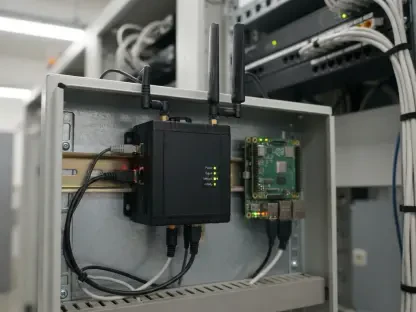

SpaceX’s move to build its own ground network suggests a strategic pivot away from relying on roaming agreements with established giants like T-Mobile and Verizon. This decision underscores a fundamental shift in how satellite-based companies view their role within the broader telecommunications ecosystem, moving from a niche provider for remote regions to a direct competitor in the high-stakes urban mobile market. By integrating advanced terrestrial infrastructure with its sprawling low-Earth orbit constellation, the company is attempting to bridge the final gap in global connectivity that has traditionally limited satellite services. This strategy reflects a growing realization that high-capacity, low-latency mobile service cannot be achieved through orbital assets alone, particularly in densely populated environments where signal blockage and user density create significant technical barriers. The partnership with Qualcomm provides the necessary hardware backbone to realize this vision, allowing for a standardized and scalable deployment that could eventually challenge the dominance of legacy carriers. As the industry moves deeper into the 5G era, the ability to control both the space and ground segments of a network offers an unprecedented competitive advantage, enabling a level of service integration that was previously considered impossible for a non-terrestrial operator.
The Technical Foundations of the Dragonwing Platform
The core of this new infrastructure initiative is the adoption of Qualcomm’s Dragonwing cellular platforms, specifically the QRU100 and QDU100 systems. These components represent the cutting edge of 5G hardware, designed to handle the massive computational loads required for real-time signal processing and network management. By selecting these specific platforms, SpaceX is ensuring that its ground stations are compatible with the global standards that govern modern smartphone communications. The QRU100 and QDU100 are built to optimize power efficiency while maintaining the high throughput necessary for 5G performance, making them ideal for a nationwide rollout that requires tens of thousands of individual installation sites. This technical alignment suggests that the network is being designed with long-term reliability in mind, focusing on a hardware-software synergy that allows for seamless data flow between the terrestrial towers and the core network. Such a foundation is critical for any new entrant looking to provide a service that rivals the uptime and speed of established telecommunications giants.
Beyond the internal processing power of the Qualcomm chips, the implementation of “Massive MIMO” technology stands as a defining feature of the planned terrestrial network. By utilizing a 64-transmit and 64-receive antenna configuration, known as 64T64R, SpaceX is preparing to tackle the problem of network congestion in crowded areas. Massive MIMO allows a single tower to communicate with multiple devices simultaneously over the same frequency, significantly increasing the total capacity of the cell site. This technology is essential for providing high-speed internet to thousands of users in a small geographic area, such as a city center or a stadium, without experiencing the service degradation common in older cellular generations. The move toward 64T64R indicates that the company is not just building a basic backup network, but is instead aiming for a premium service level that can support high-definition video streaming, low-latency gaming, and complex enterprise applications. This sophisticated antenna design will be the key to proving that a hybrid satellite-terrestrial model can compete on equal footing with traditional fiber-backed cellular networks.
Strategic Spectrum Management and the 800 MHz Advantage
The acquisition of a nationwide 800 MHz spectrum portfolio from Grain Management provides the essential radio frequency real estate required to make the terrestrial network a reality. In the world of wireless communication, spectrum is the most valuable commodity, and the 800 MHz band is particularly prized for its physical properties. As a low-band spectrum, these frequencies possess superior propagation characteristics, meaning they can travel long distances from a transmission tower and penetrate solid obstacles like concrete walls and heavy foliage with ease. For a new network operator, having access to this band is the difference between a service that only works outdoors and one that provides a reliable connection inside homes, offices, and underground transit systems. By securing this spectrum through the Federal Communications Commission, SpaceX has cleared one of the most significant regulatory and technical hurdles to entering the mobile market. This strategic move ensures that the company does not have to rely on high-band frequencies that require a much denser, and more expensive, concentration of towers to achieve the same level of coverage.
The synchronization of the hardware deal with Qualcomm and the spectrum acquisition highlights a calculated, two-pronged approach to network construction. While the Qualcomm hardware provides the means of transmission, the 800 MHz spectrum provides the medium. This combination allows for a deployment strategy that prioritizes wide-area coverage and indoor reliability from the outset. For consumers, this translates to a more consistent user experience, especially in suburban and rural areas where high-frequency signals often fail. Furthermore, the use of the 800 MHz band allows for a more efficient rollout, as fewer base stations are needed to cover the same geographic footprint compared to mid-band or high-band deployments. This efficiency is vital as the company looks toward the 2027 deployment window, aiming to establish a footprint that is large enough to be commercially viable. The ability to broadcast over these frequencies will be the primary driver behind the network’s ability to offer a “one-size-fits-all” connectivity solution that transitions smoothly between urban and rural environments.
The Evolutionary Shift Toward Primary Service Models
For the past few years, the narrative surrounding satellite-to-cell technology has focused on its role as a supplemental safety feature, providing a “lifeline” in areas where traditional cell towers do not reach. However, the current trajectory suggests that SpaceX is moving toward a full Mobile Network Operator or Mobile Virtual Network Operator model. In this scenario, the company would no longer be a silent partner providing backup for T-Mobile or Verizon, but would instead manage the entire customer relationship. This shift would allow for a single billing experience where the user pays for a primary mobile plan that utilizes ground towers whenever available and automatically switches to satellite coverage in remote gaps. Such a model is highly disruptive because it captures the total value of the subscriber, rather than just a small fraction of a roaming fee. The integrated service model represents the ultimate evolution of mobile connectivity, where the source of the signal becomes irrelevant to the end user, provided the connection is fast and reliable.
Recent data collected through 2025 demonstrates that while satellite backup is a highly valued feature, it is not yet the primary reason a consumer chooses a mobile provider. Most smartphone usage remains concentrated in areas with robust terrestrial coverage, and to win over these users, a provider must offer the same high-capacity performance that people have come to expect from 5G. By building a Qualcomm-powered ground network, SpaceX is addressing this market reality head-on. The goal is to offer a service that is indistinguishable from the “Big Three” in terms of urban performance while offering the unique added value of global satellite reach. This transition requires a massive investment in retail infrastructure, customer support, and billing systems, areas where traditional carriers have decades of experience. The success of this move will depend on whether the company can successfully market this “hybrid” advantage as a necessity for the modern mobile lifestyle, rather than just a niche luxury for hikers and offshore workers.
Market Resistance and the High Cost of Infrastructure
The established giants of the American telecommunications industry, including AT&T and Verizon, are not likely to welcome a new, vertically integrated competitor without a fight. One of the primary obstacles facing any new mobile network is the lack of roaming agreements, which allow a new provider’s customers to use existing towers while their own network is still being built. If the major carriers refuse to grant SpaceX access to their infrastructure on favorable terms, the company is forced to take the “build” route, which is incredibly capital-intensive and time-consuming. This involves securing thousands of local zoning permits, leasing land for towers, and installing the physical backhaul connectivity needed to link those towers to the internet. The Qualcomm agreement is a clear signal that the company is prepared for this long-term construction project, choosing to invest in its own hardware rather than remaining dependent on the goodwill of its competitors. This path is risky, but it ensures that the company remains the master of its own technological destiny.
Beyond the physical hurdles of tower construction, the competitive landscape is defined by “customer stickiness,” a term used to describe the difficulty of convincing users to switch providers. Legacy carriers often use complex family plans, device financing deals, and bundled services like home internet and streaming subscriptions to keep customers from leaving. To compete effectively, a new entrant must offer more than just a working signal; it must provide a superior value proposition and a simplified user experience. The logistical challenge of building a retail presence and a robust customer service department cannot be overstated. Even with the best technology in the world, a mobile network can fail if the billing systems are buggy or the support staff is unresponsive. Therefore, the period between now and the end of the decade will be a test of the company’s organizational maturity, as it attempts to replicate the operational sophistication of companies that have been in the business for over a century.
Implementation Milestones and the 2027 Deployment Roadmap
The target date of 2027 for the beginning of the terrestrial deployment serves as a critical baseline for the industry, marking the transition from the planning phase to the execution phase. This timeline involves a series of incremental milestones that must be met to ensure a successful launch. The first of these is the final approval from the Federal Communications Commission for the 800 MHz spectrum transfer and the authorization to operate terrestrial base stations alongside orbital satellites. Regulatory hurdles can often be the most unpredictable part of a network rollout, as they involve complex legal arguments and public comment periods. Once the regulatory path is clear, the focus shifts to the physical logistics of site selection and hardware installation. Building a network of “tens of thousands of sites” is a massive undertaking that requires a coordinated effort between hardware suppliers, local contractors, and regional utility companies to provide the necessary power and fiber-optic connections for each tower.
As the deployment progresses toward 2028 and 2029, the industry will be watching for successful pilot tests that demonstrate the “handoff” between satellite and ground signals. This is perhaps the most technically difficult aspect of a hybrid network: ensuring that a call or a data session does not drop as the device switches from an overhead satellite to a nearby ground tower. This process must be entirely invisible to the user, requiring sophisticated software algorithms that can predict signal strength and manage the transition in milliseconds. Additionally, the network must be compatible with existing consumer hardware. One of the primary goals of the Qualcomm partnership is to ensure that standard, off-the-shelf smartphones can connect to the new network without requiring specialized antennas or proprietary chips. If the company can prove that a standard iPhone or Android device works seamlessly on its hybrid network, it will have removed the single largest barrier to mass-market adoption, paving the way for a rapid expansion of its subscriber base.
Opportunities for Enterprise Sectors and Application Developers
The emergence of an integrated space-ground network provides significant advantages for enterprise buyers, particularly those operating in industries with distributed field employees. Sectors such as energy, agriculture, and logistics have long struggled with the limitations of terrestrial-only networks, often having to rely on expensive and clunky specialized satellite hardware for their remote operations. A single mobile plan that works in a downtown corporate headquarters and on a remote oil rig or in the middle of a massive farm simplifies the technological stack for these companies. This “unified connectivity” reduces the complexity of managing multiple service providers and hardware types, leading to lower operational costs and improved efficiency. However, these enterprise clients also demand strict Service Level Agreements, requiring the network to be highly resilient and provide guaranteed speeds. Building the trust of these large-scale corporate clients will be a major focus for the company as it moves beyond the consumer market and looks toward high-value industrial contracts.
For the developer community, the shift toward a hybrid network model necessitates a new approach to application design. Even with the best handoff technology, the physics of satellite communication mean that there will always be fluctuations in latency and bandwidth as a device switches its source of connectivity. Developers must build applications that are “connectivity-aware,” meaning they can gracefully handle shifts from a high-speed, low-latency ground tower to a slightly slower, higher-latency satellite connection without crashing or losing data. This is particularly important for real-time applications such as voice-over-IP, remote medical monitoring, and automated logistics tracking. By creating software that adapts to the available network conditions, developers can ensure a consistent user experience even in the most challenging environments. As the network matures, those who are early to adopt these “hybrid-first” design principles will be better positioned to capitalize on the unique capabilities of a truly global 5G network.
Standardized Infrastructure and the Path Toward 6G
One of the most strategic aspects of the partnership with Qualcomm is the move toward hardware standardization. By using a widely recognized and supported platform, SpaceX is ensuring that its network can be easily maintained and upgraded as technology evolves. Standardization allows for a more predictable supply chain and a faster troubleshooting process, as technicians and engineers are working with familiar systems that are used by other major players in the global market. This repeatability is essential for a network that is intended to span the entire country and eventually expand into international markets. Furthermore, by building on a 5G-advanced foundation, the company is already laying the groundwork for the eventual transition to 6G. The hardware being deployed today is designed with future-proofing in mind, allowing for software-defined upgrades that can add new capabilities without requiring a complete overhaul of the physical tower sites. This long-term thinking is a hallmark of the collaboration, positioning the network at the forefront of telecommunications innovation for years to come.
As the global telecommunications landscape continues to evolve, the integration of satellite and terrestrial networks is increasingly seen as the inevitable future of connectivity. The ability to provide a high-speed link to every corner of the planet, from the most crowded urban centers to the most isolated rural outposts, has been the “holy grail” of the industry for decades. The collaboration between SpaceX and Qualcomm represents the most serious attempt yet to realize this vision on a commercial scale. While there are still many technical and regulatory challenges to overcome, the strategic intent is clear. The industry is moving away from a world of “dead zones” and fragmented coverage toward a future of ubiquitous, always-on connectivity. This shift will not only change how we use our smartphones but will also enable a new generation of technologies, from autonomous vehicles to global Internet of Things deployments, that rely on a stable and universal data link to function effectively.
Strategic Recommendations for the Hybrid Connectivity Era
The partnership between SpaceX and Qualcomm established a new benchmark for industry collaboration and demonstrated the feasibility of hybrid networks. By combining high-performance terrestrial hardware with a comprehensive satellite constellation, the initiative addressed the long-standing problem of inconsistent coverage in diverse geographic landscapes. This strategic move successfully signaled to the market that the era of satellite-only or ground-only service providers was ending, replaced by a model of total network integration. The acquisition of the 800 MHz spectrum and the deployment of Massive MIMO technology proved to be the correct technological choices for achieving indoor reliability and urban capacity. These actions collectively moved the industry closer to a future where the source of a mobile signal is transparent to the consumer, focusing instead on the quality and ubiquity of the service provided. The progress made during this period set a precedent for how new entrants can challenge established monopolies through high-tech partnerships and aggressive infrastructure investment.
To capitalize on this evolving landscape, stakeholders must prioritize the development of adaptive technologies and resilient infrastructure. For enterprise leaders, the next step involves integrating these hybrid connectivity solutions into their long-term digital transformation strategies, ensuring that field operations are fully supported regardless of location. Application developers should focus on creating “latency-resilient” software that can handle the transitions between ground and space signals without impacting the user experience. Regulatory bodies will need to continue streamlining spectrum allocation and tower zoning processes to support the rapid deployment of these integrated networks, ensuring that competition remains healthy and consumer options continue to expand. As the industry looks toward the eventual rollout of 6G, the foundation laid by this collaboration will serve as the primary roadmap for the next generation of global communication. Maintaining a focus on interoperability and hardware standardization will be essential for ensuring that the benefits of this new connectivity model are accessible to the widest possible audience.