
Sellas Life Sciences investors are closely monitoring the upcoming Phase 3 Regal leukemia readout, which depends on reaching a specific threshold of clinical events for final analysis. This high-stakes clinical milestone serves as a microcosm for the broader volatility currently defining the technology, aerospace, and healthcare markets as they move through the final stretch of 2026. While specialized biotechnology firms grapple with the binary outcomes of clinical trials, the aerospace and electric vehicle sectors are facing their own transformative challenges, ranging from orbital hardware wars to massive capital reallocations. The intersection of satellite-to-cellular connectivity and the ongoing expansion of artificial intelligence infrastructure has created a landscape where established paradigms are being dismantled in favor of aggressive, capital-heavy growth strategies. As market participants analyze the performance of industry leaders, a clear divergence has emerged between the cautious projections of institutional analysts and the persistent optimism of retail trading communities, setting the stage for a period of profound structural realignment.
The current environment is characterized by a rapid acceleration of technological deployment that tests the limits of existing regulatory frameworks and financial sustainability. In the satellite sector, the race to provide universal cellular coverage from space has moved beyond theoretical designs into a phase of active deployment and heated corporate rivalry. Similarly, the automotive industry, led by high-profile firms like Tesla, is navigating a period of unprecedented capital intensity that forces a reevaluation of liquidity and long-term funding requirements. As the artificial intelligence sector matures, warnings of speculative bubbles are growing louder, prompting savvy investors to adopt more sophisticated hedging strategies using derivatives and options. This multifaceted market dynamic requires a granular examination of the specific technical hurdles, financial maneuvers, and regulatory pressures that are currently shaping the trajectory of the world’s most innovative companies. Through this lens, the following analysis explores the shifting tides of the global market and the strategic maneuvers of its most influential players.
Competitive Landscapes in Orbital Connectivity
Contrasting Strategies for Global Cellular Access
The ongoing rivalry between AST SpaceMobile and SpaceX highlights two fundamentally different philosophies regarding the implementation of satellite-to-cellular technology. AST SpaceMobile has successfully cultivated a partner-centric model, aligning itself with telecommunications giants such as AT&T and Verizon to leverage their existing licensed spectrum and massive subscriber bases. This approach relies on the deployment of BlueBird satellites, which are essentially massive cellular towers in space designed to communicate directly with standard, unmodified smartphones already in the hands of consumers. By utilizing the carriers’ own frequencies, AST SpaceMobile avoids the need for specialized hardware or proprietary consumer equipment, creating a seamless integration with terrestrial networks. This strategy has gained significant traction as the company begins its beta service phase, supported by a multi-billion-dollar backlog of contracted revenue that underscores the telecommunications industry’s confidence in this hardware-agnostic connectivity model.
In contrast to the partnership-driven approach of AST SpaceMobile, SpaceX has proposed a more disruptive and hardware-intensive strategy known as rooftop cellular. This model involves integrating cellular base station capabilities into the existing Starlink ground infrastructure, effectively turning residential and business satellite dishes into localized cellular nodes. While this strategy leverages SpaceX’s existing dominance in the satellite internet market and its unparalleled launch frequency, it has drawn sharp criticism from industry veterans who question the logistical and economic efficiency of such a localized deployment. Skeptics argue that the cost of placing millions of small-scale cellular transmitters on private property mirrors the prohibitive expenses of building a traditional macro-cellular network, potentially negating the inherent cost advantages of space-based solutions. As of late 2026, the market is closely watching to see which of these competing visions will achieve the critical mass necessary to dominate the global connectivity landscape, particularly as orbital capacity continues to expand at an exponential rate.
Technical and Legal Obstacles to Expansion
The technical and legal challenges facing the satellite sector are becoming increasingly complex as companies push for broader signal coverage and higher data throughput. John Stankey, the chief executive of AT&T, has emerged as a prominent critic of the decentralized hardware model proposed by SpaceX, specifically pointing to the unviable economics of localized ground stations. Stankey’s argument centers on the fact that the infrastructure requirements for a rooftop-based cellular network are fundamentally redundant when compared to the efficiency of direct-to-device satellite signaling. Furthermore, the radiation of cellular signals from private property introduces a host of legal and property law complications that have yet to be fully addressed. Obtaining individual consent from millions of homeowners to host cellular equipment is a monumental task that could stall deployment for years, making the partner-first model of using existing carrier towers and licensed frequencies appear far more pragmatic in the current regulatory climate.
Beyond the legal hurdles of property rights and signal interference, the technological competition is also a battle for bandwidth and reliability. While satellite connectivity is a vital tool for filling the coverage gaps in remote or underserved regions, it still faces significant limitations compared to advanced terrestrial infrastructure. AT&T’s recent multi-billion-dollar partnership with Corning to expand its fiber-optic footprint demonstrates a firm belief that high-speed fiber remains the gold standard for high-bandwidth applications like 8K video streaming and real-time artificial intelligence processing. Satellite technology is increasingly viewed as a complementary service—a safety net for the “dead zones” of the world—rather than a full replacement for the massive data capacity provided by land-based networks. Consequently, the companies that can best integrate space-based signals with existing fiber and macro-cell infrastructure are likely to emerge as the long-term winners in the global communications race, avoiding the pitfalls of over-reliance on a single delivery method.
Scaling Capabilities and Analyst Projections
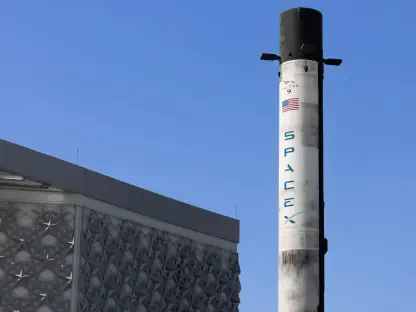
SpaceX’s operational momentum continues to redefine the possibilities of orbital scale, particularly with the recent milestones achieved during the Starship Flight 14 mission. This mission successfully deployed the first batch of Starlink V3 satellites, which represent a significant leap in capacity compared to the previous V2 Mini iterations. Each V3 satellite is capable of providing approximately one terabit per second of capacity, a tenfold increase that allows for much higher user density and faster data speeds across the globe. This rapid expansion of orbital bandwidth has prompted analysts to raise their long-term growth projections for the company, with some predicting that SpaceX could eventually become a dominant provider of AI compute leasing in addition to its core connectivity services. The ability to launch and iterate on satellite hardware at such a high frequency provides SpaceX with a competitive advantage that is difficult for smaller players to match, despite the ongoing debates surrounding its specific cellular strategy.
Wall Street’s consensus on the space sector remains largely optimistic, though price targets vary significantly based on the perceived timeline for full commercialization. Major financial institutions like Morgan Stanley have maintained bullish outlooks on the industry, citing the potential for satellite services to capture a significant share of the global telecommunications and data transit markets. Some analysts suggest that if SpaceX can maintain its target of over two thousand annual launches by 2030, the company’s valuation could more than double from its current levels. Meanwhile, the retail sentiment surrounding firms like AST SpaceMobile has shifted toward a more neutral but hopeful stance as the company moves toward full-scale commercial operation. Investors are increasingly looking past the initial novelty of satellite-to-cellular technology and focusing instead on the concrete metrics of revenue guidance, subscriber acquisition costs, and the ability to maintain consistent service levels as more spacecraft enter low Earth orbit.
Financial Pressures and Market Warnings
Tesla’s Capital Intensity and Liquidity Concerns
Tesla’s financial strategy has come under renewed scrutiny in late 2026 as the company navigates a period of unprecedented capital expenditure related to its diverse array of high-tech projects. The recent securing of $30 billion in new credit facilities, which includes significant term loans and revolving lines of credit, has sparked a debate about the company’s long-term liquidity. While Tesla’s leadership emphasizes that these funds serve as a strategic reserve for its “Terafab” manufacturing initiatives and the ongoing development of the Optimus humanoid robot, some analysts remain unconvinced. The primary concern lies in the structure of these loans, many of which feature delayed-draw mechanisms that are set to begin expiring in 2027. This timeline creates a potential funding gap if the company’s operating cash flow does not see a substantial increase in the coming quarters, particularly given the multi-billion-dollar investments required to maintain its lead in the electric vehicle and autonomous systems markets.
The operational backdrop for Tesla is further complicated by a cooling trend in global vehicle demand, which has led to delivery figures that are under constant pressure from both competitors and macro-economic factors. To meet its ambitious annual guidance, Tesla must sustain a level of investment that frequently exceeds its current operating cash flow, a dynamic that has caused some skepticism among institutional investors who prioritize fundamental balance sheet strength. While retail investors often view these capital requirements as the necessary cost of maintaining a technological edge, the reality of maintaining such a massive global footprint is becoming increasingly apparent. The success of Tesla’s future product launches, including the much-anticipated expansion of its solar and energy storage segments, will be critical in determining whether the company can successfully transition from a high-growth disruptor to a financially self-sustaining industrial powerhouse without needing to further dilute shareholders or take on additional debt.
The Specter of an AI Bubble
Michael Burry, the investor noted for his historical foresight regarding market corrections, has recently refined his bearish thesis concerning the artificial intelligence sector. Burry’s updated outlook suggests that the timeline for an AI-related market correction has accelerated, with the potential for a significant downturn occurring within the next twelve months. His concerns are primarily focused on the concept of circular financing, where large-scale investments in AI startups and hyperscalers effectively rotate back to the same parent companies as artificial revenue growth. This phenomenon creates an illusory expansion that may not be supported by genuine, long-term economic utility once the initial wave of infrastructure building subsides. By comparing the current levels of net capital investment as a percentage of GDP to those seen during the dot-com peak, Burry warns that the market is nearing a precarious inflection point that could lead to a rapid revaluation of tech-heavy indices.
In light of these perceived risks, many professional traders have begun shifting their portfolios toward more defensive positions, utilizing put options to hedge against a potential collapse in the artificial intelligence trade. The rationale behind this shift is the current environment of relatively low market volatility, which has made the cost of acquiring downside protection through derivatives increasingly attractive compared to outright short selling. This strategic adjustment allows investors to maintain some exposure to the upside of the AI boom while securing a significant payout in the event of a broad market correction. The debate over whether the current AI surge represents a genuine industrial revolution or a debt-fueled speculative bubble continues to divide the financial community. However, the increasing frequency of warnings from seasoned investors suggests that the era of unbridled optimism may be giving way to a more disciplined and cautious approach to technology investment as we move toward the end of the decade.
Prediction Markets and Regulatory Wild Cards
DraftKings has recently encountered a series of challenges that have significantly impacted its market valuation, largely driven by a tightening regulatory environment both domestically and internationally. The sudden ban on online sports betting in major international markets like Brazil served as a stark reminder of the regulatory fragility inherent in the gaming industry. In response to these headwinds, DraftKings has pivoted toward the expansion of its DKeX prediction market platform, seeking to diversify its revenue streams and tap into the growing demand for political and financial forecasting. This move places the company in direct competition with established prediction platforms like Kalshi and Polymarket, which have already captured a significant portion of the trading volume in this emerging sector. The success of this diversification strategy will depend heavily on the company’s ability to navigate the complex legal landscape that governs non-sports-related wagering.
The regulatory scrutiny surrounding prediction markets has intensified, with the U.S. House Oversight Committee launching investigations into the potential for insider trading and other compliance issues within these platforms. This heightened government oversight introduces a significant “wild card” factor for investors, as any negative legislative outcome could stifle growth or lead to costly operational changes. Despite these risks, retail sentiment remains surprisingly bullish on the long-term potential of prediction markets to transform how people interact with financial and political data. Many see these platforms as a way for gaming companies to evolve into broader information exchanges, where the collective wisdom of the crowd is used to price the probability of various global events. However, for DraftKings to truly succeed in this space, it must overcome a steep competitive curve and prove that it can maintain a high level of integrity and transparency under the watchful eye of federal regulators.
Clinical Breakthroughs in Biotechnology
Revenue Surges in Specialized Treatments
In the specialized realm of biotechnology, Iovance Biotherapeutics has emerged as a standout performer in 2026, defying the broader sector’s sluggishness with a remarkable surge in its financial outlook. The company’s success is rooted in the high demand for its advanced oncological treatments, specifically its tumor-infiltrating lymphocyte (TIL) therapies like Amtagvi and Proleukin. By successfully scaling its manufacturing processes and expanding its network of authorized treatment centers, Iovance has been able to provide concrete revenue guidance that has significantly boosted investor confidence. This achievement highlights the importance of operational execution in the biotech space; developing a breakthrough drug is only half the battle, as the ability to produce and deliver these complex treatments at scale is what ultimately drives sustainable revenue growth. The company’s trajectory serves as a blueprint for other clinical-stage firms aiming to transition into profitable commercial entities.
ImmunityBio is another player that has captured the market’s attention, not only through its clinical advancements but also through its exploration of innovative financial concepts. The company’s work on Anktiva and its potential applications in immune cell restoration have provided a solid clinical foundation for its recent share price gains. However, much of the recent retail buzz has centered on founder Patrick Soon-Shiong’s comments regarding the potential for tokenizing corporate stocks on a blockchain. While these plans remain largely speculative at this stage, they reflect a broader trend of biotechnology companies looking for novel ways to engage with their investor base and potentially access new forms of capital. By combining high-science oncology research with forward-looking financial technologies, firms like ImmunityBio are attempting to differentiate themselves in a crowded and often volatile market, appealing to a segment of the investment community that values both clinical innovation and structural disruption.
Clinical Milestones and Phase 3 Readouts
The valuation of biotechnology firms remains intrinsically tied to the binary outcomes of Phase 3 clinical trials, a reality that Vanda Pharmaceuticals recently experienced with its sleep-disorder drug Hetlioz. The reporting of positive trial results, which demonstrated a significant improvement in patient outcomes compared to a placebo, provided the necessary catalyst for the company to move forward with its regulatory filing and commercial planning. These milestones are the lifeblood of the sector, as each successful trial result brings a company one step closer to market exclusivity and the potential for blockbuster revenue. For investors, these events represent the primary source of volatility and opportunity, requiring a deep understanding of the clinical data and the regulatory landscape to accurately gauge the risk-reward profile of each individual company.
Sellas Life Sciences finds itself in a period of heightened anticipation as it awaits the final readout for its Phase 3 Regal trial. Unlike many other sectors where performance is measured by quarterly earnings or product sales, the fate of a clinical-stage biotech firm like Sellas is often determined by a single data point—in this case, reaching a specific threshold of clinical events required for the final analysis of its leukemia treatment. This waiting period can be arduous for shareholders, as evidenced by the recent decline in the company’s stock price despite positive preclinical signals for its other drug candidates like SLS009. The focus remains squarely on the Regal trial, as a successful outcome would not only validate the company’s platform but also provide a critical new treatment option for patients with limited alternatives. This dynamic underscores the high-stakes nature of the biotechnology industry, where years of research and millions of dollars in investment can be vindicated or nullified in a single clinical announcement.
Overarching Themes in the 2026 Market
The High Cost of Market Dominance
A recurring theme across the most innovative sectors of the 2026 economy was the necessity for massive, sustained capital expenditure to achieve and maintain a dominant market position. Whether the focus was on the deployment of global satellite constellations by SpaceX and AST SpaceMobile or the construction of advanced manufacturing hubs by Tesla, the barrier to entry for top-tier competition became increasingly high. This spending race created a complex environment where the ability to secure large-scale credit facilities and manage substantial debt loads became as critical as the underlying technological innovation itself. The transition from a period of low-cost capital to one where investors demanded clear paths to profitability forced many firms to reconsider their expansion timelines, prioritizing projects that offered the most immediate and tangible returns on investment.
The battle between vertically integrated models and partner-centric strategies emerged as a defining structural conflict for the future of global infrastructure. SpaceX’s decision to control every aspect of its value chain, from rocket manufacturing to consumer-facing cellular services, offered unmatched speed and agility but also required an astronomical level of funding. In contrast, the model adopted by AST SpaceMobile and AT&T highlighted the advantages of collaborative growth, leveraging existing infrastructure and regulatory approvals to reduce the overall risk and cost of deployment. As the market moved toward the end of the year, it became clear that both approaches had distinct merits, and the ultimate winners would likely be the companies that could most effectively manage the high costs of innovation while navigating the inevitable regulatory and legal hurdles that accompany large-scale technological disruption.
Retail Resilience and Institutional Caution
Throughout the latter half of 2026, a notable divergence persisted between the sentiment of retail investors and the cautious projections of institutional analysts. Data from the Stocktwits Newsroom indicated that retail traders remained significantly more optimistic about the long-term prospects of high-growth tech and space stocks, often viewing price corrections as strategic buying opportunities rather than signs of structural weakness. This resilience was particularly evident in the trading patterns of stocks like Tesla and DraftKings, where retail buyers frequently stepped in to provide support during periods of high volatility. This trend suggests that a large segment of the market continued to believe in the transformative potential of these technologies, looking past short-term financial metrics to focus on the broader narrative of global connectivity, autonomous transportation, and advanced healthcare.
Looking forward, the interaction between this retail enthusiasm and the more disciplined, risk-averse approach of professional fund managers will likely continue to drive unique volatility across the technology sector. The increasing use of derivatives and sophisticated hedging tools by institutional players provided a necessary counterbalance to the speculative fervor that often accompanied the launch of new AI and space-based services. This maturation of the market, where diverse investment philosophies coexist and compete, is a healthy sign for the long-term stability of the tech ecosystem. Investors who were able to balance the high-stakes risks of clinical trials and orbital launches with a disciplined approach to capital management were best positioned to navigate the shifting dynamics of the 2026 market. The lessons learned during this period of high-intensity growth and regulatory scrutiny provided a robust framework for those seeking to capitalize on the next wave of industrial and technological evolution.