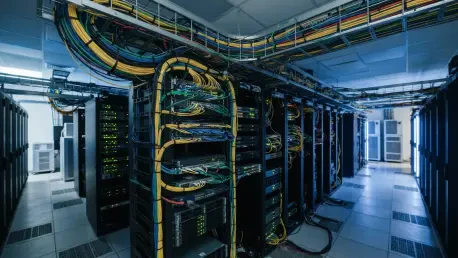

Creative studios and small business environments often require professional-grade features like isolated VLAN tagging to separate insecure smart devices from sensitive data. As we move through 2026, the traditional boundaries between consumer-grade and enterprise-level networking have largely dissolved, driven by the widespread availability of multi-gigabit fiber-optic internet and an explosion in high-bandwidth applications. Today, the average power user manages a complex digital infrastructure that rivals the small offices of a decade ago, encompassing high-resolution surveillance systems, local storage arrays for 8K video production, and a myriad of latency-sensitive cloud services. This transition has necessitated a move away from standard hardware toward specialized solutions that can handle massive data throughput without succumbing to thermal throttling or software instability. The current landscape is defined by the maturation of Wi-Fi 7 technology, which provides the spectral efficiency needed to maintain stable connections in increasingly crowded residential and urban frequency environments.
The Architecture of Speed: Prosumer Hardware for Intensive Workloads
The Asus ROG Rapture GT-BE19000 has established itself as a cornerstone for users who require more than just basic connectivity. Built around a robust 2.6 GHz quad-core processor and featuring 2GB of high-speed RAM, this device provides the necessary computational overhead to manage intensive packet inspection and traffic prioritization without introducing measurable latency. For power users in 2026, the presence of two dedicated 10-gigabit Ethernet ports is no longer a luxury but a fundamental requirement for connecting high-speed Network Attached Storage (NAS) units to primary workstations. This wired backbone ensures that massive file transfers, such as uncompressed video project folders or large architectural datasets, do not become a bottleneck that hinders productivity. The inclusion of four additional 2.5-gigabit LAN ports further expands the capacity for secondary devices, creating a high-performance local network that can fully saturate the potential of modern fiber-optic internet connections.
Beyond the raw hardware specifications, the sophistication of the internal management software differentiates this tier of equipment from standard retail routers. The implementation of Guest Network Pro and VPN Fusion allows for a level of network customization that was once the exclusive domain of IT professionals. Users can create distinct, isolated virtual networks for different categories of devices, ensuring that a vulnerability in a smart appliance does not provide a gateway into a primary work machine. Furthermore, the ability to run multiple concurrent VPN tunnels allows individual devices within the household to route through different geographic locations simultaneously, which is invaluable for researchers and developers working across international jurisdictions. Because these advanced security and management features are integrated into the initial cost of the hardware, users are spared the ongoing burden of subscription fees, making it an economically sound choice for those who prefer complete control over their digital environment.
Breaking Throughput Barriers: The Evolution of Wireless Transmission
For environments where physical cabling is impractical or where mobile device density is exceptionally high, the TP-Link Archer BE900 offers an unprecedented level of wireless performance. As a quad-band Wi-Fi 7 solution, it utilizes the 6 GHz spectrum alongside dual 5 GHz bands and the standard 2.4 GHz range to deliver aggregate speeds that frequently exceed 24 Gbps in real-world conditions. This massive capacity is made possible through the implementation of 320 MHz channels and 4096-QAM modulation, which effectively quadruples the amount of data that can be packed into a single transmission compared to previous standards. The router’s internal architecture features twelve high-gain antennas positioned to provide omnidirectional coverage, ensuring that high-speed signals can penetrate architectural obstacles that previously required the use of secondary access points or mesh extenders in moderately sized office spaces.
The physical design of the Archer BE900 reflects a broader trend in 2026 toward hardware that is both functional and aesthetically modern. Moving away from the traditional “spider” look with external antennas, this vertical tower design incorporates an interactive LED touchscreen that provides immediate feedback on network health, CPU utilization, and real-time bandwidth usage. This allows power users to perform quick diagnostics without needing to log into a management console, which is a significant time-saver during high-pressure work cycles. Additionally, the device features a flexible combo port that supports both SFP+ fiber and RJ45 copper connections at 10 Gbps, providing a future-proof interface for whatever incoming service an ISP might provide. While the adoption of a subscription-based security model for certain advanced features remains a point of discussion among enthusiasts, the raw power and versatility of the hardware make it a leading choice for those who demand the absolute peak of wireless technology.
Scalable Infrastructure: Mesh Systems and Stability Standards
The challenge of providing consistent high-speed coverage across large properties or complex multi-story buildings has been addressed through the advancement of high-performance mesh systems like the Asus ZenWiFi BQ16 Pro. In 2026, the primary innovation in mesh networking is the use of Multi-Link Operation (MLO) to establish a dedicated, ultra-high-speed backhaul between nodes. This technology allows the different units in a mesh system to communicate across multiple frequency bands simultaneously, drastically reducing the latency and speed degradation that plagued earlier generations of wireless extenders. A two-pack system is now capable of covering over 6,000 square feet while maintaining 10-gigabit throughput at the main node and comparable speeds at satellite locations. This makes it an ideal solution for home-based professional studios where the workspace might be physically separated from the main internet entry point.
While the pursuit of maximum speed often dominates the conversation, the Ubiquiti AmpliFi Alien remains a top-tier choice for users who prioritize reliability and ease of deployment. Despite utilizing older Wi-Fi standards compared to the newest flagships, its tri-band architecture and 16 spatial streams ensure that it can handle a high volume of simultaneous connections with legendary stability. The standout feature in 2026 remains the Teleport VPN service, which provides a seamless, encrypted tunnel back to the home network from mobile devices anywhere in the world. This is particularly useful for power users who frequently travel and need to access local resources or maintain a secure connection on public networks without the complexity of configuring a custom WireGuard or OpenVPN server. This focus on the “user experience” over raw specifications has allowed it to maintain a strong market position among professionals who need their network to function reliably with minimal intervention.
Maximizing Single-Unit Power: The Professional Workhorse
The Netgear Nighthawk RS700S represents a highly refined approach to single-unit networking, designed to provide maximum performance within a 2,500-square-foot radius. This tri-band Wi-Fi 7 router is engineered for users who live in high-density environments like urban apartments or condos where wireless interference is a constant battle. By optimizing the 6 GHz band, the RS700S provides a “clean lane” for high-bandwidth tasks such as 8K streaming or real-time cloud gaming, effectively bypassing the congestion found on the 2.4 GHz and 5 GHz frequencies. Its slim, vertical footprint is designed for optimal thermal management, ensuring that the internal components stay cool even when the network is under a heavy continuous load from dozens of smart devices and professional workstations.
A critical aspect of the RS700S that appeals to the 2026 power user is its dedicated 10-gigabit WAN port, which allows the router to ingest the full speed of the fastest residential fiber plans currently available. This is paired with a 10-gigabit LAN port, ensuring that the high-speed connection can be passed directly to a primary computer or a high-performance switch. The device is rated to support up to 200 simultaneous connections, making it a robust central hub for the modern internet-of-things (IoT) ecosystem. While some users have expressed a preference for the subscription-free models offered by competitors, the consistent firmware updates and integrated parental controls provided by the manufacturer ensure a high level of security and oversight. This balance of physical design and raw throughput makes it one of the most effective solutions for users who want a high-performance network without the need for multiple mesh nodes.
Optimizing Infrastructure for Long-Term Resilience
The transition to high-performance networking hardware in 2026 proved to be a critical step for professionals who navigated the increasing demands of a hyper-connected world. Organizations and individuals alike discovered that the internal network was often the most significant bottleneck in their digital workflow, and the adoption of Wi-Fi 7 and 10-gigabit standards effectively resolved these constraints. Throughout the past year, users who invested in robust hardware like the systems discussed above experienced a notable decrease in downtime and a significant improvement in the efficiency of large-scale data transfers. The successful implementation of these technologies relied not just on the hardware itself, but on a holistic approach to network design that included upgrading physical cabling to Cat6a or Cat7 standards to support the increased speeds provided by the new routers.
To maintain this performance edge, users moved toward proactive network auditing, utilizing the built-in diagnostic tools of their devices to identify and mitigate local interference. The strategic use of VLANs became a standard practice, moving from a niche technical trick to a fundamental security requirement for any home or small office containing IoT devices. For those looking to optimize their existing setups, the next logical steps involved enabling Multi-Link Operation to maximize wireless efficiency and configuring automated failover systems for critical tasks. By treating the home network as a vital piece of infrastructure rather than a secondary utility, power users ensured that their digital environments remained resilient against the evolving demands of modern software and services. These advancements allowed for a more seamless integration of remote work, high-fidelity media, and secure data management, setting a new benchmark for what a personal network could achieve.