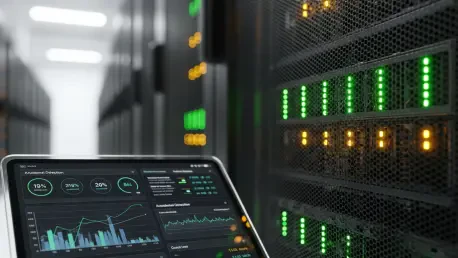

The modern enterprise infrastructure has evolved into a labyrinthine expanse of hybrid cloud environments and edge computing nodes that challenge even the most experienced network engineering teams. While marketing materials frequently herald the arrival of the fully autonomous network operations center, the reality on the ground in 2026 remains significantly more nuanced and complex. Artificial intelligence has firmly transitioned from an experimental novelty into a sophisticated operational assistant, yet it remains far from achieving the status of a solo pilot. This ongoing evolution is characterized by a strategic shift where tools are no longer evaluated solely on their algorithmic brilliance but on their ability to alleviate the cognitive burden placed on human operators. By managing repetitive diagnostic tasks and organizing massive datasets, these AI systems are transforming the chaotic atmosphere of a traditional war room into a structured environment for data-driven investigation and resolution.
The Visibility Crisis
The Barrier: Data Accuracy and Observability
The primary constraint limiting the efficacy of any artificial intelligence implementation is the inherent quality and scope of the data it is permitted to ingest during operations. Currently, a significant visibility gap persists that directly contradicts the optimistic narratives often found in vendor brochures and promotional materials. Industry reports indicate that an overwhelming majority of information technology professionals still lack total visibility into critical network segments, particularly those residing within the public cloud. If an AI model is essentially blind to certain parts of a network path, it cannot possibly offer an accurate diagnosis when an outage occurs, which inevitably leads to missed alerts or incorrect technical conclusions. This data scarcity problem creates a situation where even the most advanced algorithmic engines are restricted by the incomplete nature of their environment. Without addressing these blind spots, the promised benefits of automation remain largely theoretical.
The Impact: Cloud Blindness and Diagnostics
This persistent lack of visibility typically results in network operators losing sight of nearly a third of their total data paths across various architectural layers. Fundamental diagnostic tools often provide an incomplete picture because of security firewalls, encrypted tunnels, or asymmetric routing that distorts the actual path of data packets during transit. For an artificial intelligence model to be truly effective in a production environment, it requires a continuous and unhindered stream of telemetry from every corner of the digital infrastructure. Increasing the complexity of the AI model itself offers diminishing returns if the underlying data poverty problem is not solved as a primary objective. Consequently, organizations are finding that the effort required to clean and normalize data is more critical than the specific machine learning brand they choose. Establishing a robust telemetry foundation is now the primary prerequisite for any successful incident response transformation across the enterprise.
The Requirement: Continuous Telemetry Streams
Expanding on this need for transparency, engineering teams are now shifting their focus toward the unglamorous but vital work of instrumenting cloud-to-cloud paths and improving streaming telemetry. This transition involves moving away from legacy polling methods that provide only snapshots of network health and toward real-time push models that capture every transient event. By closing these visibility gaps, companies ensure that their AI tools have the best possible chance of producing actionable insights rather than misleading noise. Future investments are increasingly being directed toward synthetic probing and cross-layer correlation, which link network signals directly to the actual user experience. This strategy aims to discover blind spots before they result in a customer-reported outage, moving the organization toward a proactive model. Ensuring data integrity across all segments has become the most effective way to maximize the return on investment for high-end automation tools and frameworks.
The Solution: Data Normalization and Integrity
Furthermore, the evolution of network response is becoming inextricably linked to the completeness and transparency of the entire data environment. Until every data path and third-party interface is fully observable, artificial intelligence will continue to serve as a highly capable assistant rather than a primary driver. This necessitates a move away from siloed monitoring tools and toward a unified observability platform that can feed a single, high-fidelity data stream into the analysis engine. Organizations that successfully bridge the gap between physical infrastructure and cloud-native services will be the ones that derive the most value from their automation investments. The goal is to create a digital twin of the network that the AI can use to simulate changes and predict failures with high precision. As these systems mature, the emphasis will remain on ensuring that the data being analyzed is as accurate and comprehensive as possible. This commitment to data integrity will define the next phase of maturity.
Operational Realities and Technical Limits
The Advancement: Dynamic Anomaly Detection
Despite the challenges posed by data gaps, artificial intelligence has already proven to be exceptionally useful in managing the sheer volume of information generated by modern networks. One of the most significant successes in this area is the transition from static alert thresholds to dynamic anomaly detection based on historical baselines. Instead of waiting for a manual trigger or a fixed limit to be reached, the AI compares the current performance of a specific device against its own history and the behavior of similar devices in the fleet. This allows the system to identify subtle performance drift in a single router among thousands, spotting potential hardware or software failures long before they impact the end-user experience. By focusing on deviations from expected behavior rather than arbitrary numbers, teams can detect silent failures that previously escaped notice. This proactive stance is essential for maintaining uptime in highly distributed and volatile network environments.
The Efficiency: Noise Correlation and Filtering
Furthermore, artificial intelligence is effectively solving the pervasive problem of alert fatigue by correlating related signals during the onset of a major incident. When a primary fiber link fails, it often triggers a storm of hundreds of secondary alarms from downstream switches and applications that can quickly overwhelm a human operations team. Advanced algorithms can now group these signals based on network topology and precise timing, collapsing the surrounding noise into a few high-priority incidents with a single root cause. This functionality does not necessarily find the ultimate solution immediately, but it provides the human engineer with a clear and concise starting point rather than a screen full of chaotic and disconnected data points. By filtering out the distractions, these tools allow the technical staff to focus their expertise on the actual problem. This reduction in cognitive load is perhaps the most tangible benefit of AI in the modern network operations center.
The Limitation: Understanding True Causation
While artificial intelligence is excellent at identifying complex patterns within data, it continues to struggle with the deep understanding of causation required for novel scenarios. Network failures are frequently context-dependent and do not always follow a historical script or a predictable set of symptoms. An AI system trained on previous incidents might see a specific set of indicators and mislabel a new problem because it lacks a fundamental understanding of protocol behavior or the specific intent behind a configuration. This causation wall remains the most significant barrier to achieving full autonomy in network management. High-profile outages often demonstrate that what looks like a common congestion problem on the surface is actually a unique and internal configuration error that has never occurred before. Pattern-matching systems are inherently biased toward what they have seen in the past, which can lead them to suggest incorrect fixes during a unique or evolving crisis.
The Balance: Human Expertise and AI Logic
Troubleshooting the most catastrophic and unusual failures still requires an understanding of vendor-specific quirks and organizational nuances that current models cannot replicate. For now, the deep architectural knowledge and the experienced judgment of a veteran engineer remain irreplaceable when a network is facing an unprecedented disruption. These experts can draw upon their understanding of physics, hardware limitations, and specific business requirements to solve problems that baffle purely algorithmic approaches. While the AI can provide the data, the human must still provide the judgment needed to authorize a high-risk change or a complete system reboot in a crisis. The relationship between man and machine is therefore one of mutual reinforcement rather than replacement. As networks become more software-defined and complex, the need for human oversight and strategic thinking increases to ensure the network remains resilient against rare events. This balance ensures high availability.
The Implementation: Strategic Steps for Integration
To move forward, organizations successfully integrated these advanced tools by first auditing their existing telemetry pipelines to identify hidden blind spots in their cloud and edge architectures. Leaders prioritized the standardization of data formats across different vendor platforms, which allowed their AI engines to ingest a more consistent and reliable stream of information. They also invested in training their engineering teams to work alongside these systems, treating the AI as a collaborative partner that handled the heavy lifting of data aggregation while humans focused on high-level strategic decision-making. By implementing synthetic testing that simulated real-world user traffic, companies were able to validate the accuracy of their AI models in a controlled environment before deploying them in production. This approach ensured that the insights generated by the algorithms were both relevant and trustworthy. Ultimately, the transition to a more automated response framework required a fundamental shift in mindset.