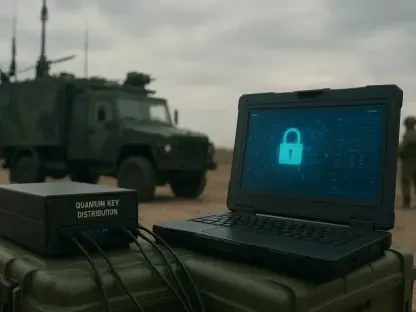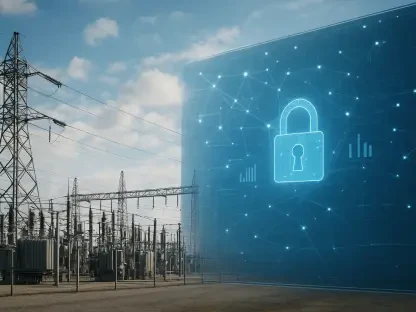

The recent discovery of sophisticated malware embedded within the programmable logic controllers of a major Midwestern utility provider has sent shockwaves through the federal agencies responsible for maintaining national stability. This incident served as a stark reminder that the specialized hardware and software governing energy, water, and manufacturing sectors are no longer shielded by their historical obscurity. As digital connectivity penetrates deeper into the factory floor and the power station, the traditional methods used to protect these assets have proven insufficient against modern, persistent threats. Federal entities such as the Cybersecurity and Infrastructure Security Agency and the Federal Bureau of Investigation have responded by advocating for a fundamental shift in strategy, focusing on the application of Zero Trust principles to Operational Technology. This transformation involves moving away from the “trust-by-default” logic that governed industrial networks for decades, replacing it with a rigorous framework where every user, device, and communication request must be continuously verified. By abandoning the outdated reliance on perimeter-based defense, industrial operators are now forced to build a more resilient posture that acknowledges the inherent risks of an interconnected global infrastructure.
The Evolution of Industrial Cybersecurity
Moving Beyond the Traditional Perimeter: The End of Isolation
For several decades, the security of industrial control systems was defined by a “castle-and-moat” philosophy that relied heavily on the concept of air-gapping. This practice involved physically isolating Operational Technology networks from the public internet and corporate IT systems to prevent unauthorized access. However, the operational requirements of 2026 demand real-time data flows, predictive maintenance capabilities, and remote oversight, which have effectively rendered complete isolation a relic of the past. As these systems became more accessible, the assumption that anything residing inside the network was inherently safe became a dangerous liability. Zero Trust addresses this vulnerability by enforcing a “never trust, always verify” policy for every interaction, regardless of whether it originates from inside or outside the traditional network boundary. This shift ensures that a single compromised device cannot lead to a complete system takeover, as every subsequent action requires explicit authorization and validation against established security policies.
The implementation of Zero Trust in industrial settings requires a departure from the static security configurations that characterized earlier eras of automation. In the past, once a technician gained access to a facility’s internal network, they often enjoyed unrestricted movement across various subsystems, from temperature sensors to high-voltage circuit breakers. This lack of internal scrutiny allowed attackers to move laterally across a site with ease, escalating their privileges until they could manipulate physical processes. Under a Zero Trust model, however, the network is no longer viewed as a single, trusted entity but rather as a collection of discrete, protected resources. Each request to access a specific controller or data stream is evaluated in real-time, considering the identity of the user, the health of the requesting device, and the context of the operation. This granular control is essential for preventing the kind of cascading failures that can occur when a seemingly minor breach in a non-critical system provides a pathway to the core components of national infrastructure.
The Risks of Interconnected Systems: IT and OT Convergence
The rapid integration of Information Technology and Operational Technology has significantly expanded the attack surface for critical infrastructure providers. Modern industrial environments now utilize the Industrial Internet of Things to drive efficiency and optimize production cycles, but this connectivity allows adversaries to pivot from relatively insecure business systems into sensitive physical control environments. High-profile attacks on global infrastructure have demonstrated how a breach originating in a corporate email system or a remote access VPN can quickly spread to the plant floor, potentially leading to catastrophic economic or safety consequences. By bridging the gap between business networks and industrial hardware, organizations have inadvertently created new vectors for ransomware and state-sponsored espionage. Zero Trust provides a necessary layer of friction in these converged environments, ensuring that the boundaries between corporate data and physical machinery are strictly enforced through continuous authentication and rigorous access controls.
Furthermore, the convergence of these two distinct worlds has highlighted the different priorities that govern IT and OT security professionals. While IT departments generally prioritize data confidentiality and integrity, OT operators focus almost exclusively on availability and physical safety. This cultural and technical divide often resulted in security gaps where legacy industrial protocols, designed without encryption or authentication, were exposed to modern network threats. Adversaries took advantage of these weaknesses to intercept unencrypted commands and send fraudulent signals to machinery, causing equipment damage or service outages. Implementing Zero Trust helps reconcile these differences by providing a unified security framework that protects the integrity of industrial processes without sacrificing the availability of the systems. By treating every command sent to a physical asset as a high-risk event that must be verified, organizations can mitigate the risks posed by their own interconnectedness and build a more robust defense against increasingly sophisticated cyber threats.
Overcoming Structural Vulnerabilities
Addressing Legacy Constraints: Technical Hurdles in Modernization
A primary hurdle in securing Operational Technology is the “flat” architecture that characterizes many legacy networks currently in operation. In these environments, there is often a complete lack of internal segmentation, meaning that once an attacker bypasses the initial firewall, they have unrestricted access to every controller, sensor, and human-machine interface in the facility. These networks frequently contain hardware that is decades old, consisting of devices that were never intended to be part of a larger digital ecosystem. Many of these legacy controllers lack the processing power and memory necessary to support modern security features, such as multi-factor authentication or robust encryption. Consequently, security teams are often forced to manage a heterogeneous environment where state-of-the-art security software must somehow coexist with hardware that predates the widespread use of the internet. This technical debt creates significant vulnerabilities that can be difficult to patch without replacing the entire infrastructure at an enormous cost.
To bridge this gap without the immediate need for a total hardware overhaul, many organizations have turned to the use of secure gateways and protective wrappers. These intermediary devices act as proxies for legacy hardware, handling the complex authentication and encryption tasks that the older controllers cannot perform on their own. This approach allows operators to bring aging assets into a Zero Trust framework by ensuring that only verified traffic from authorized sources reaches the sensitive equipment. Additionally, the transition toward Zero Trust encourages the adoption of more modern, secure versions of industrial protocols, moving away from clear-text communications that are susceptible to man-in-the-middle attacks. By layering these modern security controls over legacy foundations, industrial facilities can significantly improve their resilience against modern threats while maintaining the long-term utility of their existing physical investments. This hybrid approach represents a practical path forward for sectors like water treatment and power generation, where equipment lifecycles are measured in decades rather than years.
Safety Risks: The Human and Physical Cost of Failure
Beyond technical aging, Operational Technology environments face unique operational pressures that complicate the implementation of traditional cybersecurity measures. Unlike corporate IT systems, which can often be rebooted for security updates or taken offline for maintenance during off-peak hours, industrial systems require near-constant uptime to prevent service disruptions or dangerous physical malfunctions. In a chemical plant or a power grid, a forced reboot could lead to a loss of pressure control or a localized blackout, creating immediate safety risks for employees and the surrounding community. For this reason, security measures that carry even a slight risk of causing downtime are often sidelined in favor of maintaining operational continuity. This creates a challenging environment where critical vulnerabilities may remain unpatched for months or even years because the window for a safe maintenance shutdown never arrives. Zero Trust provides a solution by focusing on monitoring and access control rather than just reactive patching, allowing for a more flexible defense.
In these safety-critical settings, a cybersecurity failure is far more than a simple data leak; it is an event that can lead to physical destruction or the loss of human life. When an attacker gains control over a physical process, they can manipulate temperatures, pressures, or chemical compositions, turning industrial machinery into a potential weapon. The stakes of OT security are therefore fundamentally different from those of IT security, requiring a framework that prioritizes the integrity of the physical outcome above all else. Zero Trust supports this priority by ensuring that even if an attacker manages to compromise a user’s credentials, they still face multiple layers of verification before they can alter a critical process. By validating the context of every command—such as checking if a request to open a valve is consistent with the current state of the plant—Zero Trust adds a layer of logic-based protection that safeguards both the equipment and the people who depend on it. This focus on operational integrity ensures that security becomes an enabler of safety rather than a potential disruption to it.
A Framework for Operational Resilience
Core Pillars: Visibility and Identity Management
A successful Zero Trust strategy for Operational Technology must begin with comprehensive asset visibility and the establishment of a rigorous identity management system. Many organizations currently struggle to maintain an accurate and real-time inventory of every device on their network, leaving them blind to “shadow OT” or unauthorized hardware that may have been added by contractors or maintenance teams. Without knowing exactly what devices are connected and how they are communicating, it is impossible to establish a baseline for normal behavior or to detect the subtle anomalies that indicate a breach. Advanced discovery tools now allow operators to passively monitor network traffic, identifying every asset from programmable logic controllers to specialized sensors without disrupting the industrial process. Once this visibility is achieved, organizations can begin to apply identity-based access controls, ensuring that only specific, authorized personnel can interact with the most critical components of the infrastructure.
Managing identities in an OT environment requires a more nuanced approach than the simple username-and-password model used in corporate offices. Because many industrial devices cannot handle modern login requirements, the use of centralized identity providers and secure access gateways is essential to manage permissions across the entire facility. These systems allow for the implementation of the principle of least privilege, which dictates that users and devices are granted only the minimum level of access necessary to perform their specific tasks. For example, a maintenance technician might be granted temporary access to a specific turbine controller during their shift, but that access is automatically revoked once their task is complete or their shift ends. This dynamic approach to identity management reduces the risk of credential theft and ensures that a single compromised account cannot be used to move throughout the entire system. By anchoring the security framework in identity rather than network location, organizations can create a much more flexible and resilient defense.
Future Safeguards: Micro-segmentation and Beyond
To further harden the industrial environment, organizations must adopt micro-segmentation and move toward more sophisticated, automated monitoring systems. Micro-segmentation involves breaking the internal network into numerous small, isolated zones, each with its own set of access policies and security controls. This structure effectively minimizes the “blast radius” of a potential breach, as an attacker who gains access to one zone is prevented from moving laterally to others. In an industrial context, this might mean separating the control system for a water pump from the monitoring system for the filtration unit. By isolating these functions, the overall system remains resilient even if one component is compromised, ensuring that essential services can continue to be provided to the public. This approach also allows for more targeted monitoring, as security teams can focus their attention on the most sensitive zones and apply more rigorous verification for the traffic moving between them.
The transition toward a fully realized Zero Trust architecture also involves a greater focus on supply chain security and the continuous vetting of third-party vendors. As industrial systems become more software-defined, the risk of a “poisoned” update or a vulnerability in a third-party library becomes a significant concern for national security. Organizations have begun to require Software Bills of Materials for all new equipment, providing transparency into the various components that make up their critical systems. This allows for more effective risk-based patching, as operators can quickly identify which of their assets are affected by a newly discovered vulnerability. Ultimately, the journey toward Zero Trust is a phased process that evolves from initial asset discovery to the implementation of advanced, automated response capabilities. By continuously refining their security posture and embracing the principles of constant verification, industrial operators can ensure that their infrastructure remains capable of resisting the evolving threats of a digital age.
The implementation of Zero Trust within operational environments has proved to be a transformative shift in the protection of critical systems. Organizations that prioritized visibility and identity management found themselves better prepared to handle the complexities of IT and OT convergence. By adopting micro-segmentation, these entities successfully limited the impact of localized breaches and maintained the integrity of their physical processes. The move away from clear-text protocols and the integration of secure gateways provided a necessary bridge for legacy hardware, allowing older assets to meet modern security standards. Moving forward, the focus shifted toward establishing automated monitoring and rigorous supply chain vetting to stay ahead of increasingly persistent adversaries. This comprehensive strategy ultimately strengthened the resilience of the national power grid and other vital sectors, ensuring that essential services remained reliable. By treating security as a continuous process rather than a one-time project, industrial operators effectively safeguarded both their infrastructure and the public they served.