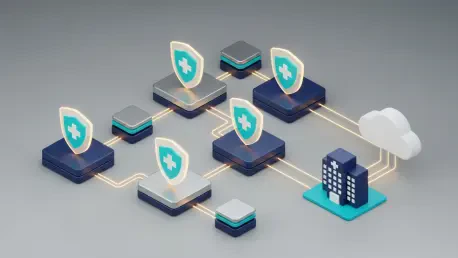

The traditional castle-and-moat approach to healthcare cybersecurity has become increasingly obsolete as hospitals transform into hyper-connected hubs where patient data flows across numerous remote sites and cloud platforms. At the recent HIMSS26 Europe conference, a significant step forward was taken with the unveiling of a strategic partnership between IGEL and Zscaler, resulting in a series of zero-trust healthcare blueprints designed to bolster clinical resilience. These blueprints offer a comprehensive framework for securing distributed care environments, ensuring that critical medical staff can maintain uninterrupted access to electronic health records even when primary IT systems are compromised. By shifting the focus from simple perimeter defense to total operational continuity, the initiative addresses the urgent need for stability in a landscape where cyber threats are a constant reality. This collaboration marks a transition toward a more robust architecture that prioritizes the availability of patient services above all else.
Integrating Specialized Endpoints: Synergies in Security
The technological foundation of this initiative relies on the tight integration of IGEL’s specialized endpoint operating system with Zscaler’s advanced cloud-based access controls. Unlike standard consumer operating systems, IGEL OS is a Linux-based, read-only system that significantly reduces the attack surface by preventing local data storage and unauthorized software installations. When paired with the Zscaler Zero Trust Exchange, the solution establishes a secure communication path that inspects every byte of traffic in real time. This ensures that sensitive health information is protected across three distinct layers: the physical user device, the encrypted connection path, and the destination application. By removing the inherent trust typically granted to local hardware, the combined architecture creates a hardened environment where clinicians can perform their duties without the constant fear of local malware infections spreading into the broader hospital network.
Beyond just technical hardening, this model successfully embeds security protocols directly into the clinical workflow rather than treating them as an external IT burden. Healthcare providers often face the challenge of navigating complex login procedures that can delay patient care, but this partnership streamlines the process through automated identity verification and policy-based access. Governance becomes a background process that monitors every interaction, ensuring that patient data remains protected regardless of whether a physician is accessing it from a surgical suite or a temporary field clinic. This holistic approach allows for a more fluid exchange of information while maintaining a strict posture of least-privileged access. By aligning security measures with the practical needs of medical professionals, the blueprints facilitate a environment where data integrity and clinical speed are no longer at odds, but rather support one another in delivering better outcomes.
Resilient Recovery: The Role of Isolated Clean Rooms
A core component of the joint strategy is the implementation of isolated recovery environments, which serve as secure “clean rooms” for medical operations during a crisis. If a hospital’s primary infrastructure falls victim to a ransomware attack, these secondary environments allow essential services to continue with minimal disruption. A key technical feature of this recovery plan is the ability of the IGEL operating system to boot directly from a secure USB drive, allowing medical staff to bypass potentially infected hard drives on existing workstations. This capability effectively transforms any piece of hardware, even one that has been compromised by malware, into a trusted terminal that can connect safely to the cloud. This immediate failover mechanism is crucial for maintaining patient safety, as it provides a reliable fallback that does not require the time-consuming process of completely wiping and reinstalling every machine in the facility.
Once the secure terminal is active, the blueprint utilizes specialized access brokering to bridge the gap between the clinician and the recovery site. Unlike legacy remote access methods that often expose internal network ports to the public internet, this system relies on outbound-only connections that keep the recovery environment invisible to external scanners and malicious actors. Every request for access is strictly verified based on the user’s identity, the health of the device, and current security policies before a connection is even established. This granular control prevents the lateral movement of malware, which is a common failure point in traditional recovery scenarios where a single breach can infect the backup systems. By maintaining a clear separation between the primary network and the recovery zone, the system ensures that medical teams have a safe, untainted space to resume critical charting and imaging tasks.
Clinical Outcomes: Aligning Security with Patient Safety
As the delivery of care moves outside the walls of the main hospital into community clinics and home-based telehealth, the potential attack surface for cybercriminals has grown significantly. The new blueprints address this expansion by replacing outdated virtual private networks with a modern zero-trust network access model that does not grant broad network entry. Instead of assuming a user is safe because they are on a specific network, the system requires continuous authentication for every individual resource being accessed. This ensures that a remote clinician working from a home office receives the same level of enterprise-grade protection as if they were inside the hospital’s data center. By moving security to the cloud edge, the solution eliminates the performance bottlenecks often associated with legacy VPNs, providing a faster and more reliable experience for medical staff who depend on real-time data to make life-saving decisions.
Health systems transitioned toward these zero-trust frameworks to better align with federal safety standards and the evolving demands of regulatory bodies like HIPAA. Organizations prioritized the adoption of these blueprints as a means to mitigate the operational risks that occurred during major security incidents in previous years. IT leaders implemented these scalable packages to reduce the administrative weight on their staff, who were previously overwhelmed by managing disparate security tools. It was widely recommended that providers audit their existing legacy systems and begin phasing out insecure protocols in favor of identity-centric access models. It became clear that investing in resilient endpoint management was not just a technical upgrade but a fundamental requirement for patient safety. Future success depended on the ability to maintain clinical workflows regardless of the external threat landscape, a goal that these joint blueprints effectively supported by providing a clear and actionable roadmap for modern recovery.