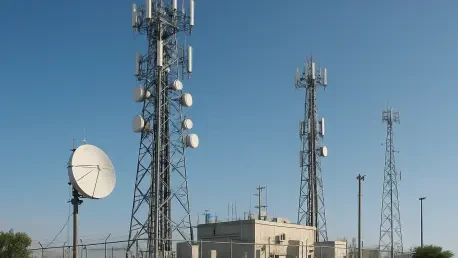
The realization that a foreign intelligence service successfully embedded its digital fingerprints within the core switching centers of major American telecommunications providers has sent shockwaves through both the public sector and private industry circles. This breach, attributed to the group

Digital privacy advocates have long championed Virtual Private Networks as a primary defense against intrusive tracking, yet recent findings suggest that Microsoft’s Windows operating system utilizes a persistent Global Device ID that remains effectively visible to telemetry servers regardless of

Securing the immense torrent of sensitive information that defines modern business operations requires a fundamental departure from traditional perimeter-based defense strategies that focus primarily on network boundaries. While encryption has long served as the standard for protecting information

The rapid evolution of autonomous AI agents has outpaced the slow-moving security protocols of the past decade, leaving modern enterprises vulnerable to a new breed of high-velocity digital threats. Act Security has recently emerged from its strategic development phase with a significant

The sudden malfunction of a climate control system or the unexpected freezing of electronic badge readers in a high-rise office complex no longer signals a mere mechanical failure but often indicates a sophisticated digital intrusion. Modern commercial real estate has undergone a radical

The traditional buffer zone that once allowed cybersecurity teams to breathe between a vulnerability disclosure and its exploitation has effectively vanished as artificial intelligence systems now synthesize weaponized code in the time it takes to brew a pot of coffee. The cybersecurity landscape