
For nearly two decades, the conventional wisdom dictated that connecting to a public Wi-Fi network at a local coffee shop or a busy international airport without an active Virtual Private Network was a reckless invitation for identity theft and data breaches. This pervasive narrative was heavily

The sudden proliferation of OpenClaw across corporate networks represents a seismic shift in how enterprises deploy artificial intelligence, moving away from simple chat interfaces toward fully autonomous agents that interact directly with critical infrastructure. Since gaining widespread traction

The landscape of digital warfare is undergoing a radical transformation as the era of static, pre-programmed malware gives way to a new generation of autonomous agents that possess the ability to reason and adapt in real time. Recent collaborative research conducted by the University of Toronto,

The traditional castle-and-moat approach to healthcare cybersecurity has become increasingly obsolete as hospitals transform into hyper-connected hubs where patient data flows across numerous remote sites and cloud platforms. At the recent HIMSS26 Europe conference, a significant step forward was
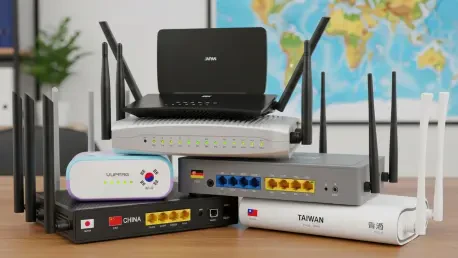
The global interconnectedness of modern telecommunications infrastructure has reached a point where the distinction between domestic and foreign hardware is increasingly blurred by complex manufacturing cycles. As major internet service providers navigate a landscape defined by rapid technological

A single compromised credential in a traditional legal network can expose decades of privileged client secrets, forcing modern firms to reconsider the inherent vulnerabilities of legacy connectivity. Law firms historically relied on the physical security of their offices, but the shift toward