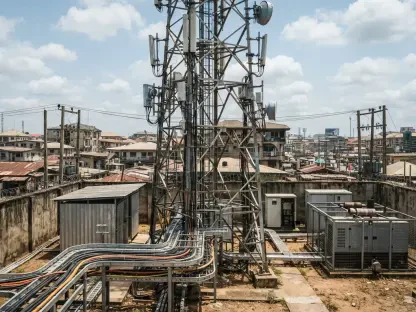

AI agents are now capable of identifying network degradations before they impact users, recommending corrective actions to maintain optimal performance without human intervention. This capability is the cornerstone of the strategic alliance between NVIDIA and Nokia, representing a profound transformation in telecommunications from static 5G infrastructure to dynamic, AI-native computing platforms. By merging high-performance computing with mobile connectivity, this initiative brings intelligence closer to the end-users, industrial machines, and enterprise ecosystems. The partnership utilizes NVIDIA’s accelerated hardware and Nokia’s sophisticated software to turn traditional mobile sites into multi-purpose hubs. These environments are capable of running complex network functions alongside heavy AI workloads, effectively bridging the gap between data processing and delivery. This architectural shift ensures that the network is no longer just a pipe for data but an intelligent entity that reacts to the needs of modern digital society.
The Milestone: Commercial AI-RAN Deployment
A pivotal moment in this technological evolution was reached when T-Mobile conducted the world’s first AI-RAN call on a live commercial network in Bellevue, Washington. This successful demonstration validated the practical application of the NVIDIA Aerial RAN Computer platform and served as a proof of concept for the industry. The technical architecture involved in this milestone included Nokia’s CUDA-accelerated RAN software and massive MIMO radio technology integrated into a 5G Standalone core. By using a standard commercial smartphone, T-Mobile proved that AI-native infrastructure is a functional reality capable of enhancing existing services without specialized consumer hardware. This achievement showed that software-defined networks can manage radio resources with a level of precision previously thought impossible. The successful call marked the transition of AI-RAN from a theoretical laboratory exercise to a viable solution for large-scale urban mobile deployments.
The technical significance of the Bellevue trial extends beyond the simple completion of a call, as it highlights the efficiency of the NVIDIA Aerial RAN Computer platform. This system allows for the offloading of heavy processing tasks to dedicated GPUs, which significantly reduces the burden on traditional central processing units. Nokia’s software, fine-tuned for the CUDA architecture, ensures that these processes occur with minimal latency and maximum throughput. As the industry moves further into the implementation of 5G Standalone cores, the ability to integrate AI directly into the radio access network becomes a competitive necessity. This approach allows operators to upgrade their capabilities through software updates rather than expensive hardware overhauls. Consequently, the collaboration between NVIDIA and Nokia has established a new benchmark for how mobile networks are built, maintained, and scaled to meet the growing data demands of an increasingly connected world.
Technical Synergy: Hardware and Spectrum Efficiency
The convergence of connectivity and compute is the primary theme driving this shift, as AI-RAN architecture collapses previously separate silos into a unified platform. One of the most immediate benefits is the drastic improvement in spectrum efficiency, where AI algorithms optimize radio wave usage in real-time to increase capacity. This means that operators can support more devices and higher data rates within their existing frequency bands, maximizing the value of their spectrum licenses. Furthermore, by moving AI processing to the network edge, latency is virtually eliminated, which is a prerequisite for time-sensitive applications like autonomous robotics and real-time language translation. This intelligence at the edge allows for instantaneous decision-making that would be impossible if data had to travel to a distant cloud server. The result is a network that is not only faster but also more responsive to the specific requirements of industrial and consumer applications.
To support these high-capacity demands, NVIDIA introduced specialized hardware configurations under the MGX umbrella, such as the MGX 2U and 4U systems. These servers are specifically engineered for the rigorous requirements of centralized radio sites, where power efficiency and high performance must coexist. Powered by NVIDIA RTX PRO 6000 Blackwell Server Edition GPUs, these systems provide the necessary computational power to handle massive amounts of network and AI data simultaneously. Global server manufacturers, including Dell Technologies, Quanta Cloud Technology, and Supermicro, are already working to bring these AI-optimized systems to the market. These hardware solutions offer a choice between x86 architectures and NVIDIA Vera CPUs, providing flexibility for different operator needs. This robust hardware foundation is what allows the vision of an AI-native network to become a reality, providing the horsepower needed to run sophisticated generative models and real-time analytics.
The Future: Global Adoption and Autonomous Operations
The momentum behind AI-RAN is a global phenomenon, with approximately 20 major telecom operators currently collaborating with Nokia and NVIDIA to deploy these solutions. In Europe, the progress is particularly visible, with BT preparing for live trials in the United Kingdom to focus on fault detection, while Elisa has executed the first over-the-air AI-RAN trial in Finland. Furthermore, the integration of generative AI models like NVIDIA Nemotron into network management has revolutionized how companies handle infrastructure lifecycles. These models enable automated fault discovery and predictive maintenance, allowing the network to heal itself by identifying degradations before they impact the user experience. By shifting from reactive to proactive management, telecom operators have ensured maximum uptime. This global trend confirms that the industry is moving away from generic connectivity toward specialized, intelligent services for healthcare and public safety.
The synthesis of NVIDIA’s computing power and Nokia’s networking expertise effectively turned the telecom network into a distributed computer. This shift toward AI-RAN was not merely an incremental upgrade but a fundamental redesign of digital service delivery. By combining power, fiber optics, and spectrum with advanced AI models, telecom operators positioned themselves as the backbone of the current industrial revolution. The transition proved that the synergy between AI and telecommunications was the essential foundation for global digital infrastructure. Moving forward, organizations should prioritize the integration of localized AI processing to reduce data backhaul costs and enhance security. Future considerations will likely involve the development of specialized AI agents tailored to specific vertical industries. As more operators transition to full commercial deployments, the focus must remain on scaling these technologies to ensure equitable access to high-performance connectivity.