
As of the current landscape in 2026, nearly four out of five industrial organizations have integrated some form of autonomous physical agent into their operational workflow, marking a definitive end to the era of purely digital intelligence. The Physical AI represents a significant advancement in the robotics and automation sector, moving beyond the confines of screens and data centers into the messy, unpredictable reality of the physical world. This review will explore the evolution of the technology, its key features, performance metrics, and the impact it has had on various applications. The purpose of this review is to provide a thorough understanding of the technology, its current capabilities, and its potential future development.
The rapid proliferation of these systems is not merely a matter of convenience but a response to deep-seated labor shortages and the increasing demand for hyper-efficient logistics. By imbuing mechanical forms with advanced reasoning capabilities, industries have unlocked a level of productivity that was previously unattainable through traditional automation. However, this transition brings with it a complex set of safety considerations that go far beyond the simple “emergency stop” buttons of the past. As we analyze the current state of Physical AI, it becomes clear that the success of these systems depends less on their raw power and more on their ability to interpret and respect the nuances of human environments.
Introduction to Physical and Embodied AI
Physical AI refers to artificial intelligence systems that gather, process, and utilize data in real-time within a physical context, effectively acting as the nervous system for mechanical hardware. While some systems, like AI-driven traffic control, operate without a singular physical form, “embodied AI” refers to independent platforms such as autonomous vehicles and warehouse robots. These technologies have emerged as a bridge between digital intelligence and physical labor, evolving from static industrial machines into dynamic agents capable of navigating complex, human-centric environments. This distinction is vital because it changes the nature of the AI from a passive advisor into an active participant with the kinetic energy to alter its surroundings.
The unique value of embodied AI lies in its ability to handle “edge cases”—those unexpected moments like a spilled box in a warehouse or an erratic pedestrian on a sidewalk—which would paralyze a non-intelligent machine. By utilizing sophisticated onboard computing, these agents move away from rigid pre-programmed instructions toward a model of continuous perception and action. This shift matters because it allows for a more decentralized operational model where robots do not need a central brain to tell them every move, thereby reducing latency and increasing the resilience of the entire system.
Categorization of Robotic Systems and Their Components
Traditional Industrial Robots and Fixed Automation
Traditional robots are characterized by limited sensor input and repetitive motion paths, serving as the backbone of heavy manufacturing for decades. They prioritize high-speed precision and heavy payloads within controlled environments, often operating behind physical barriers to ensure human safety. Their primary performance metric is reliability in execution, though they lack the decision-making flexibility found in newer AI-driven counterparts. These machines are essentially high-performance tools that excel at consistency but fail immediately when a single variable in their environment changes.
The limitation of these systems is their “blindness” to the context of their work; they will continue to swing a mechanical arm with several tons of force even if an unauthorized person enters their path. This necessitates a rigid safety infrastructure that is expensive to maintain and difficult to reconfigure. While they remain essential for tasks like high-volume automotive assembly, their lack of adaptability makes them increasingly obsolete in the modern era of flexible manufacturing, where production lines must change daily rather than annually.
Embodied AI and Autonomous Mobile Platforms
Embodied AI platforms integrate advanced sensors to see, predict, and avoid obstacles in real-time, representing a fundamental departure from fixed automation. Unlike traditional systems, these platforms possess high computing power and independent decision-making capabilities, allowing them to function in chaotic or changing settings such as logistics hubs or surgical suites. The implementation of Simultaneous Localization and Mapping (SLAM) and sensor fusion—combining LiDAR, depth cameras, and ultrasonic sensors—allows these robots to build a mental model of their surroundings that is updated dozens of times per second.
What makes this implementation unique is the move toward probabilistic safety. Instead of just stopping when something is in the way, these platforms calculate the likelihood of a human’s future movement and adjust their own velocity or path accordingly. This proactive approach minimizes downtime and allows robots to move through crowded spaces without causing a constant “gridlock” of halted machinery. However, the complexity of these algorithms also introduces new risks, as the AI might occasionally misinterpret a person’s intent, leading to “near-miss” incidents that are difficult to diagnose in the software logs.
Collaborative Robots (Cobots) for Human-Centric Tasks
Cobots are a specialized class of embodied AI designed to work directly alongside humans without the need for safety cages. They feature specific technical safety components, including torque sensing, power-limiting mechanisms, and rounded physical forms to minimize the risk of injury during contact. Their significance lies in their ability to augment human labor in shared workspaces, taking over repetitive or ergonomically taxing parts of a job while leaving the complex decision-making to the human operator. This symbiotic relationship is the defining characteristic of the modern shop floor.
Unlike their heavy industrial cousins, cobots are designed with “softness” in mind, both in terms of their physical materials and their software control loops. If a cobot feels an unexpected resistance—such as a human hand—it immediately dissipates its kinetic energy through back-drivable motors. This makes them the ideal choice for small-to-medium enterprises that lack the space for massive safety enclosures. The trade-off, however, is a lower payload capacity and reduced speed, as the laws of physics dictate that a robot safe enough to touch cannot also be powerful enough to move heavy steel at high velocities.
Modern Trends in Human-Robot Collaboration
The industry is currently seeing a massive shift toward taking human-robot collaboration to the next level, with nearly 80% of organizations engaging in some form of physical AI deployment. One of the most significant emerging trends is the integration of conversational AI into robotic platforms to improve human-machine communication. This allows workers to give verbal commands or receive status updates in natural language, reducing the technical barrier to entry for managing these machines. It transforms the robot from a mysterious piece of hardware into a predictable colleague that can explain why it chose a certain path or why it has paused its operation.
Moreover, the development of bipedal or humanoid robots designed to navigate infrastructure built specifically for humans has accelerated. By mimicking the human form, these robots can climb stairs, open doors, and use existing tools without requiring companies to redesign their entire facilities. This trend toward “form-factor compatibility” is a major differentiator in the market, as it allows for the deployment of AI agents in legacy buildings that were never intended for automation. These humanoid platforms represent the pinnacle of current engineering, though they remain some of the most difficult systems to stabilize and secure.
Real-World Applications and Use Cases
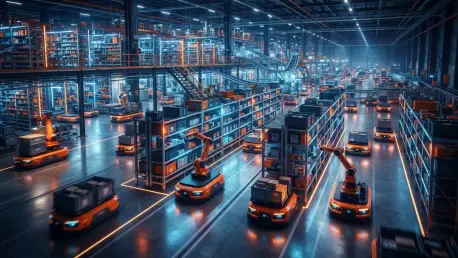
Physical AI is being deployed across diverse sectors, including manufacturing, where it handles heavy-duty assembly with a newfound level of environmental awareness. In logistics, autonomous mobile robots (AMRs) manage warehouse inventory by dynamically rerouting themselves based on real-time order priority and floor congestion. This has revolutionized the “last mile” of internal logistics, cutting the time between an order being placed and being ready for shipment by nearly half in some high-tech fulfillment centers. The data collected by these robots also provides managers with a heat map of warehouse activity, highlighting bottlenecks that were previously invisible.
In healthcare, surgical robots and patient-monitoring systems demonstrate the technology’s precision and delicate touch. These systems allow for minimally invasive procedures that reduce recovery times and human error. Unique use cases are also appearing in agriculture for automated weeding and in the hospitality sector for guest services and facility management. For instance, AI-driven agricultural platforms can identify and neutralize individual weeds with lasers or targeted sprays, drastically reducing the need for broad-spectrum chemicals. These applications prove that Physical AI is not just about replacing labor; it is about performing tasks with a level of granularity that humans simply cannot match.
Technical Challenges and Safety Vulnerabilities
Physical Hazards and Mechanical Limitations
Embodied AI faces significant hurdles regarding unexpected human contact and stability loss. Bipedal robots, in particular, require constant power and complex inertial control to remain upright, making them vulnerable to mechanical fatigue or sudden software glitches. A loss of balance in a 300-pound humanoid robot is a significant safety event that current damping systems struggle to fully contain. Furthermore, the “pinch points” in robotic joints remain a physical hazard that even the most advanced AI cannot completely eliminate through software alone.
Sensor disruption caused by environmental factors like vibrations, smoke, or bright light remains a technical obstacle that can lead to system failure. If a robot’s vision system is blinded by a sudden glare from a warehouse skylight, it may briefly lose its ability to track nearby humans. This “perceptual gap” is a primary focus for engineers who are trying to build redundancy into the systems by using different types of sensors that fail in different ways, ensuring that the robot always has at least one “eye” open to the world.
Cybersecurity and AI Model Integrity
Since these platforms rely on machine learning and network connectivity, they are susceptible to data bias, model drift, and cybersecurity exploits. A software vulnerability in a physical AI system is not merely a data risk but a potential physical threat to humans in the vicinity. For example, if a hacker gains control of a mobile robot’s navigation system, they could turn a productive tool into a kinetic weapon. This necessitates a “security-by-design” approach where the safety-critical systems are physically isolated from the general-purpose AI models.
Model drift is another insidious problem, where the AI’s performance degrades over time as the physical environment changes in ways the training data did not predict. A robot that was safe in a quiet, organized factory might become erratic in a crowded, noisy one. This matters because it requires constant monitoring and retraining of models, creating an ongoing maintenance burden that many organizations are not yet prepared to handle. The integrity of the AI model is now just as important as the integrity of the steel frame it inhabits.
Regulatory and Standardization Gaps
The rapid evolution of the technology has outpaced the development of engineering standards, leaving many companies to operate in a regulatory gray area. Traditional safety frameworks, such as physical cages, are often inapplicable to mobile AI that must share the same floor space as people. Current efforts are focused on ratifying new standards, such as ISO 25785-1 for bipedal stability and updated ANSI/A3 guidelines for mobile industrial robots. These new rules attempt to quantify “safe behavior” in a way that is mathematically provable, which is a massive challenge for systems based on black-box neural networks.
Furthermore, the lack of a unified global standard means that a robot certified as safe in one region may not meet the requirements in another, complicating the global supply chain for AI hardware. The move toward “functional safety” means that manufacturers must now prove that their software is as reliable as a physical brake. This shift in the burden of proof is changing how robots are developed, with an increasing percentage of the R&D budget being spent on simulation and verification rather than physical prototyping.
Future Outlook and Technological Trajectory
The future of Physical AI lies in achieving a seamless, safe coexistence between humans and machines through more advanced cognitive architectures. Breakthroughs in ultra-low-latency sensor fusion and more robust functional safety standards will likely lead to widespread adoption in public spaces, far beyond the controlled environments of factories. We are moving toward a period where robots will possess “common sense” regarding physical laws, understanding that a falling object needs to be caught or that a person carrying a heavy load should be given the right-of-way automatically.
Long-term, the focus will shift from simple task execution to sophisticated social awareness, allowing robots to understand nuanced human cues and social norms. This will be essential for the integration of AI into eldercare and service industries, where the robot must be more than just a tool; it must be a polite and predictable presence. As the “intelligence” part of AI becomes a commodity, the “physical” part—the actuators, batteries, and safety sensors—will become the primary differentiator for the leading companies in the sector.
Conclusion and Summary of Findings
The review of Physical AI as of 2026 revealed a technology that successfully migrated from experimental labs into the core of the global economy. It demonstrated that while the productivity gains were undeniable, the shift toward autonomous, embodied agents created a new frontier of risk that necessitated a fundamental rethink of industrial safety. The analysis showed that the most successful implementations were those that treated safety not as a bolt-on feature but as a core component of the AI’s decision-making process. The data also indicated that the industry’s reliance on traditional safety metrics was no longer sufficient for systems that operated with high degrees of autonomy.
To move forward safely, organizations must adopt dynamic risk assessment tools that can adapt as quickly as the AI itself. Engineers recognized that continuous monitoring for model drift and cybersecurity vulnerabilities had to become as routine as oiling a mechanical joint. The future will likely see the rise of “safety-rated AI,” where neural networks are subjected to the same rigorous stress testing as aircraft components. Ultimately, the maturity of Physical AI will be judged by its invisibility—when these machines can move among us so safely and predictably that we no longer stop to watch them work. This past period of rapid growth provided the foundation; the next phase must prioritize the refinement of the human-machine interface to ensure that progress never comes at the expense of safety.