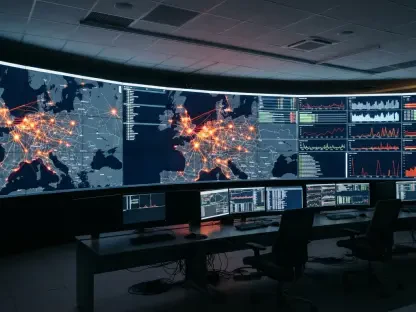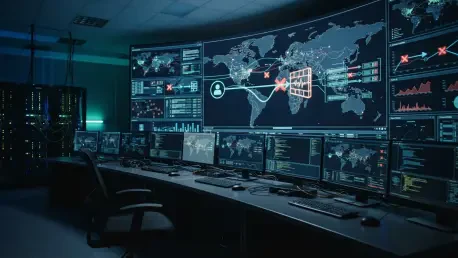

Effective circumvention in the current landscape depends more on the ability to blend into background noise than on the complexity of the encryption algorithm. While many users believe that a 256-bit AES cipher provides an impenetrable shield, they often overlook the fact that the very existence of encrypted traffic can be a liability in a monitored network environment. Modern firewalls and deep packet inspection engines are no longer concerned with what a message says; they are increasingly focused on how that message is delivered and what characteristics its transport medium exhibits. This fundamental shift has transformed the privacy landscape into a game of mimicry and stealth, where the most robust encryption matters little if the connection itself stands out like a beacon against the backdrop of standard internet protocols. As 2026 progresses, the ability to remain hidden requires a sophisticated understanding of the digital signals left behind during every session. This process begins with the recognition that every packet carries metadata that forms a distinct behavioral pattern used to terminate access before the first byte of actual data is processed by the server.
Identifying the Technical Signature
Basic Filtering and Port Analysis
Commercial VPN providers typically operate out of massive, well-known data centers that offer the high bandwidth required for their global user bases. However, this centralization serves as a significant vulnerability because network administrators and state actors can easily cross-reference these IP ranges against known database providers. When a connection request originates from a data center known to host proxy services, the firewall can pre-emptively drop the packet without needing to inspect its content at all. This method is particularly effective for streaming platforms that enforce regional licensing agreements, as they can block access to thousands of users simultaneously by simply blacklisting a single subnet. This strategy requires minimal computational overhead, making it the first line of defense for any organization seeking to restrict bypass tools. Because these IP addresses often remain static or follow predictable patterns, the task of maintaining these blocklists has become automated and highly efficient within modern security infrastructures.
Beyond simple IP blocking, network operators analyze the specific entry points or ports used by data packets to navigate the internet. Most traditional VPN protocols have established default behaviors that make them easy targets for even rudimentary filtering systems. For instance, the widely used OpenVPN protocol typically defaults to UDP port 1194, while the more modern WireGuard protocol is designed to operate exclusively over UDP, often on port 51820. If a network administrator chooses to block all UDP traffic or restricts communication to essential ports like 80 for HTTP and 443 for HTTPS, these standard VPN configurations will immediately fail to establish a handshake. While some users attempt to circumvent this by rerouting their VPN traffic through port 443 to mimic standard web traffic, modern firewalls are rarely fooled by port numbers alone. They utilize stateful inspection to ensure that the traffic flowing through that port actually matches the expected protocol, effectively identifying and stopping non-HTTPS traffic regardless of the designated port.
Deep Packet Inspection: The Structural Fingerprint
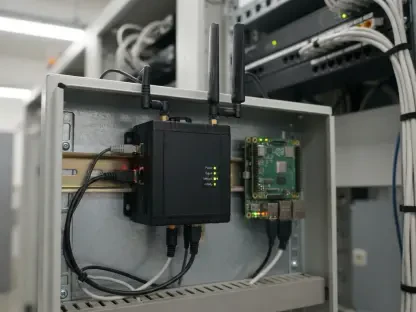
Deep Packet Inspection represents a more sophisticated tier of network management that involves a granular analysis of the internal structure of individual data packets as they pass through a gateway. Unlike basic firewalls that only look at the envelope of a message, DPI engines examine the metadata and the specific sequences of bytes that define a protocol. Even though the actual payload of a VPN packet is encrypted and unreadable, the process of establishing that encrypted tunnel involves a series of unencrypted or predictable exchanges. These exchanges possess unique markers that act like a digital fingerprint, allowing the hardware to recognize the signature of a specific VPN service in real-time. This capability is now integrated into standard enterprise-grade hardware, enabling schools, corporations, and governments to enforce strict traffic policies with high precision. The accuracy of these engines allows them to distinguish between different types of encrypted traffic, such as banking data and proxy tunnels, based on their inherent construction.
The effectiveness of packet inspection is best illustrated by how it handles modern high-performance protocols like WireGuard. Research has confirmed that despite its lightweight and secure design, WireGuard is highly susceptible to identification because its handshake messages have fixed, predictable sizes that are easily recognized by automated systems. Specifically, the initiation message is always 148 bytes, and the response is consistently 92 bytes. A DPI engine can be programmed to look for this exact sequence of packet sizes occurring between two endpoints; when it sees this pattern, it can be nearly certain that a VPN connection is being attempted. OpenVPN exhibits similar vulnerabilities through its specific header structures and the way it manages session renegotiations over time. By focusing on these structural constants rather than the encrypted data itself, censors can maintain a high success rate in blocking these services. This creates a scenario where the cryptographic strength of the protocol becomes irrelevant because the shape of the communication provides the information needed.
Behavioral Analysis and Active Suppression
TLS Fingerprinting and Probing: Verifying the Source
To combat the blocking of standard VPN ports, many providers began wrapping their traffic in Transport Layer Security to make it appear as standard HTTPS browsing. However, this led to the development of TLS fingerprinting, a technique that analyzes the unique way different applications negotiate their encrypted connections. Every software client has a distinct way of introducing itself to a server during the initial handshake, offering different lists of cipher suites and extensions in a unique, identifiable order. A sophisticated firewall can compare the fingerprint of an incoming connection against a comprehensive database of legitimate software signatures. If a connection claims to be a standard web browser but its TLS handshake parameters do not match any known browser profile, the system flags it as a potential proxy or unauthorized tunneling tool. This method allows administrators to identify automated traffic that attempts to hide within the encrypted stream, ensuring that only verified applications can maintain a stable connection to the outside web.
Active probing is a more aggressive and proactive form of suppression that goes beyond passive observation to verify the nature of a suspicious server. When a firewall identifies a connection to an unfamiliar IP address that looks like a VPN, it can initiate its own probe by sending a connection request to that same destination. The censor’s system acts as a standard client and attempts to interact with the suspected server to see how it responds. If the server identifies itself as a VPN gateway or fails to provide the expected response of a standard web server, the firewall immediately blacklists the IP address for the entire network. This technique is particularly effective against protocols that are designed to be responsive, as their very willingness to accept new connections becomes their undoing in a monitored environment. This turns the server’s availability into a liability, forcing developers to create stealth servers that only respond when they receive a specific, secret knocking sequence from a verified user, thereby avoiding detection.
The Problem of Entropy: The Danger of Randomness
A significant paradigm shift occurred in network censorship when authorities realized that the absence of a signature is itself a signature. For years, the standard approach for bypassing firewalls was to use obfuscation to make traffic look like completely random noise, a technique often referred to as high entropy. However, on the modern internet, almost no legitimate traffic is truly random because nearly all authorized protocols, from HTTPS to SSH, begin with a highly structured and recognizable handshake. Consequently, advanced firewalls now implement entropy rules that exempt known, structured traffic and treat anything that looks like pure noise as a high-probability VPN or proxy. By targeting the lack of a recognizable fingerprint, censors have successfully identified and blocked tools that were specifically designed to be invisible. This reversal of logic means that highly encrypted, featureless data streams are now more likely to be flagged than those that successfully mimic the predictable patterns of common web traffic.
Modern networks also utilize heuristic and statistical modeling to identify VPN usage based on the timing and volume of data transfers over a specific period. Even when the contents and fingerprints are obscured, the rhythm of a VPN connection often differs significantly from that of standard web browsing. A typical user browsing the web produces a bursty traffic pattern characterized by short requests followed by varying amounts of downloaded data. In contrast, a VPN tunnel often maintains a more consistent and long-lived connection with different packet intervals and sizes, especially during data-heavy tasks. Machine learning algorithms integrated into 2026-era network hardware can analyze these flow statistics to assign a probability score to a connection. If the traffic pattern deviates too far from the expected behavior of a human user, the connection can be throttled or reset, even if the firewall cannot definitively prove that a VPN is being used. This statistical approach ensures that even the most obfuscated traffic remains subject to intense scrutiny.
Strategy for Bypassing Modern Detection
The evolution of network monitoring throughout the recent years proved that the traditional model of VPN privacy was insufficient against modern, behavior-based detection systems. Censors and network administrators successfully transitioned from simple filtering to complex heuristic analysis, making it clear that encryption alone could not guarantee anonymity in a hostile environment. For those seeking to maintain digital privacy, the focus shifted toward using tools that prioritized mimicry and protocol wrapping over raw cryptographic strength. Users found that the most reliable connections were those that utilized identity borrowing and stealth protocols to blend into the daily traffic of the global internet. Moving forward, individuals and organizations should prioritize using protocols that support dynamic fingerprinting and avoid those with fixed packet sizes or predictable handshakes. It became evident that staying ahead in this metadata arms race required a proactive approach to traffic shaping and a constant awareness of how connection patterns appear to the watchers. By adopting these advanced mimicry techniques, users successfully maintained access to a free and open internet despite the increasing sophistication of automated surveillance systems.