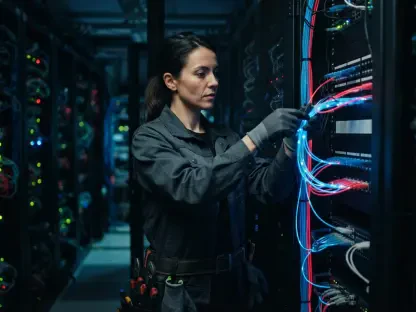

The rapid generation of software through artificial intelligence creates a misleading sense of security regarding the actual reliability of hardware-software integrations. In the current technological climate of 2026, the concept of vibe coding has shifted from a novelty into a pervasive development strategy that prioritizes aesthetic completeness over mechanical robustness. This approach relies on large language models to interpret high-level intentions, producing code that appears functional but frequently lacks the deep architectural considerations required for complex environments. While an AI can instantly generate a beautiful interface for an electric vehicle charging station or a smart home hub, it often misses the nuanced failure states inherent in physical hardware. Consequently, teams frequently find themselves with a product that “vibes” perfectly during a controlled demonstration but fails catastrophically when subjected to the unpredictable variables of the real world, such as intermittent network connectivity or hardware latency.
The Illusion of High-Speed Development
Modern artificial intelligence tools have significantly lowered the technical entry barriers for product creation, allowing small teams to produce functional prototypes in just a few hours. This speed creates a dangerous false sense of progress, as the visual “vibe” of a product can be perfected long before any of the actual engineering challenges associated with hardware integration are addressed. In the realm of connected products, the software interface is rarely the primary technical hurdle; instead, the difficulty lies in the invisible integration with external hardware and legacy infrastructure. When a development team focuses on the speed of construction provided by AI, they often neglect the rigorous stress testing needed for low-level communication protocols. This results in a product that looks sophisticated on a smartphone screen but remains fundamentally incapable of managing the messy, asynchronous realities of hardware-to-software signaling, which ultimately leads to a breakdown in the core user experience.
The rapid pace of vibe coding often ignores the accumulation of technical debt that occurs when foundational logic is generated rather than intentionally architected. In complex ecosystems, every line of code must account for hardware specificities, such as power-saving modes or sensor calibration drift, which generative models rarely prioritize without highly specific prompting. Building a product through high-level prompts often bypasses the essential phase of discovery where engineers uncover the limitations of the physical components they are controlling. This shortcut leads to a superficial level of functionality that crumbles under edge cases that were never explicitly described to the AI. As the industry moves forward from 2026 to 2028, the most successful engineering organizations will likely be those that treat AI as an accelerant for documentation and boilerplate, while maintaining a strict, human-led focus on the underlying physical logic that governs how software interacts with the tangible world.
Navigating Systemic Complexity and Reliability
In complex networks like smart energy grids or autonomous logistics hubs, failures typically manifest in the “spaces between systems” rather than within the central codebase itself. For example, a script generated via AI might flawlessly handle a financial transaction on the server side, but it cannot inherently account for conflicting status updates sent by different hardware operators at the edge. This systemic friction occurs when multiple independent entities must synchronize their data in real-time, a task that requires more than just syntactically correct code. Vibe coding tends to treat these external systems as reliable APIs, ignoring the reality that hardware often provides inconsistent or delayed information. When the software lacks the built-in intelligence to reconcile these discrepancies, the entire system loses reliability. The challenge is not just processing data faster, but creating a resilient layer of logic that can navigate the operational noise generated by thousands of disparate, often uncalibrated, physical devices.
Artificial intelligence currently lacks the contextual judgment required to determine which data source represents the “truth” when different systems provide conflicting information. In a connected ecosystem, a cloud platform might receive one status from a local sensor and a completely different one from a regional gateway. A developer using generative tools might create a simple priority logic, but this often fails to account for the environmental nuances that a human engineer would recognize, such as a sensor that is prone to overheating or a gateway with known firmware bugs. This inability to perceive the physical context of the data leads to a fragile architecture where the software makes decisions based on incorrect assumptions. While vibe coding can significantly accelerate the development of data processing pipelines, it does not provide the critical oversight necessary to ensure that the data being processed is actually accurate. High-quality logic is useless if it is applied to faulty premises, making contextual awareness a non-negotiable requirement.
The Limits of Universal Industry Standards
Even when industry standards like Matter or the Open Charge Point Interface are employed to promote interoperability, they do not serve as a universal solution for product reliability. A protocol is only as effective as its most flawed implementation, and different manufacturers often interpret the same technical specifications in divergent ways. This variability creates a landscape where “standardized” devices still struggle to communicate effectively, leading to a long chain of potential failure points. Vibe coding often assumes that if a protocol is followed, the system will work as intended, but real-world engineering requires accounting for these subtle deviations in vendor behavior. AI tools are excellent at generating localized logic that follows a specific set of rules, but they are not yet capable of managing the high-level orchestration required to bridge the gap between fragmented ecosystems. Success in 2026 requires a deep understanding of these implementation quirks, which cannot be captured by a simple generative prompt or a polished visual interface.
The chain of handoffs required for a single user action in a connected product is often incredibly complex, involving multiple layers of authorization, hardware handshakes, and external payment gateways. A single error at any point in this sequence can break the entire user experience, yet vibe coding often focuses on the “happy path” where everything functions perfectly. Building for reliability means anticipating every possible point of failure in that chain and designing graceful recovery mechanisms for each one. For instance, if a vehicle fails to authorize a charge due to a microscopic latency spike in a third-party API, the software must be able to retry or provide a clear, actionable alternative to the user. Generative tools tend to overlook these defensive programming requirements in favor of producing a working demonstration quickly. Consequently, products built this way often feel “flaky” to the end user, as they lack the robust error-handling logic that characterizes professional-grade engineering in the 2026 tech market.
Prioritizing Data Integrity and User Trust
A connected product is fundamentally only as useful as the quality of the data it provides, and incorrect information breaks user trust almost immediately. Whether it is a navigation application leading a driver to a non-existent charging station or a security sensor reporting a false status update, the result is a failure of the product’s core promise. Artificial intelligence can process and display poor-quality data at lightning speed, but it cannot verify the physical accuracy or completeness of that information without human-curated verification processes. The human element of auditing data sources and verifying physical hardware states remains a vital necessity that cannot be replaced by automated code generation or aesthetic design. As teams look toward development cycles from 2026 to 2028, they must realize that no amount of vibe coding can compensate for a lack of data integrity. Providing a high-quality user experience requires a commitment to data accuracy that goes far beyond what can be achieved through rapid software prototyping and generic AI-generated logic.
The shift toward prioritizing system reliability and user empathy became the definitive characteristic of successful product development during this period. Organizations that moved beyond the superficial allure of vibe coding recognized that the primary responsibility of a team was to absorb technical complexity on behalf of the customer. They implemented rigorous validation frameworks that tested hardware-software interactions under extreme environmental conditions, ensuring that the physical reality matched the digital intent. These teams utilized the time saved by AI to focus on deep interoperability and the elimination of systemic friction, rather than just adding more features. By moving the focus from the speed of construction to the durability of the connection, developers successfully rebuilt the trust that had been eroded by early, fragile prototypes. Ultimately, the industry learned that while AI could write the code, it could not replace the fundamental need for human judgment and field-tested engineering in creating products that truly served the needs of people in the real world.