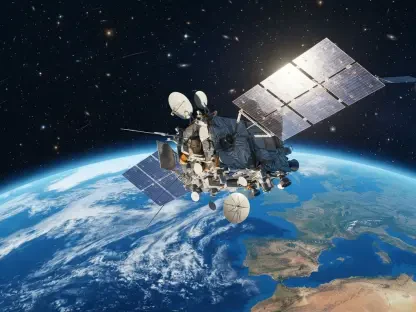

The concept of orbital cold storage could provide a secure, off-planet backup for terrestrial financial and defense data that is immune to ground-level geopolitical risks. This paradigm-shifting approach is at the heart of the MOI-1A mission, an Indian-led initiative that marks the country’s official entry into the high-stakes world of dedicated orbital computing. Scheduled for deployment on October 1, 2026, via the SpaceX Transporter-18 rideshare mission, this satellite represents a departure from the antiquated methods of space-to-ground communication. Traditionally, satellites functioned as simple collectors, vacuuming up massive amounts of raw imagery that required extensive time and energy to transmit to ground stations. The MOI-1A changes this dynamic by processing data directly at the source, effectively distilling information into actionable insights before a single byte is sent back. This evolution turns the spacecraft into an intelligent node within a global data network.
Technical Specifications: Engineering the Hardware Platform
The technical architecture of the MOI-1A is a marvel of miniaturization, packing the computational density of a workstation into a 6U CubeSat chassis weighing just 14 kilograms. At the core of this platform lies the NVIDIA Orin NX processor, hardware designed to handle the rigorous demands of real-time edge computing. With a capacity to perform up to 117 trillion operations per second, the satellite provides a level of processing power that was, until recently, impossible to maintain in such a compact form factor. This high-performance core is supported by a 2-terabyte onboard storage system, allowing the satellite to manage enormous datasets without immediate downlinking. Such a robust configuration ensures that the satellite can perform complex algorithmic tasks, such as multispectral image classification and change detection, while maintaining the structural integrity and thermal balance required for long-term survival in the harsh and unforgiving vacuum of space.
To facilitate these intensive tasks, the MOI-1A utilizes a sophisticated power management system capable of handling a peak load of approximately 120 watts. This is a significant threshold for a CubeSat, as it allows the concurrent operation of both the high-capacity AI processors and the multispectral imaging payload. The imaging system itself captures data across nine distinct spectral bands, providing a rich dataset for the onboard AI to analyze. By integrating these systems, the satellite overcomes the traditional limitation where a spacecraft must choose between capturing data and processing it. Instead, the MOI-1A functions as a cohesive unit where the sensor and the processor are in a constant state of dialogue. This tight integration is essential for the rapid turnaround of information, ensuring that the time between data acquisition and the delivery of a finished report is measured in minutes rather than the hours or days typical of previous platforms.
Operational Efficiency: Overcoming Bandwidth Bottlenecks
The primary motivation behind the orbital computing revolution is the persistent bottleneck caused by limited ground station bandwidth. For years, the satellite industry has struggled with the heavy file problem, where high-resolution imagery occupies so much transmission space that ground queues become backlogged. The MOI-1A addresses this by acting as a remote server in space, fundamentally flipping the script on data management. Instead of treating the satellite as a passive pipe for raw data, the mission treats it as an active participant in the analytical chain. By running software directly in orbit, the satellite filters out irrelevant information, such as cloud-covered images or redundant scans, before they ever reach the downlink. This selective transmission not only saves bandwidth but also reduces the energy expenditure required for radio-frequency communications, extending the operational life of the spacecraft while providing significantly more value to the final user.
Furthermore, the flexibility of the MOI-1A platform allows customers to upload their own custom AI models directly to the spacecraft, enabling a software-as-a-service model in orbit. A practical application of this technology can be seen in disaster response scenarios, such as detecting forest fires over remote areas. In a traditional setup, an operator would need to download a gigabyte-sized image and then run a detection algorithm on a ground server. With the MOI-1A, the detection algorithm runs in space, and the satellite sends back a simple, low-bandwidth data packet containing the exact GPS coordinates of any identified hotspots. This drastic reduction in latency is critical for time-sensitive missions where every second counts. By minimizing the volume of data that must travel through the atmosphere, the orbital computing model lowers the barrier to entry for smaller organizations that require high-level insights but lack the expensive ground infrastructure.
Strategic Roadmap: The Future of Orbital Services
The commercial viability of the MOI-1A is already being proven through a diverse client base that includes over 20 organizations across the globe. These users represent a wide spectrum of the modern economy, from precision agriculture firms monitoring crop health to insurance companies assessing damage after natural disasters. By utilizing the satellite as a multi-tenant laboratory, TakeMe2Space has democratized access to advanced space hardware, allowing even educational institutions to run experiments in a real-world environment. This collaborative approach has fostered a new ecosystem where developers can iterate on space-based applications with the same agility seen in terrestrial software development. The success of this model is largely due to the satellite’s ability to provide tailored outputs for specific industry needs, whether that involves identifying logistical patterns in mining operations or tracking environmental changes in ecological zones, all without ground processing.
In conclusion, the mission demonstrated that the marriage of artificial intelligence and satellite technology was the necessary next step for the global data economy. While previous iterations faced technical hurdles, the successful deployment of the MOI-1A validated the resilience of the Indian private space sector and its ability to innovate under pressure. It became evident that the industry needed to focus on building interconnected satellite constellations that facilitated distributed computing across multiple orbital nodes. This transition from single-satellite missions to networked systems suggested a redefinition of data security through the implementation of orbital cold storage, providing a secure sanctuary for sensitive information. Organizations prepared for a future where space was not just a place to look at Earth, but a platform where critical processing happened autonomously. The shift toward this intelligent infrastructure proved that the value of space was in the insights.