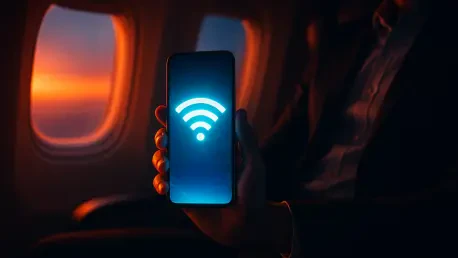

While Delta relies on established providers like Viasat, United is betting that the physical superiority of SpaceX’s Starlink hardware will redefine passenger expectations. This strategic pivot marks a significant escalation in the ongoing battle for the sky’s most profitable travelers. By launching the “Switch To Better Wi-Fi” campaign, United Airlines is not just marketing a service but actively attempting to dismantle the long-standing loyalty of Delta Air Lines and American Airlines elites. The airline has extended this aggressive promotional window through late October, signaling a calculated effort to capitalize on a specific technological window. This is a rare moment where a carrier openly critiques the technical infrastructure of its rivals, suggesting that the traditional perks of lounge access and seat upgrades are no longer sufficient to retain high-revenue flyers. Instead, United is positioning low-latency, high-speed internet as the ultimate luxury, turning a basic utility into a primary differentiator for the modern era.
Technological Friction: Executive Rivalries and Satellite Bets
The genesis of this campaign lies in a public and digital disagreement regarding the future of inflight connectivity. United has doubled down on Starlink, committing to equip its entire fleet with the SpaceX-powered service by 2027. This move directly counters the strategy of Delta Air Lines, whose leadership has voiced skepticism about the viability of partnering with Elon Musk’s ventures. Delta CEO Ed Bastian reportedly preferred a more cautious approach, looking toward future alternatives like Amazon’s Project Kuiper. However, since the Kuiper satellite service is still in its developmental stages for commercial aviation, United has exploited this delay to portray Delta’s connectivity as dated. The contrast between Starlink’s proven low-latency performance and the theoretical potential of unproven systems has created a narrative of technological superiority that United is now weaponizing to attract tech-savvy business travelers who cannot afford to be offline during a flight.
This “airline style war” represents a departure from the usually professional and subtle competition seen between major carriers. Marketing materials for the campaign have been uncommonly direct, featuring slogans that explicitly mock the “buffering” experienced on rival networks. By framing the conversation around the physical hardware and the speed of the connection, United is forcing its competitors to defend their technical choices rather than their service quality. This strategy turns the aircraft’s antenna and satellite backhaul into a core product feature, akin to engine efficiency or cabin quietness. For the first time, a major airline is betting that the digital experience at thirty-five thousand feet is the primary reason a customer chooses one flight over another. This shift indicates a broader trend where technical infrastructure becomes the most visible weapon for customer acquisition, potentially forcing other airlines to accelerate their own hardware upgrades to match the new market standard.
Breaking Traditions: Mechanics of the High-Speed Status Match
To facilitate this mass migration of loyalty, United has engineered a status match program that is significantly more accessible than its traditional offerings. The most striking change is the removal of the “three-year rule,” which typically bars any passenger from participating in a status match if they have done so within the previous thirty-six months. By waiving this long-standing restriction, United is effectively inviting “churners” and former customers back into the fold, acknowledging that the value of capturing a high-revenue flyer now outweighs the risk of promotional abuse. This tactical flexibility suggests that the airline views the current technological gap as a temporary but powerful window of opportunity that justifies breaking standard operational procedures. It is a precision-guided attempt to capture the most frequent travelers at a moment when their dissatisfaction with existing connectivity is at its peak, providing them a frictionless path to transition their status to a new carrier.
The mechanics of the challenge are structured to prioritize revenue over flight frequency, aligning with the spending habits of the modern corporate “whale.” Approved applicants receive a ninety-day trial of United Premier status that mirrors their current level with Delta or American. To secure this status through early 2028, participants must meet specific Premier Qualifying Point targets during that three-month window. These spending thresholds are steep, starting at fifteen hundred dollars for Premier Silver and reaching seven thousand dollars for the top-tier Premier 1K. By removing the requirement for a specific number of flight segments, United is making the challenge particularly appealing to those who fly less often but book expensive, premium-cabin tickets. This focus on high-yield revenue ensures that the customers who make the switch are the most profitable assets for the airline, creating a long-term “lock-in” effect that benefits the carrier’s bottom line while providing the traveler with superior internet speeds.
Comparative Strategy: Precision Strikes versus Broad Loyalty Programs
Comparing this specialized Wi-Fi match to the standard United status match reveals a highly targeted strategy. While the standard match remains open to a global audience and requires a balance of both flights and spending, the “Switch To Better Wi-Fi” offer is a precision strike limited exclusively to United States residents holding status with Delta or American. This narrow focus allows United to concentrate its marketing resources on the most relevant competitive landscape. However, the specialized match also carries a tighter deadline, offering only ninety days to meet the requirements compared to the one hundred and twenty days often found in more general challenges. This condensed timeline forces the traveler into a high-intensity period of flying on United, which helps cement new travel habits quickly. It is an aggressive play that demands immediate behavioral change, banking on the idea that once a flyer experiences seamless, high-speed internet, they will be unwilling to return to the slower systems of their old carriers.
Furthermore, the emphasis on spending over frequency reflects a sophisticated understanding of current travel trends. In the current economic climate, airlines are increasingly moving away from rewarding “miles flown” in favor of “dollars spent.” This campaign accelerates that shift by making the status match entirely dependent on qualifying points. For a Delta Diamond or American Executive Platinum member, spending seven thousand dollars in three months is a significant but achievable hurdle if they are booking international business class or last-minute domestic flights. By tailoring the requirements to match the financial profile of an elite traveler rather than just their time spent in a seat, United is ensuring that its new loyalists are those who contribute most to the airline’s profitability. This strategy also simplifies the transition process for busy executives who may not have the time to track individual flight segments but can easily justify the necessary spend through their corporate travel budgets and premium bookings.
Future Trajectories: Connectivity as the New Premium Standard
The broader industry context suggests that connectivity has officially replaced more traditional amenities as the most critical competitive frontier. For years, inflight internet was viewed as a luxury that was notoriously slow and prohibitively expensive. However, as the global workforce has become increasingly mobile and remote-friendly, the ability to stream high-definition video, conduct uninterrupted video calls, and manage large data files at cruising altitude has become a non-negotiable requirement for professional travelers. Each major carrier is taking a distinct path to meet this demand, with American Airlines planning a phased Starlink rollout across its narrowbody fleet while Delta continues to refine its partnership with Viasat. United’s bet is that by being the first to offer a comprehensive, fleet-wide solution, it can disrupt deep-seated loyalty habits. The success of this campaign will serve as a litmus test for the entire industry, proving whether digital infrastructure can finally outweigh the emotional and historical ties of legacy loyalty programs.
In conclusion, the industry-wide shift toward high-speed satellite connectivity redefined what it meant to provide a premium passenger experience. United’s aggressive status match campaign demonstrated that technical infrastructure could serve as a more powerful incentive than traditional loyalty perks. By targeting the high-spending elite flyers of its rivals, the carrier forced the market to acknowledge that digital productivity was now a central pillar of airline service. For travelers, this development offered a clear path toward better connectivity, provided they were willing to commit significant spending within a short timeframe. Moving forward, airlines must prioritize hardware upgrades and low-latency solutions if they intend to remain competitive in a landscape where the quality of the Wi-Fi is as important as the destination itself. The era of accepting subpar internet as a standard of flight ended, leaving carriers with the choice to either invest in the physical superiority of their systems or risk losing their most valuable customers to those who did.