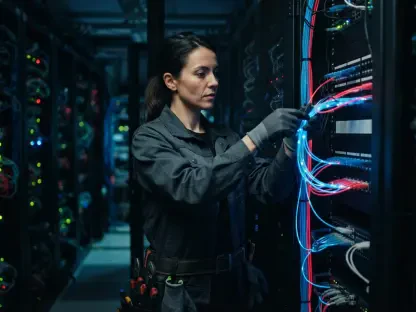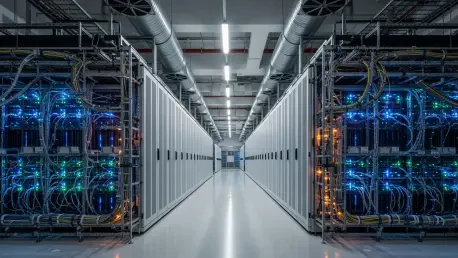

The massive energy consumption of a single state-of-the-art GPU cluster now rivals the power requirements of a mid-sized American city, forcing a radical rethink of how we build the physical foundations of the internet. This surge in power demand marks the end of the traditional server room and the beginning of a specialized era where the data center is no longer just a warehouse for computers, but a singular, massive, integrated machine. As artificial intelligence moves from experimental chatbots to the primary engine of the global economy, the underlying infrastructure must evolve from simple storage to high-performance thermal and electrical environments.
This review explores the transition of the digital infrastructure sector, specifically examining how standards bodies and facility operators are redesigning the physical stack. The focus has shifted from discrete, interchangeable server units to massive GPU clusters that function as unified compute nodes. This evolution is not merely about scale; it is about managing the extreme physical stresses that come with AI workloads, ensuring that the global digital economy remains stable under unprecedented pressure.
Evolution of AI-Ready Digital Infrastructure
The core principles of data center design have undergone a seismic shift, moving away from the “rack-and-stack” mentality of the early cloud era. Traditional digital infrastructure was built for general-purpose computing, where hardware was largely heterogeneous and workloads were distributed across isolated virtual machines. In contrast, modern AI-ready infrastructure is defined by its architectural unity, where thousands of interconnected processors require sub-millisecond latency and massive shared memory pools to train large language models.
This context is vital because it explains why legacy facilities are becoming obsolete. The shift toward unified compute nodes means that the failure of a single rack or cooling loop can stall a training run worth millions of dollars. Consequently, the industry has pivoted toward a “digital infrastructure” model that integrates power, cooling, and connectivity into a single, resilient fabric. This transition represents the most significant change in network topology since the dawn of the internet, as the focus moves from simply moving data to processing it at the point of arrival.
Core Pillars of Modern Data Center Design
High-Density Thermal Management and Liquid Cooling
As GPUs reach thermal design points that air cooling can no longer satisfy, liquid cooling has transitioned from a niche enthusiast solution to a mandatory enterprise requirement. Liquid cooling functions by circulating specialized coolants directly through cold plates or immersing hardware entirely in non-conductive fluids, which are exponentially more efficient at carrying heat away than air. This transition is unique because it removes the “fan bottleneck” that limited the density of traditional data centers, allowing for racks that consume over 100 kilowatts of power—ten times the previous industry average.
However, replacing legacy air-cooling systems is not without its trade-offs. The implementation of direct-to-chip or immersion cooling requires a complete overhaul of plumbing and secondary cooling loops, introducing new risks like fluid leaks within the server environment. Despite these complexities, the performance gains are undeniable; liquid cooling allows for tighter component spacing and higher clock speeds, which are essential for the compute-intensive nature of deep learning. This thermal modernization is the only path forward for operators who wish to remain competitive in an AI-dominated market.
Global Reliability Standards and Tiered Certification
In a world where downtime can have catastrophic economic consequences, verifiable standards like ANSI/TIA-942 provide a much-needed standardized language of trust. This framework evaluates facilities across four reliability tiers, ranging from basic site infrastructure to fault-tolerant systems with redundant components. The technical rigor of these tiers ensures that a global operator can expect the same level of uptime and electrical stability whether their facility is located in Virginia or Singapore.
The significance of these standards lies in their role as an equalizer for global hyperscale operators. While many providers claim high levels of reliability, third-party certification offers an objective baseline that eliminates the ambiguity of self-reported data. This tiered approach allows companies to match their specific workloads to the appropriate level of investment, ensuring that mission-critical training clusters receive Tier 4 protection while less sensitive edge applications can operate on more cost-effective Tier 2 or 3 foundations.
Quality Management and the DCE 9000 Framework
The rapid expansion of AI infrastructure has exposed a massive gap in the global supply chain, leading to the creation of the DCE 9000 quality management framework. Unlike previous efforts that focused solely on the final facility design, DCE 9000 unifies requirements for the vendors that build the hardware and operational technology. This is a unique industry shift; for the first time, major hyperscalers are moving away from proprietary, siloed quality checks in favor of a shared “operating lane” for all suppliers.
This framework matters because it prevents the project delays and hardware failures that often plague hyperscale construction. By enforcing rigorous, standardized processes for everything from power generators to cooling manifolds, DCE 9000 ensures that components are ready for the extreme demands of an AI workload before they ever reach the site. This systemic approach reduces waste and allows the industry to scale at a pace that matches the explosive growth of artificial intelligence.
Recent Innovations and Industry Shifts
The latest developments in this field show a clear movement toward “greenfield” sites—facilities built from the ground up specifically for AI rather than being retrofitted from old office buildings. This shift allows for the integration of high-voltage power delivery systems and specialized structural reinforcement needed for heavy, liquid-cooled racks. Moreover, standards bodies are expanding their mission to encompass the broader digital infrastructure, recognizing that the boundary between telecommunications and computing has effectively vanished.
Real-World Applications and Sector Deployment
Hyperscale cloud providers like AWS, Google, and Meta are currently the primary drivers of this infrastructure revolution, deploying dense GPU clusters that are revitalizing local economies through industrial-to-data-center conversions. In many regions, shuttered manufacturing plants are being transformed into high-tech hubs, bringing significant tax revenue and high-paying jobs to areas that were previously in decline. These conversions demonstrate how digital infrastructure can breathe new life into the physical world while supporting the virtual economy.
Unique use cases are also emerging in the integration of these facilities with the existing power grid. For instance, some modern data centers are being designed as grid-interactive nodes that can return power during peak demand or utilize waste heat to warm nearby buildings. This symbiotic relationship between AI compute and local utilities represents a significant shift in how we view the data center—not as a drain on resources, but as a strategic asset for urban development and energy management.
Technical Hurdles and Market Obstacles
Despite the rapid progress, the industry faces significant physical limitations when trying to retrofit older facilities. Many existing data centers lack the floor-loading capacity for heavy liquid-cooled racks or the ceiling height for specialized piping. Furthermore, the fragmentation of proprietary quality requirements persists among some smaller players, creating friction in the supply chain. Regulatory hurdles related to massive power consumption and water usage for cooling also remain a constant point of tension with local governments.
To mitigate these limitations, ongoing development efforts are focusing on the creation of more modular “plug-and-play” cooling and power units. These modules allow operators to upgrade portions of a facility without a complete overhaul, providing a bridge between legacy designs and the AI-driven future. By standardizing these components, the industry aims to reduce the time-to-market for new capacity, though the challenge of securing massive, consistent energy feeds remains a primary obstacle for global expansion.
Future Trajectory and Technological Convergence
The horizon of data center technology is defined by the convergence of AI clusters with next-generation communication networks and high-density edge computing. We are likely to see the proliferation of smaller, localized facilities that handle real-time AI inference, while massive regional hubs focus on large-scale model training. Future breakthroughs in sustainable energy, such as small modular reactors (SMRs) or advanced hydrogen fuel cells, could provide the carbon-neutral power needed to sustain this growth.
Summary of Findings and Strategic Assessment
The review of AI data center infrastructure revealed a fundamental shift toward technical modernization and supply-chain rigor, moving away from fragmented, legacy approaches. The industry successfully transitioned from viewing data centers as passive storage hubs to treating them as active, high-density compute engines. This transformation was evidenced by the adoption of liquid cooling to manage extreme thermal loads and the implementation of standardized quality frameworks like DCE 9000 to streamline the global supply chain. These advancements proved that the physical foundation of the digital world is finally catching up to the speed of software innovation.
Looking forward, the focus must shift toward securing sustainable energy sources and developing a unified “trust architecture” to ensure global interoperability. Stakeholders should prioritize the deployment of grid-interactive facilities that contribute to, rather than just consume from, local energy ecosystems. Investing in modular, retrofittable designs will be essential for salvaging older assets while meeting the soaring demand for AI capacity. Ultimately, the long-term success of the digital economy will depend on our ability to harmonize the massive power needs of artificial intelligence with the physical and environmental constraints of the planet.