
The current surge in generative artificial intelligence has fundamentally altered the global data landscape, forcing a massive overhaul of the physical structures that keep the world connected. This shift is not merely about adding more capacity to existing lines; it represents a complete reimagining of the optical foundation required for a society where compute power is as vital as electricity.
To meet this moment, Zayo and Corning have solidified a partnership that secures the glass and cable necessary to fuel digital expansion through 2030. Unlike traditional internet traffic, AI workloads require significantly higher density and faster deployment speeds, placing immense pressure on the availability of physical materials.
The New Era of Global Connectivity and the Critical Role of Optical Foundations
High-capacity fiber networks serve as the invisible bedrock of the modern digital economy, supporting everything from financial transactions to cloud computing. However, the requirements for these networks have evolved rapidly as generative artificial intelligence and high-performance computing become the primary drivers of data growth.
Collaborative ecosystems between infrastructure providers and hardware manufacturers are now essential to maintain the global competitive edge. Strategic importance has shifted toward deep-fiber architectures that support a decentralized landscape, ensuring that data-intensive applications remain responsive and reliable regardless of their geographic location.
Modern connectivity depends on the seamless integration of physical assets and software-defined capabilities. As cloud hyperscalers expand their reach, the demand for raw optical throughput has reached an all-time high, making high-density fiber the most valuable commodity in the telecommunications sector.
Catalysts for Network Transformation and Projections for the AI Decade
The transition from reactive capacity management to a proactive build-ahead strategy is now a necessity for staying relevant in the AI era. Building infrastructure before demand peaks ensures that innovation is never throttled by a lack of physical connectivity or available bandwidth.
Optical networks must now be optimized for the specific patterns of AI workloads, which often involve massive bursts of data between specialized compute nodes. This specialized corridor approach replaces the old model of uniform long-haul distribution, focusing resources where they provide the most value.
The Shift Toward AI-Optimized Architecture and High-Density Connectivity
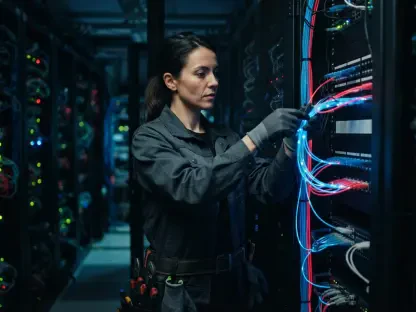
AI processing necessitates fiber density that far exceeds the standards of previous decades. Concentrated data centers require thousands of individual connections to facilitate the parallel processing tasks that define modern machine learning models.
Corning’s innovations in optical cabling allow for more fibers to be packed into smaller diameters, simplifying the physical installation process. These technological advancements enable providers to scale their networks quickly without the need for extensive new trenching or invasive construction.
Quantifying the Fiber Boom through 2030 and Beyond
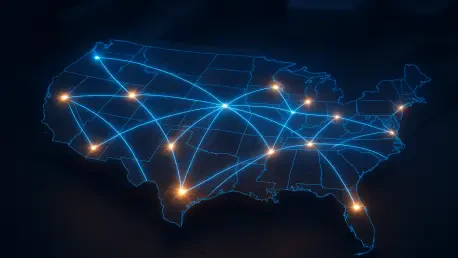
Zayo is currently executing a 15,000-route-mile expansion that serves as a cornerstone for global infrastructure growth. This massive undertaking includes over 8,000 miles of fiber specifically designed for long-haul routes that connect major AI compute hubs.
Market forecasts suggest that the integration of artificial intelligence into government and enterprise sectors will keep demand for fiber high through 2030. Performance indicators for these next-generation networks focus on achieving terabit-scale throughput while minimizing the latency that can hinder real-time processing.
Navigating Supply Chain Volatility and Execution Complexity
Material shortages and logistics bottlenecks remain the primary risks for large-scale infrastructure projects. By securing long-term supply agreements from 2026 to 2030, Zayo effectively insulated its expansion plans from the price fluctuations and delays that often plague the high-tech industry.
Executing a build across diverse geographical terrains requires navigating multi-year project lifecycles and complex local permitting processes. Operational flexibility is maintained by utilizing modular deployment strategies that allow for adjustments as environmental or regulatory conditions change.
Strategic partnerships with component manufacturers provide a layer of stability that is often missing in the open market. This integration ensures that the procurement cycle is aligned with construction timelines, preventing expensive equipment from sitting idle or projects from stalling due to missing parts.
Compliance, Standards, and the Evolving Regulatory Environment
National and regional regulations significantly influence the trajectory of 21st-century digital highways. Compliance with these rules ensures that new fiber routes meet the safety and environmental standards required for long-term operation in sensitive areas.
Industry standards play a critical role in ensuring that fiber layers remain compatible with hardware from various providers. This interoperability is vital for maintaining a healthy competitive market and allowing for the easy upgrade of network components over time.
Security considerations have become a top priority for infrastructure that supports global carriers and government entities. Protecting the physical integrity of the fiber backbone is now seen as a matter of national importance, leading to more rigorous monitoring and protection protocols.
The Future of Predictive Infrastructure and Global Compute Scaling
The convergence of massive AI compute clusters and physical fiber networks points toward a future of predictive infrastructure. In this model, networks automatically adjust to traffic patterns, shifting capacity to where it is most needed before congestion actually occurs.
Emerging technologies like hollow-core fiber and advanced signal processing will likely continue to disrupt data transmission speeds. These innovations will allow for even greater efficiency, squeezing more performance out of the existing physical footprint.
Decentralization remains a dominant trend as edge computing brings data processing closer to the end user. This shift will require a new wave of localized fiber builds to connect smaller data centers to the primary global backbone established by companies like Zayo.
Fortifying the Physical Backbone for an AI-First World
The strategic alignment between Zayo and Corning acted as a vital catalyst for global technological readiness during a period of extreme transition. It demonstrated that a resilient, high-density optical environment was the only viable foundation for the sustained growth of artificial intelligence.
Stakeholders and investors who recognized the value of the physical layer found themselves better positioned to capitalize on the AI boom. The partnership successfully bridged the gap between digital potential and the physical infrastructure required to realize it.
Future projects shifted toward more collaborative models that integrated supply chain security directly into the engineering process. This holistic approach ensured that the global connectivity grid remained robust enough to handle the next generation of data-intensive innovation.