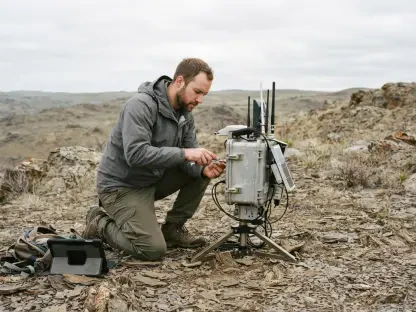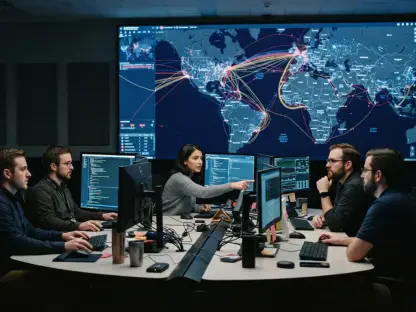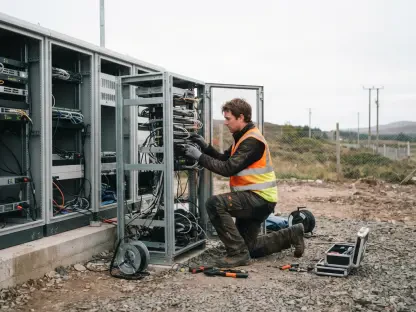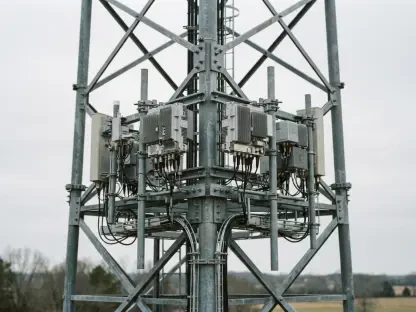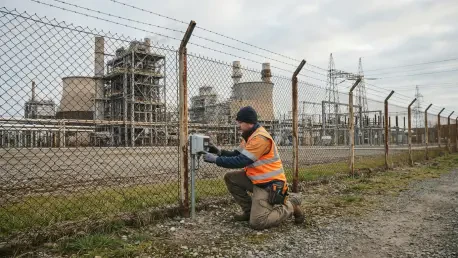

The sophisticated efficiency of a modern decentralized monitoring system relies far less on the sheer volume of deployed hardware than on the calculated reach of individual sensory perception across a designated perimeter. When a sensor network is deployed across a remote border or around a high-security power plant, its success is not measured by how many nodes are active, but by how many physical barriers it effectively creates. An intruder attempting to cross a monitored zone should, in theory, be intercepted by at least one active sensor, yet the technical factors that guarantee this protection have remained a point of contention among engineers. For years, the industry leaned on the assumption that saturating a region with devices was the most reliable way to ensure safety.
However, the reality of modern infrastructure protection reveals that these “virtual fences” are far more complex than a simple numbers game. Recent computational research has finally moved past the era of guesswork, revealing that the strength of these security perimeters depends more on the individual reach of a sensor than the total number of devices on the ground. This shift in understanding allows for more precise deployments where resources are allocated to hardware capability rather than redundant quantity. By viewing the network as a structural defense rather than just a communication web, security architects can build more resilient systems that provide airtight monitoring with fewer points of failure.
This paradigm shift comes at a critical time as the demand for automated surveillance continues to accelerate across the globe. From military border security to the protection of sensitive environmental zones, the reliance on Wireless Sensor Networks (WSNs) is at an all-time high. The challenge has always been determining which specific technical factor—node density, signal reach, or sensing power—actually drives the formation of these invisible barriers. With the integration of advanced machine learning, the industry is finally obtaining the clarity needed to optimize these systems for maximum performance and minimum cost.
The Invisible Shield: Beyond Simple Connectivity
The concept of barrier coverage serves as the invisible shield that protects critical assets from unauthorized access. Unlike area coverage, which focuses on monitoring every square inch of a field, barrier coverage is specifically designed to detect movement across a specific line or perimeter. This is the primary requirement for border security, where the goal is to ensure that no path exists for an intruder to cross the boundary without triggering an alert. Traditionally, assessing the effectiveness of these barriers was a slow and painstaking process. It required extensive physical testing or exhaustive computer simulations that failed to account for the nuanced interactions between sensor parameters.
Wireless Sensor Networks are the backbone of this decentralized monitoring, serving in roles that range from disaster management to high-stakes defense. In many scenarios, these networks must operate in harsh or inaccessible environments where human maintenance is impossible. This makes the structural design of the network vital; if the sensors are not placed with a clear understanding of their sensing reach, gaps in the “shield” will inevitably emerge. The shift toward more intelligent network design has moved the focus away from simple connectivity—whether nodes can talk to one another—and toward the actual detection probability that each node contributes to the whole.
As networks grow in complexity and scale, the old methods of deployment are proving to be unsustainable. Modern engineers are now looking at the network as a holistic entity where each sensor’s “vision” must overlap perfectly with its neighbor to form a continuous line of defense. This transition from a reactive framework to a proactive structural design represents a major leap in architectural philosophy. By prioritizing the formation of thick, multi-layered barriers, developers can ensure that even if several nodes fail due to battery depletion or environmental damage, the integrity of the security perimeter remains uncompromised.
The Evolution of Barrier Coverage in WSNs
Historically, evaluating the performance of a sensor network required exhaustive Monte Carlo simulations, which are notoriously slow and computationally expensive. These simulations often took over fifteen hours to evaluate a single deployment scenario, making it nearly impossible for engineers to make real-time adjustments or test multiple configurations during the design phase. As we move from 2026 into the next few years, the reliance on these outdated methods is being replaced by machine learning regression tasks. By training models to predict how many barriers a network can form based on its input parameters, researchers can now achieve in seconds what used to take nearly an entire day.
This evolution is driven by the need for more agile responses to security threats and environmental changes. Traditional models often treated sensor networks as static entities, but modern needs require a more dynamic approach to barrier formation. By reframing network security as a mathematical prediction problem, the industry has unlocked the ability to use large datasets to identify patterns that human observation might miss. This shift toward predictive modeling has allowed for the creation of more resilient infrastructures that are optimized for the specific terrain and threat level they are intended to monitor.
The move toward machine learning has also enabled the use of more sophisticated algorithms that can handle the massive variability found in real-world sensor data. Instead of relying on a one-size-fits-all simulation, these new models can be tailored to specific hardware and environmental conditions. This progress means that from 2026 to 2028, we expect to see a surge in the deployment of “smart” barriers that can be virtually tested and optimized before a single piece of hardware is placed in the field. This saves significant time and money while simultaneously increasing the safety of the regions being monitored.
Determining the Primary Drivers of Detection
To understand what truly fuels intrusion detection, researchers have utilized advanced models like the Light Gradient Boosting Machine and Radial Basis Function networks. These models were further refined through the nature-inspired Rider Optimization Algorithm, which mimics the strategic movements of competitive riders to find the most accurate results. The most striking discovery from this analysis, specifically through the use of SHapley Additive exPlanations, is that the sensing range is the single most important factor in barrier formation. In these advanced models, the physical distance at which a sensor can perceive an object contributed nearly twice as much to detection performance as any other factor, including the total monitored area.
While it is often assumed that adding more sensors will automatically increase security, the data suggests a level of conditional redundancy that challenges this long-held myth. Once a certain sensing range is established, the absolute node count becomes significantly less critical to the overall strength of the barrier. A smaller number of high-quality sensors with a wide reach often creates a denser and more reliable security barrier than a massive swarm of short-range, low-cost devices. This finding is revolutionary for budget allocation, as it proves that investing in superior hardware is a more effective strategy than simply increasing the quantity of equipment.
The research also highlighted the secondary roles played by transmission reach and the total monitored area. While transmission range—how far nodes can communicate with one another—is essential for data health and ensuring that alerts reach the base station, it has surprisingly little impact on the physical formation of the detection barriers themselves. In some highly optimized models, the communication reach of a node showed almost zero impact on the actual density of the “virtual fence.” This distinction is vital: “seeing” an intruder is an entirely different mechanical function than “talking” to other nodes, and the most effective networks are those that prioritize the former without sacrificing the latter.
Expert Insights into Model Performance
The integration of the Rider Optimization Algorithm represents a pinnacle of current computational efficiency in sensor network design. By mimicking the cooperative maneuvers of riders seeking a destination, the algorithm iteratively refines the predictive models to avoid local errors and find the most accurate configuration for a given environment. This optimization process has been shown to reduce prediction errors by nearly two-thirds compared to standard, unoptimized models. The result is a system that can accurately forecast the security density of a network with a high degree of confidence, providing engineers with a reliable roadmap for deployment.
However, these high-performance models come with a unique set of computational trade-offs that experts are still working to balance. While the optimization process is significantly faster than traditional simulations—taking approximately 50 seconds instead of 15 hours—it still represents a significant load for the low-power microcontrollers found in individual sensor nodes. This suggests that while these algorithms are perfect for the planning and design phase on a powerful central computer, they may still be too heavy for “on-the-fly” adjustments by the sensors themselves in the field. This realization has sparked a new wave of research into lightweight versions of these models that could eventually run on the sensors.
Experts in the field emphasize that the individual reach of a sensor’s perception is the most valuable asset for boundary monitoring. By using models like the Light Gradient Boosting Machine, designers can now see exactly how each parameter contributes to the whole. This level of transparency is a major improvement over previous “black box” simulations. It allows for a more nuanced understanding of how different hardware components interact, leading to the development of networks that are not just larger, but fundamentally smarter and more efficient in their detection capabilities.
Strategies for Optimizing Network Security
As the industry moved forward, security architects found that the most effective path toward robust protection involved prioritizing hardware quality over sheer numbers. By investing in sensors with superior sensing ranges, engineers were able to create more resilient perimeters while actually reducing the total number of failure points in the system. This strategy proved to be more cost-effective in the long run, as it lowered the maintenance burden and simplified the communication architecture of the network. These findings shifted the focus of budget discussions away from node density and toward the acquisition of high-performance components that offered greater individual reliability.
Decision-makers also realized the importance of utilizing offline planning during the initial phases of network design. Because the optimization algorithms required significant computational power, they were best utilized as a pre-deployment tool where central computers calculated the ideal layout before sensors were physically placed. This proactive approach allowed for the identification of potential gaps and weaknesses in the “virtual fence” before they could be exploited. Furthermore, aligning sensor parameters with specific use cases became a standard practice; for border security, the focus remained almost entirely on sensing overlap, while for environmental monitoring, a more balanced approach between sensing and transmission was preferred.
Architects also accounted for real-world noise by building a layer of environmental compensation into their models. They recognized that while synthetic models provided a strong baseline, factors such as weather interference, physical obstacles, and node mobility required a slightly higher density than the theoretical ideal. By factoring these environmental variables into the planning phase, security teams were able to maintain barrier integrity even in the most challenging conditions. This transition toward evidence-based design and high-quality hardware integration ensured that the next generation of sensor networks remained the most effective tool for protecting critical global infrastructure.