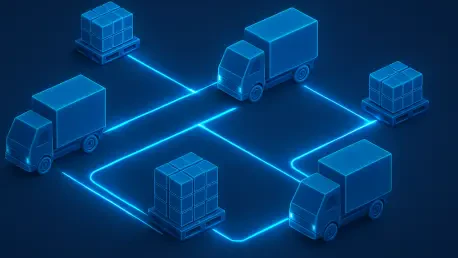

The transition from reactive management to a proactive data-driven model requires granular visibility into every stage of an asset’s journey. In the current global economy, the ability to see deep into the logistics network has moved from a competitive advantage to a fundamental requirement. Supply chain managers are increasingly focused on eliminating “black holes” of information that frequently occur between logistics hubs. By utilizing advanced asset tracking, companies can now gain granular transparency regarding the location, movement, and condition of containers and load carriers. This shift allows organizations to move away from reactive troubleshooting toward a proactive, data-driven operational model that thrives on real-time transparency. As global trade routes grow in complexity, the focus of supply chain technology is shifting from simple hardware specifications to the utility of the insights they generate. Establishing a digital identity for every load carrier allows companies to understand structural dynamics, identifying where assets linger or deviate.
Implementing a Multi-Tiered Tracking Architecture
A single technology is rarely sufficient to cover the diverse environments an asset traverses during its lifecycle. A successful tracking strategy requires a hybrid approach that balances global reach with local precision. For assets moving across international borders or via long-haul trucking, 4G-LTE technology provides the necessary broad-spectrum coverage. This ensures that even when an asset is in transit between facilities, its general location remains accounted for within the management system. Modern gateways now support seamless handovers between various network protocols, ensuring that no data packets are lost when a container moves from a highway into a shipping yard. This level of persistent connectivity is essential for maintaining a continuous chain of custody. Furthermore, the integration of these technologies allows for a more resilient data stream that can withstand the geographic challenges of international shipping, where traditional cellular signals may often fluctuate or weaken.
As assets enter more controlled environments, such as production facilities or distribution centers, the technical focus must shift toward high-precision localization. At this stage, Bluetooth Low Energy (BLE) and Wi-Fi scanning are employed to pinpoint items within specific zones. For organizations just beginning their digital transformation, a modular scalability model is often most effective. This allows a company to start with basic global movement tracking and gradually layer in high-precision Real-Time Location Systems (RTLS) as their specific business needs and use cases evolve. Precision is not just about coordinates; it is about context. Knowing a pallet is in the warehouse is useful, but knowing it is specifically in the outbound staging lane for a specific customer is transformative for operational speed. This granular level of detail reduces the time spent on manual searches and significantly decreases the margin of error in loading processes, directly impacting the overall bottom line.
Leveraging Swarm Solutions for Scalability
One of the most significant hurdles in widespread IoT adoption is the high cost of equipping thousands of low-value load carriers with expensive hardware. To solve this scalability paradox, industry leaders are turning to swarm solutions. This model utilizes a limited number of high-capability LTE/BLE gateways that act as anchors for a larger group of affordable BLE tags. By using a single cellular connection to transmit data for dozens of nearby assets, the per-unit cost of tracking is dramatically reduced. This makes it economically viable to track even the simplest containers that were previously left in the dark. The financial logic is sound: by concentrating the expensive communication components in a few nodes, the rest of the fleet can be equipped with low-cost sensors. This architecture democratizes tracking technology, allowing small and medium-sized enterprises to achieve the same level of visibility as logistics giants without requiring a massive upfront capital investment.
The technical execution of these swarm networks relies on intelligent communication intervals to preserve battery life while maintaining data freshness. Each passive or low-power tag periodically “checks in” with the master gateway, which then bundles this information for cloud transmission. This batch processing reduces network congestion and extends the maintenance cycles of the hardware. In the field, this means that a single shipment of parts can be monitored as a collective unit, with each individual bin reporting its presence to the truck’s central tracker. If a bin is inadvertently left behind at a loading dock, the system immediately recognizes the discrepancy in the expected “swarm” and triggers an automated alert. This level of automated oversight reduces the need for human intervention and manual auditing, streamlining the entire logistics chain. The result is a self-policing network that identifies its own errors before they escalate into costly delivery delays or missing inventory reports.
Integrating Condition Monitoring and Sensor Data
True visibility extends beyond knowing the coordinates of an asset; it requires understanding the physical state of the cargo. For industries handling temperature-sensitive goods or fragile high-value components, location data is only half of the equation. By integrating sensors that monitor temperature, humidity, vibration, and shock, companies create a holistic view of asset health. This integration enables automated alerts when an asset undergoes environmental stress, ensuring that quality control is maintained throughout the entire international journey. For example, a sudden drop in temperature in a refrigerated container can be detected and addressed before the goods are ruined. This proactive maintenance of the environment is a game-changer for pharmaceutical and food logistics, where compliance and safety are paramount. The ability to provide a documented history of an asset’s environment also simplifies the insurance and claims process by providing indisputable evidence.
Beyond immediate environmental alerts, condition monitoring provides long-term insights into the durability and handling of various logistics routes. By analyzing shock and vibration data over several months, a logistics manager might discover that a specific port or transport provider consistently subjects containers to excessive physical stress. This data-driven evidence allows for more informed negotiations with service providers or the selection of alternative routes that better preserve the integrity of the products. Furthermore, the integration of these sensors facilitates predictive maintenance for the load carriers themselves. If a high-value specialized container shows signs of structural fatigue or sensor degradation, it can be scheduled for service during a natural break in its cycle rather than failing unexpectedly in the field. This comprehensive approach ensures that every link in the chain is not only visible but also functioning at its peak physical performance.
Transforming Raw Data into Actionable Intelligence
The most critical phase of the tracking process is the transformation of raw coordinates into supply chain intelligence via cloud-based analytics. This process involves sophisticated noise reduction to filter out erroneous measurements and ensure the data reflects physical reality. Cycle analysis then evaluates how long it takes for a container to complete a full circuit from the plant to the customer and back. These insights often reveal “dead inventory”—assets that are not moving or are caught in inefficient cycles—allowing managers to reduce unnecessary capital expenditure. The objective is to convert billions of data points into a handful of strategic decisions. When the digital twin of a supply chain matches its physical counterpart, the hidden inefficiencies become glaringly obvious. This clarity allows for the optimization of asset pools, ensuring that the right number of containers is available at the right locations without maintaining an expensive and wasteful surplus of idle equipment.
Effective asset management systems must eventually translate complex data into intuitive visualizations that align with human workflows. In fast-paced industrial environments, employees require decision-support systems that automatically flag deviations and key performance indicators. When a system can autonomously identify that a location is hoarding more containers than necessary or that a carrier has been idle too long, it empowers managers to make rapid, informed choices. This transition from simple tracking to operational management ensures that the technology serves the ultimate goal of logistical excellence. Instead of staring at a map filled with dots, a warehouse manager receives a prioritized list of actions to take. This human-centric design is what ultimately bridges the gap between technology and results. By providing clear, actionable steps, the system enhances the capabilities of the workforce, allowing them to focus on high-value problem solving rather than manual data entry.
Strategic Next Steps for Logistics Resilience
The implementation of advanced IoT tracking has historically reshaped how organizations managed their physical footprints. To move forward, leaders prioritized the unification of siloed data streams into a single source of truth that bridged the gap between global transit and local floor operations. The initial phase focused on deploying modular hardware that could scale alongside the business, ensuring that the technology did not become obsolete as needs evolved. Management teams then transitioned toward swarm-based models to capture data from every asset, regardless of its individual value, which provided a comprehensive view of the entire fleet. This structural transparency allowed for the identification of systemic bottlenecks that were previously invisible to the naked eye. By shifting the focus from simple location pings to comprehensive condition monitoring, the organization successfully mitigated risks associated with product spoilage and mechanical damage during long-haul transport.
Operational excellence was further achieved when the focus shifted toward the refinement of data analytics and the human-centric presentation of insights. The strategy moved beyond just collecting information to actively using it to reduce the total cost of ownership for logistics assets. Decision-makers leveraged cycle analysis to purge dead inventory and rebalance asset pools across different regions. This proactive approach turned the supply chain from a cost center into a strategic asset that supported faster turnaround times and higher customer satisfaction. Moving forward, the emphasis should remain on the continuous refinement of these digital twins to anticipate disruptions before they occur. The integration of environmental sensors and high-precision tracking remains the cornerstone of a modern, resilient logistics framework. This evolution ensured that every load carrier was no longer just a box, but an intelligent, communicative participant in a global network of efficiency and reliability.