
By implementing a TTI-level beam scanning system, the VitaAAU equipment increases coverage range by 30% compared to standard 1024-antenna element solutions. This breakthrough, showcased at the 2026 Africa Tech Festival in Cape Town, represents a fundamental shift in how mobile network operators approach high-capacity spectrum. As the continent grapples with an explosion in data demand, Vodacom and Huawei have converged on a strategy that leverages the U6GHz band to redefine the capabilities of 5G-Advanced. This collaboration is not merely a pilot project but a comprehensive technical validation aimed at securing Africa’s place in the global digital economy. By focusing on the 6425–7125 MHz range, the partners are addressing the critical shortage of contiguous wideband spectrum. This move establishes a robust framework for next-generation wireless services, ensuring that urban centers can handle the massive influx of connected devices without sacrificing performance or energy efficiency. Furthermore, this initiative signals a commitment to long-term infrastructure stability across the entire region.
The Golden Spectrum: Global Connectivity Standards
The U6GHz frequency range has earned its designation as the golden spectrum band due to its unique position within the Sub-10 GHz landscape. It serves as the final available contiguous wideband resource that can offer the high capacity required for advanced mobile services while maintaining manageable propagation characteristics. Since its formal recognition as International Mobile Telecommunications spectrum during the 2023 World Radiocommunication Conference, the U6GHz band has seen rapid global adoption. It now encompasses markets that include roughly 80% of the world’s population, with numerous nations having already finalized their allocation frameworks. This global momentum ensures a mature ecosystem for hardware and consumer devices, making it an ideal choice for South African infrastructure. By prioritizing this band, operators can ensure their networks are ready for the transition from 5G to 5G-Advanced, providing a seamless bridge toward the arrival of 6G systems.
This specific spectrum allocation is indispensable for resolving the capacity crunches currently plaguing dense metropolitan environments. As mobile users consume more high-definition video and engage in real-time digital interactions, existing bands like the C-band are becoming increasingly saturated. The U6GHz band provides the necessary headroom to sustain massive data throughput, which is essential for the long-term scalability of African telecommunications. Beyond simple smartphone connectivity, this bandwidth supports Fixed Wireless Access solutions that bring fiber-like speeds to residential and business districts where physical cable installation remains cost-prohibitive. The ability to deploy such large-scale data pipes ensures that the infrastructure can grow alongside the evolving needs of the digital economy. This focus on scalability allows for the proliferation of immersive entertainment and enterprise-level collaboration tools, which require stable, low-latency connections to function across diverse regions.
Physical Barriers: Overcoming Coverage Challenges
Transitioning to the U6GHz band is not without its physical hurdles, primarily due to the natural laws of radio frequency propagation. As frequencies increase, signal path loss becomes more severe, creating a coverage gap of approximately 13 dB when compared to the established C-band. In a standard deployment scenario, an operator would be forced to double the density of its cell sites to maintain the same coverage footprint, a strategy that is financially impossible for most telecommunications providers. This increase in infrastructure density would also lead to significantly higher energy consumption and a larger carbon footprint, contradicting modern sustainability goals. Therefore, the challenge has been to find a way to make high-frequency spectrum perform like lower-frequency bands without the need for additional physical towers. This technical bottleneck has historically limited the utility of higher bands, but recent innovations in antenna technology are finally making it possible to bridge this gap through hardware integration.
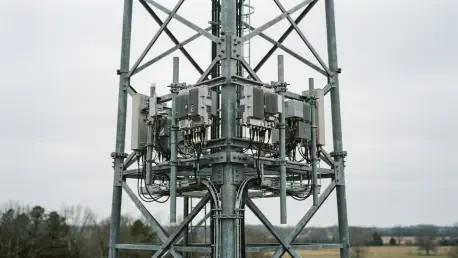
To tackle these environmental and financial constraints, the development of the VitaAAU hardware represents a significant engineering achievement. By utilizing RetinaMIMO technology, the equipment can reconstruct radio link topologies dynamically at the TTI level, effectively preventing the coverage collapse that typically occurs at higher frequencies. This approach moves away from traditional static antenna arrays, which often hit a wall of diminishing returns as more elements are added. The refined architecture allows for what engineers call co-site, co-coverage deployment. This means that operators can install U6GHz equipment on their existing C-band sites and achieve the same coverage radius without building new infrastructure. Not only does this save on capital expenditure, but it also reduces total energy consumption by up to 30%. By optimizing the way beams are scanned and directed, the system ensures that signal strength is concentrated exactly where it is needed, maximizing the efficiency of every watt of power used by the network.
Performance Validation: Realizing Industrial Potential
The technical potential of the U6GHz band was meticulously verified within the Vodacom Lab environment, where engineering teams subjected the new hardware to a battery of end-to-end tests. These evaluations were specifically designed to simulate real-world conditions for Fixed Wireless Access, a technology that is vital for expanding high-speed internet access across the African continent. By focusing on FWA, the teams were able to demonstrate how the U6GHz band can serve as a primary connection method for homes and small businesses that lack access to fiber optics. The validation process involved testing the system’s ability to maintain high throughput and low latency under heavy load, ensuring that the user experience remains consistent even during peak usage hours. These results provide the empirical evidence needed to move the technology from a laboratory curiosity to a cornerstone of commercial network strategy. The success of these trials confirms that the infrastructure is capable of supporting the next generation of digital services.
During the validation phase, the performance of the U6GHz network was tested against demanding applications such as immersive cloud gaming, high-definition live broadcasting, and enterprise-grade video conferencing. These scenarios require not only massive bandwidth but also extremely stable connections to avoid lag or dropped packets. The findings from these tests confirmed that the combination of the U6GHz spectrum and VitaAAU hardware provides a premium experience that meets the stringent requirements of modern digital consumers. For example, cloud gaming requires a round-trip latency low enough to feel instantaneous, while 4K video conferencing requires a sustained uplink that many current networks struggle to provide. By successfully handling these data-intensive tasks, the U6GHz solution proves its worth as a versatile platform for both consumer entertainment and industrial productivity. This validation clears the way for a large-scale commercial rollout, signaling to the market that the era of high-capacity mobile connectivity is arriving.
Strategic Impact: The Future of Digital Inclusion
The introduction of advanced wireless technologies is deeply tied to the broader socioeconomic goals of the continent, particularly the drive for universal digital inclusion. In many African regions, the digital divide remains a significant barrier to economic growth, as a lack of high-quality internet access prevents individuals from participating in the modern global economy. Vodacom’s strategic vision emphasizes the importance of keeping everyone connected, and the U6GHz innovation is a key tool in achieving this objective. By lowering the cost of network deployment through co-site coverage, operators can expand their high-speed services to more people without passing on prohibitive costs to the end user. This democratization of high-speed data access empowers local entrepreneurs, students, and healthcare providers to leverage digital tools that were previously out of reach. As connectivity becomes widely available and affordable, it acts as a primary engine for job creation and community development, fostering a resilient society.
Looking forward, the partnership between Vodacom and Huawei deepened as they moved from technical validation toward full commercial implementation. The successful unveiling of these U6GHz innovations served as a global blueprint for how collaborative engineering solved local infrastructure challenges while setting new international standards. The next phase involved the incubation of localized applications that took full advantage of the 5G-Advanced capabilities, such as smart manufacturing, remote mining operations, and enhanced digital education platforms. Organizations and regional governments prioritized spectrum policy that supported the allocation of the U6GHz band to ensure that these technological gains were realized across all sectors. By continuing to iterate on radio architectures and antenna efficiency, the telecommunications industry maintained its momentum toward a hyper-connected future. The lessons learned from this collaboration were vital as the continent prepared for waves of digital transformation, ensuring that the infrastructure remained robust.