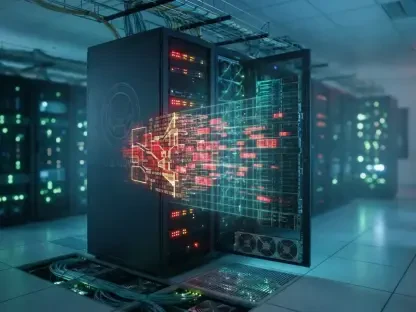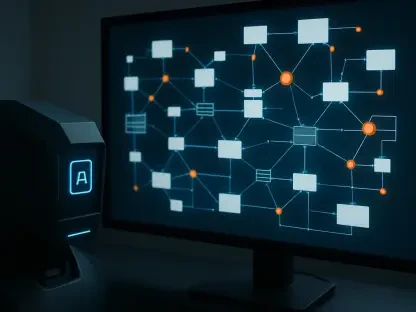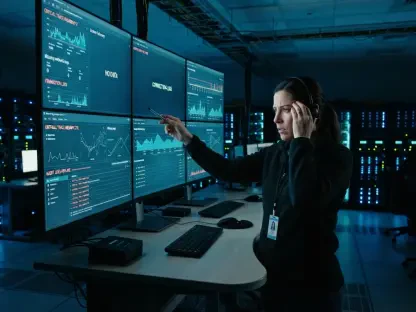

The recent discovery of a critical vulnerability that remained hidden within the foundational Curl library for over twenty-five years has effectively dismantled the industry’s reliance on software age as a marker of security. This event, driven by advanced artificial intelligence, highlights a major shift in how digital infrastructure is protected. By moving beyond manual oversight, AI-powered discovery tools are now identifying flaws in “battle-tested” code that were previously invisible to the most rigorous human audits. This review explores how these systems function and why they have become indispensable for maintaining the integrity of the modern software supply chain.
The Evolution of AI-Driven Security Auditing
The transition from manual code review to AI-driven auditing represents a move from pattern recognition to contextual understanding. Historically, security teams relied on static analysis tools that flagged suspicious syntax based on a library of known bad practices. However, these tools often generated overwhelming numbers of false positives or missed sophisticated logic errors. As neural networks and large language models reached maturity, the technology evolved to treat code as a complex, interlocking narrative rather than a series of isolated commands.
This evolution was necessitated by the sheer scale of modern software dependencies. With libraries like Libcurl integrated into billions of devices, the manual labor required to vet every line of code became impossible. The emergence of AI-powered auditing provided a scalable solution, allowing for the deep inspection of legacy codebases that had been neglected for decades. By applying machine learning to the audit process, security firms can now simulate the persistence and creativity of a human attacker but at a speed and volume that no human team could ever match.
Core Capabilities of AI Vulnerability Analyzers
Dynamic Behavioral Simulation
Modern AI vulnerability analyzers distinguish themselves through their ability to simulate how software behaves under specific, high-pressure conditions. Unlike traditional fuzzing, which throws random data at an application to see if it crashes, AI-driven simulation uses predictive modeling to identify the most likely paths toward a failure. It explores how various modules interact when network conditions change, mimicking the precise sequences of events that an adversary might use to bypass security controls.
In the case of the Curl library, this behavioral simulation allowed researchers to identify how cached connections were handled when credentials changed. The AI recognized that under certain Mutual TLS configurations, the library failed to properly flush existing entries from its connection pool. This level of dynamic analysis is critical because it identifies flaws that only manifest during runtime, providing a layer of protection that static tools simply cannot offer.
Automated Logic and Context Analysis
The second pillar of this technology is its capacity for automated logic analysis. Security flaws are frequently the result of subtle logical inconsistencies rather than simple coding errors. AI models are trained on vast repositories of both secure and compromised code, allowing them to understand the “intent” behind a developer’s implementation. When the actual code deviates from this intent or fails to account for edge cases in session management, the AI identifies the discrepancy as a potential exploit.
This contextual awareness is what enabled the discovery of flaws that had survived for a quarter-century. While human reviewers often suffer from cognitive bias—assuming that frequently used code must be secure—AI approaches the audit with no such preconceptions. It analyzes the persistence of credentials and the inheritance of security settings across different sessions, ensuring that a request initiated in one context does not inadvertently gain the privileges of another.
Current Trends in Machine Learning and Code Analysis
The field is currently moving toward the integration of symbolic execution with large language models to reduce the incidence of “hallucinations” in security reporting. In 2026, the focus has shifted to making these tools more accessible to open-source maintainers who lack the massive computational resources of large corporations. There is a growing trend of “autonomous red-teaming,” where AI systems are tasked with not just finding bugs, but also generating the proof-of-concept exploits needed to verify them.
Furthermore, the industry is seeing a shift in how training data is curated. Rather than just feeding models more code, developers are emphasizing “adversarial training,” where the AI is exposed to the newest methods used by state-sponsored actors. This ensures that discovery tools remain effective against zero-day threats. As we look from 2026 to 2028, the expectation is that these systems will become more integrated into the development environment, providing real-time feedback as code is written rather than waiting for a post-release audit.
Real-World Impact and Industrial Applications
The impact of this technology was most visible during the recent audit of the Curl library, which uncovered 35 CVEs and over 160 bugs in a project that many considered the gold standard of secure coding. This engagement, led by the security firm Aisle, demonstrated that AI can fundamentally change the risk profile of the entire network stack. These findings forced a massive wave of patching across cloud providers, IoT manufacturers, and enterprise software vendors, highlighting the deep-seated risks in the global software supply chain.
In industrial settings, AI-powered discovery is being used to secure the “shadow IT” that often plagues large organizations. Many companies operate with legacy systems where the original developers have long since departed, leaving behind code that no one fully understands. AI acts as a bridge, providing a clear map of vulnerabilities within these inherited systems. This application is particularly vital in critical infrastructure, where a single unpatched library in a utility grid or transportation network could have catastrophic consequences.
Technical Barriers and Adoption Hurdles
Despite its successes, the technology faces significant hurdles related to “triage fatigue.” While AI can find hundreds of potential bugs in a single afternoon, those bugs still require human verification and remediation. The sheer volume of disclosures can overwhelm small project teams, leading to a bottleneck in the patching process. There is also the issue of computational cost; running deep neural audits on massive codebases requires substantial energy and hardware, which can be a barrier for smaller organizations or non-profit software foundations.
Regulatory and legal issues also complicate widespread adoption. As AI begins to uncover vulnerabilities in proprietary software, questions arise regarding responsible disclosure and intellectual property. If an AI discovers a flaw in a competitor’s product, the ethical landscape becomes murky. Additionally, there is a constant arms race between defenders and attackers; the same AI models used to find and fix bugs can be repurposed by malicious actors to create more effective malware, necessitating strict controls on how these tools are distributed.
The Future of Autonomous Security Research
The trajectory of security research points toward a future where vulnerability discovery and remediation are fully synchronized. We are approaching a point where AI will not only identify a flaw but also automatically generate and test a patch, presenting a finished solution to the maintainer for approval. This would move the industry toward “self-healing” software, where the time between the discovery of a bug and its resolution is measured in minutes rather than months.
Long-term, this technology will likely lead to the creation of standardized security “scores” for all open-source components. These scores, updated in real-time by autonomous auditors, will allow developers to make informed choices about which libraries to include in their projects based on verifiable security metrics. As AI becomes more deeply embedded in the development lifecycle, the focus will shift from fixing mistakes to preventing them entirely through AI-guided architectural design.
Final Assessment of AI-Integrated Security
The audit of the Curl library proved that no piece of software was too old or too well-reviewed to harbor critical risks. The technology provided by AI-driven analyzers transformed the way researchers approached legacy code, turning a twenty-five-year-old blind spot into a landmark case for supply chain security. This shift highlighted the necessity of treating every software scan as a clean slate, disregarding the false comfort provided by a library’s longevity or reputation.
Security leaders recognized that the burden of discovery had successfully shifted to machines, which necessitated a corresponding upgrade in human response capabilities. The implementation of these tools became a requirement for any organization serious about its digital defense. Ultimately, the integration of artificial intelligence into the security audit process offered a decisive advantage, ensuring that the foundational elements of the internet became significantly more resilient against both known and unknown threats.