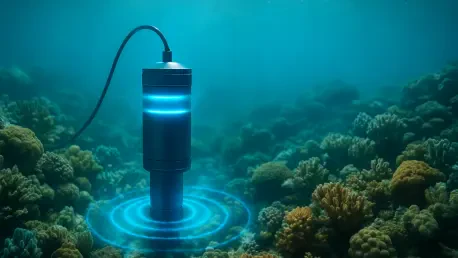

Software-based optimization serves as a cost-effective alternative to hardware improvements when attempting to extend the operational lifespan of existing marine sensors. In the current landscape of 2026, Underwater Wireless Sensor Networks (UWSNs) have become indispensable tools for a variety of critical global operations, ranging from the fine-grained monitoring of coral reef health to the protection of vital subsea communication cables. Despite their utility, these networks face a harsh reality: the ocean is an unforgiving medium that rapidly degrades electronic hardware and restricts the easy replenishment of energy. Traditional radio waves do not propagate well in saltwater, forcing these systems to rely on acoustic signals that are both slow and incredibly power-hungry. To solve these persistent challenges, researchers from the Hanoi University of Industry and Hanoi University of Science and Technology have introduced a breakthrough computational framework known as the Enhanced Genetic Algorithm for Maximum Lifetime Target Coverage (EGA-MLTC). This innovative approach focuses on maximizing the duration that a network can effectively monitor its environment by using sophisticated scheduling logic rather than relying on hypothetical battery breakthroughs.
The Core Challenge: Energy Depletion in Submerged Networks
The primary obstacle preventing the long-term deployment of underwater sensors is the Maximum Lifetime Target Coverage (MLTC) problem. Because these sensors are submerged in deep, often turbulent waters, the logistical effort required to retrieve them for battery replacement is prohibitively expensive and frequently dangerous. In many cases, once a sensor is deployed, its energy reserve is the only fuel it will ever have for its entire operational life. When several critical sensors within a network exhaust their batteries, the entire system can suffer from “coverage holes,” where significant areas of the ocean floor or water column are no longer being monitored. This makes the operational life of the network entirely dependent on the energy management of its most burdened nodes. The EGA-MLTC addresses this by viewing the network as a collection of overlapping resources that must be carefully rationed to ensure that the mission goals are met for the longest possible timeframe.
To manage this depletion effectively, the network must solve a complex multi-objective optimization puzzle that balances continuous target coverage with the need for data connectivity. The research team identified that the most efficient way to preserve energy is to organize sensors into specific groups called “cover sets.” Instead of having every sensor active at once, which would drain the entire network’s power simultaneously, the algorithm calculates a rotation schedule. In this model, only one cover set is “awake” and performing monitoring duties while the remaining sensors are placed in a low-power “sleep” mode. This rotation ensures that the energy burden is distributed across the entire population of nodes, effectively preventing any single sensor from failing prematurely. By keeping the communication pathways to a central data hub open only when necessary, the network can maintain a persistent presence without unnecessary waste.
Environmental Variables: Navigating the Dynamics of the Sea
Operating a sensor network underwater is fundamentally different from managing a terrestrial system due to the constant physical movement of the medium. Unlike land-based towers that remain fixed in place, underwater sensors are frequently subject to drift caused by tides, deep-sea currents, and internal waves. This mobility means that a sensor which is perfectly positioned to monitor a specific target today might be pushed kilometers away by tomorrow. Standard genetic algorithms often fail in these scenarios because they assume a static geometry that does not exist in the marine world. The EGA-MLTC framework is built to acknowledge this volatility, treating the physical coordinates of each node as a dynamic variable that changes over time. This adaptability allows the network to maintain its coverage objectives even as the physical structure of the network evolves, ensuring that no data points are lost to the shifting currents of the ocean.
Furthermore, the reliance on acoustic communication introduces significant delays and high energy costs that are not present in radio-frequency environments. Sound travels much slower through water than light or radio waves do through air, leading to high latency and a greater probability of signal interference. To compensate for these limitations, the EGA-MLTC incorporates energy-aware communication protocols that prioritize the most efficient data paths back to the surface or a central sink. By minimizing the distance and frequency of these acoustic transmissions, the algorithm further stretches the limited energy reserves of the nodes. This focus on the physical reality of underwater signal propagation ensures that the mathematical solutions generated by the algorithm are actually functional when applied to real-world hardware submerged hundreds of meters beneath the surface.
Methodological Innovations: Scheduling and Sensing Models
One of the most significant advancements introduced by the Vietnamese research team is the “key-time” scheduling framework. This system discretizes the operational timeline of the network into specific intervals or slots, allowing the algorithm to recalculate the optimal active sensor sets at regular periods. By breaking the schedule into these manageable blocks, the EGA-MLTC can re-evaluate the positions of drifting nodes and adjust the active cover sets accordingly. This prevents the network from relying on outdated spatial data and ensures that the monitoring mission remains accurate throughout the entire deployment period. The flexibility of key-time scheduling means that the network can respond to unexpected events, such as the sudden failure of a node or an unforeseen change in current patterns, without requiring a complete manual reconfiguration from the surface.
In addition to advanced scheduling, the EGA-MLTC moves away from the simplistic “binary” sensing models used in previous studies. In older models, a sensor was typically assumed to have a hard radius within which it could see a target perfectly, and beyond which it saw nothing at all. The new algorithm utilizes a probabilistic sensing model that more accurately reflects the “fuzzy” nature of underwater detection. It recognizes that a sensor’s ability to detect a signal or an object degrades gradually as the distance increases and environmental noise levels rise. By incorporating this uncertainty into its fitness function, the EGA-MLTC produces schedules that are far more robust. It ensures that targets are monitored by sensors that have a high probability of detection, rather than just those that are theoretically within a certain distance, resulting in a significantly higher quality of data.
Refined Mechanics: Evolution and Performance Benchmarks
The internal logic of the EGA-MLTC has been specifically tuned to avoid the common pitfalls of evolutionary computation. Standard genetic algorithms often suffer from “premature convergence,” a state where the population of potential solutions becomes too similar, causing the algorithm to settle on a “good enough” solution rather than the true optimum. To prevent this, the researchers implemented a diversity preservation mechanism that ensures a wide variety of candidate schedules are maintained throughout the evolution process. This diversity is crucial for finding the non-obvious configurations required for maximum longevity. The algorithm also uses an improved crossover operator designed to preserve the structural integrity of successful sensor covers, ensuring that the best energy-saving traits are passed down to future generations of the schedule.
To validate these theoretical improvements, the research team conducted rigorous simulation testing against other prominent metaheuristic methods, including Differential Evolution and Harmony Search. The simulations covered a wide range of scenarios, from small-scale deployments to massive, dense networks consisting of hundreds of sensors. In every tested configuration, the EGA-MLTC outperformed its predecessors by providing longer operational lifetimes and more consistent target coverage. It proved particularly adept at managing energy consumption equitably, effectively eliminating the “hotspots” where certain sensors would be overworked and die early. By maintaining a balanced energy profile across the entire network, the algorithm ensured that the communication fabric remained intact and that the data could always find a path back to the collection point, even as the network approached its final days of operation.
Broad Impacts: Science and Maritime Security Applications
The ability to extend the life of an underwater network by 20% to 30% through software alone has profound economic and scientific implications. In the current economic climate of 2026, the cost of deploying subsea equipment remains high, often requiring specialized research vessels, remotely operated vehicles (ROVs), and teams of expert technicians. By increasing the longevity of these networks, the EGA-MLTC reduces the frequency of these expensive deployment missions, allowing organizations to redirect their budgets toward more sensors or deeper exploration. This is particularly valuable for long-term environmental monitoring projects, such as those tracking ocean acidification or thermal changes related to climate shifts, where continuous data collection over several years is required to identify significant trends.
Maritime security and infrastructure protection also stand to benefit from these advancements in energy efficiency. Critical assets like underwater oil and gas pipelines, high-voltage power cables, and fiber-optic communication lines require constant vigilance to prevent accidents, leaks, or intentional damage. A sensor network that can stay active for longer periods without maintenance provides a more reliable security perimeter for these vital resources. Similarly, disaster prevention systems that monitor for seismic activity on the ocean floor rely on the absolute reliability of their power management. The EGA-MLTC ensures that these early-warning systems remain operational during the long periods of silence between events, so they are ready to transmit life-saving data the moment an earthquake or tsunami is detected.
Future Directions: Autonomous Integration and Open Science
As marine technology continues to evolve toward more autonomous systems, the logic established by the EGA-MLTC will play a central role in coordinating hybrid networks. There is an increasing trend toward integrating mobile elements, such as Autonomous Underwater Vehicles (AUVs), into static sensor grids. These robotic participants can move to fill coverage gaps caused by sensor drift or battery failure, act as mobile data relays, or even perform localized maintenance. Future iterations of scheduling algorithms will need to manage these active participants alongside drifting sensors. The framework provided by the Vietnamese research team offers a scalable foundation for these complex, multi-agent systems, ensuring that both static and mobile nodes work in harmony to achieve the longest possible mission life.
The researchers also emphasized the importance of transparency and collaboration by making their findings and implementation logic available for further development. This “open science” approach allowed other engineering teams to adapt the EGA-MLTC for specific local conditions, such as high-salinity environments or areas with extreme tidal turbulence. By moving the field away from idealized, theoretical models and toward a reality-based approach that accounts for noise and movement, the scientific community demonstrated that software intelligence is just as critical as hardware durability. The development of the algorithm concluded with a clear roadmap for future field trials, positioning it as a primary tool for the next generation of global ocean observation systems that must remain operational in the deep for years at a time.