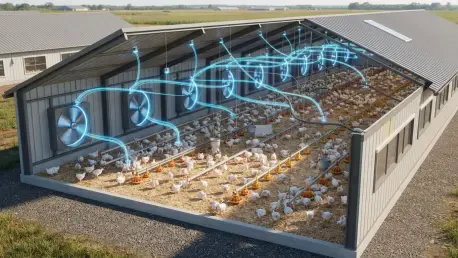

The integration of a heterogeneous grid of DHT22 and SHT31 sensors provides the high-accuracy thermal readings necessary for dynamic microclimate control. As the global demand for animal protein continues to climb in 2026, the poultry industry is facing an era where traditional management techniques have reached their physical and biological limits. Intensive broiler operations now house tens of thousands of birds in a single environment, creating a complex microclimate where even a minor failure in ventilation can lead to catastrophic losses. The move toward Precision Poultry Farming is no longer a luxury but a necessity for operational resilience. By leveraging a combination of high-fidelity sensors and automated response systems, producers can maintain the delicate balance required for optimal bird health. This shift represents a transition from human-centric observation to a more robust, data-driven framework that monitors every corner of a facility with a level of granularity that was previously impossible. It is this synergy of hardware and software that is currently redefining the standards for efficiency and animal welfare across the global agricultural landscape.
The Digital Nervous System: Multi-Modal Sensing
Maintaining the health of a poultry flock requires constant vigilance over a wide array of atmospheric variables that extend far beyond simple temperature checks. Modern farms utilize a sophisticated perception layer that functions as a digital nervous system, employing specialized sensors to detect toxic gases and moisture levels. For instance, the deployment of MQ-135 and TGS826 sensors allows for the real-time monitoring of ammonia levels, which is a byproduct of litter decomposition. High concentrations of this gas can lead to severe respiratory distress and ocular lesions in birds, yet it is often difficult for human operators to detect until it has already reached dangerous thresholds. By integrating these sensors into a centralized AI system, the facility can automatically trigger increased ventilation rates the moment a spike is detected, ensuring that the air quality remains within safe parameters for both the livestock and the workers managing the facility.
In addition to chemical sensing, the integration of bio-visual and bio-acoustic monitoring provides a holistic view of animal behavior that environmental sensors alone cannot capture. High-definition infrared cameras paired with computer vision algorithms can analyze the spatial distribution of the flock to identify signs of thermal stress. When birds huddle together in tight clusters, the system recognizes this as a behavioral indicator of cold stress, even if the ambient temperature sensors suggest the room is within the target range. Similarly, omnidirectional microphones are being used to monitor the acoustic environment for distress calls or the specific frequency of coughing, which often serves as an early warning sign for infectious diseases. This multi-modal approach ensures that the management system is not just monitoring the room, but is actively observing the biological responses of the birds, allowing for a more nuanced and compassionate form of livestock management.
Connectivity and Data Infrastructure: The Backbone of the Farm
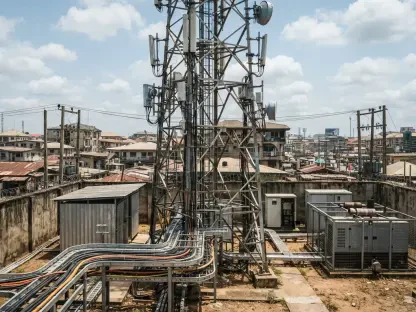
The vast amount of data generated by thousands of sensors is only useful if it can be transmitted reliably to a central processing hub, a task that is surprisingly difficult in a modern agricultural setting. Poultry barns are typically constructed with thick concrete floors and metallic insulation panels that act as electromagnetic shields, often blocking traditional Wi-Fi signals. To overcome these physical barriers, the industry has turned to robust communication protocols such as LoRaWAN and ZigBee. LoRaWAN is particularly effective for large-scale operations because its sub-gigahertz radio frequency can penetrate dense building materials over long distances while consuming very little power. This allows for the deployment of battery-operated sensors in remote corners of a farm that can remain functional for years without human intervention. By establishing a reliable network backbone, farmers ensure that their data streams remain uninterrupted, which is critical for real-time automated decision-making.
Beyond the physical transmission of data, the network layer must also facilitate the integration of diverse devices into a single, cohesive management platform. This is increasingly achieved through Narrowband IoT technology, which provides direct cellular connectivity for remote facilities that may lack a local internet infrastructure. Such connectivity allows for the synchronization of data between multiple barn units and cloud-based analytics platforms, giving enterprise-level producers a bird’s-eye view of their entire operation. This connectivity also enables the implementation of “edge computing,” where initial data processing occurs on-site to reduce latency. If a critical failure in the heating system is detected, the local controller can act within milliseconds to activate backup systems without waiting for a command from a distant cloud server. This combination of local speed and global oversight ensures that the farm remains resilient against both technical failures and environmental fluctuations.
Artificial Intelligence: Predicting and Resolving Environmental Conflicts
The true power of modern precision farming lies in the processing layer, where artificial intelligence transforms raw sensor data into predictive insights. One of the most significant advancements in 2026 is the use of Long Short-Term Memory networks for time-series forecasting. Unlike older systems that only react when a temperature threshold is crossed, these AI models analyze historical data and current weather forecasts to predict internal climate shifts hours in advance. If the system anticipates a sudden drop in external temperature during the night, it can pre-emptively adjust the heating and ventilation settings to maintain a stable homeostatic environment. This prevents the “thermal overshoot” that often occurs when reactive heaters struggle to catch up with a cooling room, thereby reducing the physiological stress on the birds and ensuring they remain in their optimal thermoneutral zone for growth.
Furthermore, AI algorithms are now capable of resolving the complex, multi-objective control challenges that have long plagued manual farm management. In a poultry house, the goals of maintaining warmth, providing fresh oxygen, and removing moisture are often in direct conflict with one another. For example, increasing ventilation to lower ammonia levels can inadvertently strip away the heat needed for young chicks. To solve this, fuzzy logic inference systems are employed to evaluate these competing needs and find the mathematical “sweet spot” that satisfies all biological requirements with the least amount of energy. These systems function as a digital expert, weighing the severity of each variable and making micro-adjustments to fan speeds and heater output. This level of automated sophistication ensures that the environment is always optimized for the specific age and weight of the flock, a task that would be impossible for a human operator to perform manually on a continuous basis.
Biological and Economic Outcomes: Maximizing Production Efficiency
The implementation of these intelligent systems has led to a quantifiable improvement in the Feed Conversion Ratio, which remains the primary metric for economic success in the poultry industry. When birds are kept in a perfectly stable microclimate, they no longer need to expend metabolic energy on thermoregulation, such as panting to stay cool or shivering to stay warm. Instead, that energy is directed toward muscle development and immune function. Data from early adopters in 2026 shows that facilities using AI-driven microclimate control see a significant increase in Daily Weight Gain compared to those using standard thermostat-based systems. By eliminating the “cold spots” and stagnant air pockets that are common in traditional barns, producers are able to achieve a more uniform flock weight, which simplifies the processing stage and increases the overall market value of the production cycle.
Beyond the biological benefits, the financial advantages of precision farming are heavily driven by a massive reduction in energy overhead. Energy costs for heating and ventilation are among the highest expenses for poultry producers, and traditional systems are notoriously wasteful. By using AI to drive equipment based on the actual biological demand of the birds rather than a rigid schedule, farms have been able to cut electricity and fuel consumption significantly. Fans and heaters run at the precise intensity required to maintain the target environment, preventing the unnecessary wear and tear on equipment caused by frequent on-off cycling. This proactive maintenance and operational efficiency not only protect the farmer’s bottom line but also contribute to a more sustainable production model that reduces the carbon footprint of meat production. This alignment of economic profit and environmental sustainability is a defining characteristic of the modern agricultural era.
Strategic Implementation: A Roadmap for Growth
While the benefits of precision technology are clear, the industry had to address the significant physical challenges of deploying sensitive electronics in the harsh environment of a poultry barn. The high levels of biological dust, humidity, and corrosive ammonia gas were historically known to cause sensor failure within a few months of installation. To mitigate these risks, manufacturers developed IP67-rated protective casings and shifted toward solid-state and non-dispersive infrared sensors that are inherently more durable. Furthermore, the adoption of edge computing allowed farmers to maintain control over their facilities even when rural internet connections were unstable. These engineering solutions ensured that the technology remained functional over multiple production cycles, providing a reliable return on investment. This transition marked a crucial step in moving precision tools from experimental research settings into the rugged reality of commercial large-scale farming operations.
The final hurdle toward the democratization of these systems involved lowering the high initial capital investment that often excluded small-to-medium-scale producers. To solve this, the industry shifted toward “Hardware-as-a-Service” models and modular subscription packages that allowed farmers to retrofit existing barns with specific sensors as their budget permitted. This modularity ensured that even older facilities could benefit from the predictive power of AI without requiring a total reconstruction of the infrastructure. As these systems became more accessible, the widespread collection of anonymized data helped refine the underlying machine learning models, making them even more accurate for different geographic regions and bird breeds. By the mid-2020s, the integration of AI and IoT had successfully transformed from a niche high-tech curiosity into the foundational standard for a more resilient, efficient, and ethically conscious global poultry supply chain.