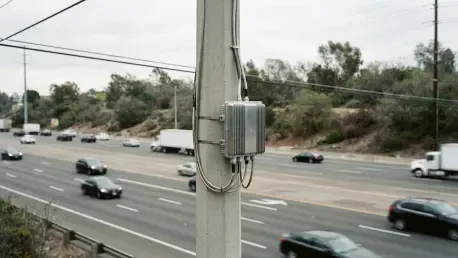

As vehicles become increasingly data-reliant, the need for a robust infrastructure that can handle fluctuating traffic densities has become a primary engineering concern. The rapid shift toward autonomous navigation and data-heavy transit systems has effectively pushed the limits of traditional cloud computing, necessitating a move toward Vehicular Edge Computing (VEC). By placing computational resources at the road’s edge, latency is significantly reduced, yet the high mobility of modern cars creates a complex logistical challenge for server placement. Research from SRM University-AP focuses on this specific gap, proposing a strategy that uses real-time traffic data to optimize the distribution of edge servers. Unlike static models that ignore the fluid nature of urban movement, this approach ensures that the network backbone can scale dynamically with demand. This evolution is critical for maintaining the efficiency of Intelligent Transportation Systems as they become more integrated into the daily flow of city life.
Traffic Density Logic: Implementing the TDA-NSGA-II Framework
The heart of this new deployment strategy is the Traffic Density-Aware Non-Dominated Sorting Genetic Algorithm II (TDA-NSGA-II). This framework represents a significant departure from uniform distribution models by using real-time data to pinpoint urban hotspots where the demand for bandwidth and processing power is highest. By aligning the supply of computational resources with these high-density zones, the system effectively reduces communication delays and energy waste that occur in over-provisioned or underserved areas. This proactive logic ensures that the infrastructure remains robust even when traffic patterns shift, preventing the bottlenecks that typically plague standard networks. Engineering teams can now prioritize resource allocation in areas where vehicles naturally congregate, ensuring a more responsive network environment. This intelligent identification of demand centers serves as the foundation for a more efficient urban communication network.
To ensure the framework functions effectively in real-world environments, the researchers utilized the Simulation of Urban Mobility (SUMO) platform to mirror complex driving behaviors and road layouts. This integration allows the TDA-NSGA-II algorithm to learn from high-fidelity mobility traces, including how cars react to traffic signals and persistent road congestion. By analyzing these movements, the system can anticipate where server demand will peak before it actually occurs, transforming the network from a reactive service into a predictive one. This reliance on realistic data modeling ensures that server placement strategies are grounded in actual driver behaviors rather than abstract mathematical assumptions. Consequently, the framework becomes significantly more adaptable to the specific geographical and behavioral quirks of any metropolitan area. This predictive capability allows the network to preemptively optimize its resource distribution, maintaining high performance in even the densest city environments.
Performance Benchmarks: Balancing Coverage and Connectivity
Managing a vehicular network requires a delicate balance of conflicting performance goals, which the researchers addressed through a multi-objective optimization strategy. The framework simultaneously targets the reduction of communication latency and energy consumption while trying to maximize network coverage and minimize the frequency of handovers. Because improving one factor can often degrade another—such as how adding servers to increase coverage may inadvertently increase the number of handovers—the algorithm seeks a non-dominated solution that offers the most efficient compromise. This results in a network configuration that provides consistent connectivity for safety-critical applications without draining excessive power or dropping data packets as vehicles move. By prioritizing connection stability alongside speed and energy efficiency, the framework supports a wide range of diverse data needs, from high-bandwidth infotainment to low-latency safety signals that are vital for collision avoidance.
The research concluded that a dynamic, traffic-aware approach to server deployment was essential for the successful integration of next-generation vehicular technologies. To build on these findings, city planners and network engineers adopted flexible edge nodes that allowed for reconfiguration based on evolving growth patterns. Future implementation strategies shifted toward integrating more granular data sources, such as pedestrian movement and weather-related traffic variations, to further sharpen predictive accuracy. Standardized protocols for faster handover transitions became a priority to ensure uninterrupted connectivity at high speeds. By adopting these density-aware algorithms, municipalities moved closer to creating a truly intelligent transportation ecosystem that scaled naturally with demand. These actionable steps provided a roadmap for transitioning from experimental setups to fully operational, large-scale smart city networks that were both environmentally sustainable and technologically robust.