
Modern AI chips generate such extreme levels of heat that cooling towers and liquid systems require fast-converging network protocols to prevent dangerous thermal runaway conditions. This operational reality has forced a significant departure from the legacy models of data center management where facilities and compute existed in isolation. As AI workloads continue to surge in 2026, the industrial infrastructure—often referred to as the gray space—has become as critical as the servers themselves. Managing these complex systems manually is no longer feasible given the speed at which thermal and power dynamics shift during high-intensity training cycles. Consequently, the industry has turned toward comprehensive networking automation to bridge the gap between heavy industrial equipment and the digital logic of the server room. This shift ensures that every chiller, pump, and power unit responds with the same agility as the virtualized workloads they support, creating a truly unified and resilient environment for modern computing.
Bridging Environments and Subsystems
Integrating White and Gray Space Environments
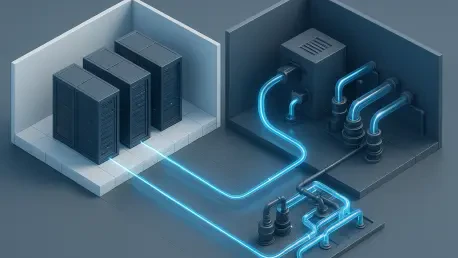
The dual-environment ecosystem of a contemporary AI facility necessitates a seamless interaction between the white space, where the compute clusters reside, and the gray space, which houses the physical support infrastructure. In previous years, these two domains were managed by separate teams using entirely different toolsets, leading to dangerous visibility gaps and delayed responses to environmental changes. However, the rise of liquid cooling and high-density power distribution has made this separation a liability. By applying modern networking standards to the industrial side of the house, operators can now ensure that facilities data is ingested directly into the same monitoring platforms used for IT operations. This convergence allows the infrastructure to act as a single, coordinated system that can dynamically adjust its cooling capacity or power allocation based on the specific telemetry coming from the GPU clusters. Such integration is essential for maintaining the uptime required for global AI training.
Achieving this level of operational flow requires a fundamental shift in how data is transported across the facility. Integrating these environments involves the deployment of high-speed interconnects that can bridge the historical divide between operational technology and information technology protocols. When these systems are brought onto a common network fabric, the latency involved in identifying a cooling failure or a power spike is virtually eliminated. This speed is critical because, in an AI-driven data center, even a few seconds of cooling loss can lead to hardware damage or a catastrophic shutdown of the compute cluster. By automating the data exchange between the gray and white spaces, facilities teams can implement proactive maintenance schedules and automated failover routines that were previously impossible. This unified approach transforms the data center from a collection of siloed hardware into an intelligent, self-regulating organism capable of scaling to meet any computational demand.
Digitizing Critical Industrial Subsystems
The digitization of the gray space involves modernizing several critical subsystems that have traditionally relied on fragmented or manual control mechanisms. Power distribution systems now require sophisticated, resilient connectivity to monitor granular telemetry and prevent electrical surges that could cripple expensive AI hardware. By networking every circuit breaker and power distribution unit, operators gain the ability to reroute energy in real time, ensuring that critical workloads remain active even during localized power events. At the same time, thermal management systems have evolved from simple thermostats into complex, networked arrays of sensors and actuators that manage the flow of liquid and air with extreme precision. These systems rely on fast-converging network protocols to ensure that feedback loops remain tight and responsive. This level of granular control is the only way to manage the massive heat output of current-generation silicon while maintaining high energy efficiency.
Building management systems and physical security platforms represent the final layers of this industrial digitization process. In a modern AI facility, these systems are no longer standalone entities but are integrated into the broader network architecture to provide a holistic view of the site’s health and security posture. Bringing every component—from the cooling towers on the roof to the biometric access control sensors at the front gate—onto a single fabric ensures that security and facilities teams share the same real-time data. This integration allows for sophisticated automation, such as automatically adjusting airflow in response to a surge in occupancy or locking down specific zones based on detected environmental hazards. Furthermore, the use of standardized communication protocols across these diverse devices simplifies the management of the facility, reducing the likelihood of human error and ensuring that the infrastructure can be scaled rapidly as the demand for AI compute continues to grow.
Overcoming Operational and Security Hurdles
Navigating Harsh Technical Environments
Operators face significant obstacles when attempting to automate industrial environments, beginning with the harsh physical conditions inherent to the gray space. Standard networking hardware is often entirely unsuitable for areas prone to extreme temperatures, vibration, and significant electrical noise, necessitating the use of ruggedized industrial Ethernet switches. These specialized devices are designed to operate in environments where moisture and dust would cause traditional enterprise hardware to fail. By deploying these ruggedized solutions, data center managers can extend the reach of their automation fabric into the most demanding areas of the facility, such as power vaults and mechanical rooms. This ensures that telemetry data remains accurate and consistent, regardless of the surrounding physical conditions. Investing in hardware that can withstand these stressors is a prerequisite for any organization looking to achieve long-term operational stability.
Beyond the physical challenges, a severe shortage of qualified staff who understand both IT and facilities management creates a need for simplified, automated tools. Existing teams are often experts in one domain but lack the specialized knowledge required to manage the intersection of high-speed networking and industrial control systems. To address this gap, modern automation platforms now provide familiar, software-defined interfaces that allow facilities engineers to manage complex network configurations without deep expertise in CLI programming. This democratization of technology ensures that the gray space can be managed effectively by the current workforce, reducing the risk of operational silos. By prioritizing ease of use and automated troubleshooting, these tools allow data center operators to scale their infrastructure rapidly without being hindered by a lack of specialized personnel, ultimately speeding up the deployment of new AI clusters.
Securing the Industrial Attack Surface
Security remains a paramount concern as the attack surface of the data center expands with every newly connected sensor and industrial controller. In many legacy facilities, operational technology systems were insufficiently segmented, meaning a breach in a secondary system like a security camera or a lighting controller could potentially compromise critical power and cooling controls. Modern networking solutions address this by embedding security directly into the connection points themselves. By using the network as a sensory organ, operators can achieve passive asset discovery, identifying every device on the fabric and monitoring its behavior for anomalies. This allows for the implementation of dynamic micro-segmentation, which ensures that different industrial subsystems remain isolated from one another. If a single device is compromised, the network can automatically isolate the threat, preventing lateral movement and protecting the core infrastructure from cyber threats.
The implementation of these advanced security measures also facilitates a more robust governance model between the IT and facilities departments. With automated security protocols in place, teams can define clear access policies that dictate which users and systems can interact with specific pieces of industrial equipment. This level of granular control is necessary for maintaining compliance with increasingly stringent global data and infrastructure protection standards. Furthermore, by integrating security into the automation layer, operators can generate detailed audit logs that provide a clear record of every change made to the facility’s physical configuration. This transparency not only aids in incident response but also helps in identifying potential vulnerabilities before they can be exploited. In an era where AI facilities represent high-value targets for cyberattacks, securing the gray space through intelligent networking is no longer optional; it is a foundational requirement.
Building a Unified Architectural Foundation
Orchestrating Resilient Network Solutions
The transition to an automated gray space requires a shift toward a single, governed experience across all data center domains. By utilizing cloud-based control platforms, operators achieved a single pane of glass view that integrated white space performance metrics with gray space environmental data. This holistic visibility eliminated operational blind spots and allowed for shared governance between IT and facilities teams. Organizations that successfully moved away from fragmented management tools found that they could respond to infrastructure events with unprecedented speed and accuracy. Leveraging such a unified architecture ensured that the entire facility functioned as a cohesive system rather than a collection of isolated parts. This strategic alignment was critical for managing the massive power draws and thermal loads associated with large-scale AI inference engines, providing a stable foundation for the next decade of technological growth and infrastructure expansion.
To guarantee the continuous uptime required for AI training, the industry prioritized building its networks on a foundation of industrial-grade resilience. Ruggedized hardware designed for longevity in demanding settings used specialized protocols to ensure that critical telemetry data was never lost, even during sudden link failures. This robust connectivity served as the primary defense against downtime, which had become a massive financial liability as AI projects grew in complexity and cost. Operators discovered that by investing in high-availability network designs, they could significantly reduce the mean time to repair for industrial components. This integrated approach provided the data-driven insights necessary to optimize energy and water usage, helping data centers meet increasingly stringent sustainability targets. Through granular telemetry, facilities teams were able to pinpoint inefficiencies and implement automated corrections that lowered the total cost of ownership.
Driving Sustainability and Future Efficiency
The strategic implementation of gray space automation laid the groundwork for a more sustainable and efficient data center industry. It was determined that the most effective way to reduce the environmental footprint of AI was to gain deeper visibility into the physical operations of the facility. Organizations that prioritized real-time telemetry were able to achieve significant reductions in Power Usage Effectiveness and Water Usage Effectiveness ratings. These improvements were driven by the ability to precisely match cooling and power delivery to the actual needs of the compute clusters. Future considerations for the industry now focus on the further integration of renewable energy sources and the use of AI itself to manage the automation logic of the gray space. By analyzing the vast amounts of data generated by networked industrial systems, operators can now predict equipment failures before they happen and optimize the entire facility for maximum performance and minimal waste.