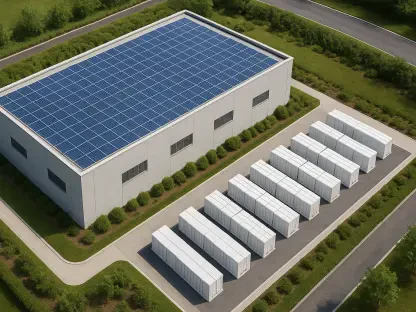

High-stakes manufacturing environments utilize edge nodes to synchronize robotic movements instantly without the lag associated with distant hyperscale cloud facilities. The broader digital landscape is undergoing a fundamental transformation as data processing moves from centralized remote hubs to decentralized neighborhood nodes. This evolution marks a departure from the traditional dependency on massive, distant server farms, placing computational power within the physical structures where people live and work. By bringing intelligence closer to the source of data, the current infrastructure is becoming significantly more responsive and deeply woven into the urban environment. This shift is not merely an incremental update to existing networks but a complete reimagining of how digital services interact with the physical world. As demand for real-time interaction grows, the limitations of the classic cloud model have become apparent, necessitating a more distributed architecture that can handle the massive influx of data generated by modern smart devices.
The Physics of Information: Overcoming Latency Constraints
Even as network speeds increase, the physical speed of light remains a constant barrier that dictates the time it takes for data to travel across continents. In the current landscape of 2026, the demand for sub-millisecond response times has forced a move away from distant server arrays toward localized hardware. For applications such as autonomous vehicle fleets and remote surgical robotics, even a brief delay in data transmission can lead to catastrophic outcomes or system failures. By processing data at the edge of the network, organizations effectively bypass the long-distance congestion of the public internet. This localized approach allows for immediate decision-making at the device level, ensuring that critical safety protocols are enacted without waiting for a round-trip confirmation from a data center located thousands of miles away. Consequently, the digital infrastructure is evolving into a layered system where speed is prioritized by proximity, allowing for a more reliable user experience.
Beyond the safety implications for vehicles, the move toward edge-centric processing is revitalizing heavy industry and power management. Modern smart grids now utilize localized nodes to adjust wind turbine pitch or solar panel orientation based on instantaneous weather fluctuations, optimizing energy production without central oversight. Similarly, automated fulfillment centers rely on edge computing to coordinate thousands of mobile robots that must navigate high-density environments with extreme precision. These systems operate as a mesh network, sharing localized data to prevent collisions and streamline logistics pipelines. By maintaining the computational brain near the mechanical body, these industries achieve a level of efficiency that was previously impossible under a centralized cloud regime. This shift also provides a layer of security, as localized processing reduces the amount of sensitive data that must be transmitted over long distances, narrowing the window for interceptive cyberattacks.
Hidden Architectures: Carrier Hotels and Modular Data Centers
Much of the infrastructure supporting this transition remains largely invisible to the public, hidden within repurposed urban landmarks known as carrier hotels. These massive, windowless buildings are strategically located at the intersection of major fiber-optic trunks and power grids, serving as the high-speed hubs for local data distribution. Unlike traditional data centers tucked away in rural plains, carrier hotels are the nerve centers of the modern city, housing thousands of interconnects that facilitate seamless communication between different service providers. These structures have been heavily retrofitted with advanced cooling systems and backup power arrays to ensure constant uptime for the low-latency services that city dwellers now take for granted. By housing localized servers within city limits, these facilities provide the necessary bandwidth for intensive applications like augmented reality. This integration into the urban core represents a permanent shift in how municipal resources are allocated.
Complementing these permanent structures is a new generation of mobile infrastructure in the form of modular data centers. Often housed in standardized shipping containers, these self-contained units are equipped with their own climate control, fire suppression, and server racks, allowing for rapid deployment in nearly any environment. They are frequently utilized at large-scale construction sites, temporary sporting venues, or disaster recovery zones where local network capacity is insufficient. This flexibility allows companies to bring high-performance computing to the exact location of a project, processing petabytes of data on-site before transporting the hardware to a new location. This model has fundamentally changed the logistics of infrastructure deployment, moving away from multi-year construction projects toward agile, on-demand installations. As organizations seek to scale their operations quickly, these modular units offer a scalable solution that maintains the high-speed advantages of localized processing.
The Street-Level Digital Grid: Micro-Nodes and Smart Hubs
The most pervasive signs of the edge computing revolution are the nondescript utility cabinets appearing on street corners across major metropolitan areas. While they may resemble traditional electrical boxes, these micro-data centers are the frontline processors for the modern smart city. They handle immense streams of telemetry from traffic cameras, environmental sensors, and pedestrian flow monitors, analyzing the data locally to optimize city services in real-time. By filtering and processing this information at the source, these nodes prevent the central metropolitan network from being overwhelmed by raw data that does not need to be stored long-term. For example, a traffic node can identify a congestion pattern and adjust signal timing locally in seconds, rather than sending video feeds to a central cloud and waiting for a command. This localized intelligence makes city infrastructure more autonomous and capable of handling complex urban challenges without constant human intervention or massive backhaul requirements.
In areas where ground space is limited or restricted by zoning laws, digital infrastructure is climbing upward onto utility poles and building facades. These ruggedized server enclosures are designed to endure extreme weather while providing the dense connectivity required for the latest cellular deployments. These nodes act as the final link in the digital chain, providing the necessary processing power for the billions of sensors and mobile devices that populate the contemporary landscape. By mounting hardware closer to the end-user, service providers can deliver incredibly high bandwidth and low latency for consumer electronics and industrial internet-of-things applications. This vertical expansion of the digital grid ensures that high-speed connectivity is treated as a universal utility, much like water or electricity. As the density of these installations increases, the boundary between the physical and digital worlds continues to blur, creating an environment where computational power is as ubiquitous as the air.
Strategic Implementation: Navigating the Distributed Future
The transition toward a decentralized digital infrastructure was driven by a fundamental realization that the cloud could no longer sustain the demands of an increasingly real-time world. Organizations that successfully adapted to this shift began by auditing their latency requirements and identifying critical points where localized processing could eliminate operational bottlenecks. This involved a move away from monolithic software architectures toward containerized microservices that could be deployed across a fleet of edge nodes. By diversifying their hardware presence, these entities built a more resilient system that remained functional even if primary network connections were severed. The focus shifted from simply storing data to extracting immediate value from it at the moment of generation. This strategic pivot required a significant investment in automated management tools capable of overseeing thousands of remote nodes without direct human oversight, resulting in a more robust and redundant network environment.
Ultimately, the strategic path forward was defined by the standardization of edge protocols to ensure interoperability between different hardware vendors and software providers. Decision-makers prioritized the implementation of zero-trust security frameworks that handled the unique vulnerabilities of distributed physical nodes. This included the physical hardening of street-level enclosures and the adoption of hardware-based encryption to protect data at the extreme edge. Furthermore, the integration of local energy harvesting and storage solutions became a crucial factor in ensuring that these nodes operated independently during power outages. By developing a comprehensive edge strategy that accounted for both physical security and network agility, businesses leveraged this decentralized infrastructure to create truly responsive and intelligent services. The focus remained on modularity and local autonomy, which proved to be the primary path for maintaining a competitive technological edge in a rapidly evolving global market.