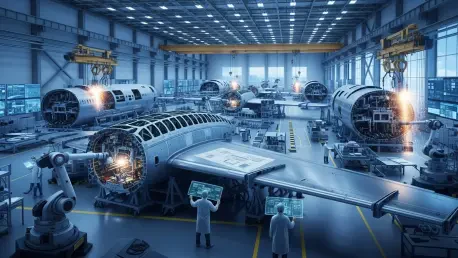

The aerospace manufacturing sector has reached a critical juncture where the margin for error is effectively zero and traditional safety protocols are finally merging with the high-tech capabilities of the digital age. This transformation centers on the integration of Non-Destructive Testing (NDT) with the Internet of Things (IoT), fundamentally changing how engineers ensure structural integrity. While NDT has served as the industry standard for decades, the advent of ubiquitous connectivity is turning once-isolated inspections into a continuous, data-driven safety mesh. This shift is not merely about replacing paper logs with digital files; it is about establishing a higher standard for flight safety through real-time monitoring and advanced predictive analytics. By embedding intelligence into the very fabric of aircraft components, manufacturers are now able to detect microscopic anomalies long before they pose a risk to operational safety, ensuring that every flight is backed by a comprehensive digital history of its structural health.
The Foundation of Non-Destructive Testing in Aviation
Non-destructive testing serves as a vital analytical process used to evaluate the physical properties of materials and components without causing any permanent change or damage to their structure. In the high-stakes aerospace environment, where the failure of even a minor part like a turbine blade or a landing gear strut can lead to catastrophic consequences, NDT is an absolute necessity for mission success. These methods allow engineers to perform rigorous evaluations of flight-critical structures quickly and accurately, ensuring that every component is fit for service before it leaves the assembly line. The primary goal has always been to identify subsurface defects, cracks, or material inconsistencies that are invisible to the naked eye. In the context of 2026, this process has evolved from a periodic requirement into a proactive strategy that informs the entire design cycle, helping material scientists understand how different alloys behave under extreme stress.
To appreciate the impact of modern connectivity, one must understand the various techniques used to peer inside complex machinery and the ways they are now being networked. Traditional methods such as radiographic testing use high-energy X-rays to reveal hidden defects in deep welds, while ultrasonic testing employs high-frequency sound waves to spot internal cracks or voids in composite materials. Other techniques, including eddy current and magnetic particle inspection, allow technicians to find surface-level flaws in various types of conductive and ferromagnetic materials. When these traditional tools are combined with IoT sensors, they become part of a larger, interconnected network that tracks the health of an aircraft throughout its entire operational life. Instead of being a one-off measurement, the data from an ultrasonic probe is now automatically uploaded to a central database where it is compared against thousands of previous scans to identify subtle patterns of degradation over time.
Connectivity Across the Manufacturing and Service Lifecycle
The digitization of inspection processes represents a massive move away from manual data collection toward a sophisticated model of automated, networked intelligence. IoT-enabled systems connect various sensors and imaging devices to a central platform, creating what industry experts describe as a comprehensive safety ecosystem. This ensures that information is not just recorded in a silo but is shared across different engineering teams and quality control departments in real time. This level of connectivity allows manufacturers to catch defects at the very beginning of the production line, preventing costly mistakes from affecting the final assembly or delivery schedule. For instance, if a sensor detects a cooling rate anomaly during the casting of an engine component, the system can flag it for immediate NDT inspection. This prevents the part from moving further down the line, saving significant labor costs and ensuring that only the highest quality components reach the wings.
As aircraft move from the factory floor to active service, IoT-driven NDT continues to provide immense value through constant, remote monitoring of structural health. Many modern aircraft now utilize embedded sensors that track mechanical stress, vibrations, and temperature fluctuations during flight, sending a live stream of data back to ground-based maintenance teams. This creates a permanent digital record for every critical component, ensuring that any part can be traced back through its entire operational history with a few keystrokes. Having this data readily available in the cloud is essential for long-term safety audits and quick troubleshooting when unexpected technical problems arise in the field. This capability allows airlines to maintain a continuous pulse on their fleet, effectively eliminating the blind spots that used to exist between scheduled heavy maintenance checks, thus making the entire global aviation network more resilient.
Driving Operational Efficiency and Future Innovation
Beyond the obvious improvements to safety, the fusion of IoT and NDT provides significant financial and performance benefits for both manufacturers and operators. By using connected inspection tools, manufacturers have been able to drastically reduce the amount of time an aircraft spends grounded in a maintenance hangar for routine checks. Real-time data sharing and high-speed automation allow for faster, more accurate inspections, meaning that planes spend more time in the air generating revenue. Furthermore, the precision of these digital tools helps reduce material waste; instead of discarding expensive components based on conservative estimates or guesswork, engineers use hard data to determine if a part is truly damaged or if it can be safely repaired. This level of granular insight allows for a more sustainable approach to aerospace manufacturing, where resources are utilized to their maximum potential without ever compromising the safety of the crew or passengers.
The industry is also moving rapidly toward a model of predictive maintenance, where the focus is on repairing or replacing parts based on their actual condition rather than a rigid calendar schedule. By comparing real-time sensor data with vast historical records, IoT platforms can predict with high accuracy when a specific component is likely to wear out or require service. This process is often enhanced by the use of digital twins—virtual replicas of physical aircraft that let engineers simulate performance and test various failure scenarios in a safe, digital environment. Artificial intelligence also plays a major role in this evolution, as machine learning algorithms scan through massive amounts of inspection data to find tiny anomalies that even a highly experienced human inspector might miss. This synergy between human expertise and machine processing power ensures that potential issues are identified and addressed long before they develop into serious mechanical failures.
Strategic Integration: The Human-Centric Future of Aviation Safety
To ensure these new technologies are successful, the aerospace industry is maintaining a strict focus on human-centric design throughout the implementation process. The goal of IoT-enabled NDT has always been to support and enhance the expertise of human technicians, rather than attempting to replace their nuanced judgment. By providing clear, visualized data and easy-to-use digital interfaces, these systems help workers make more informed and confident decisions about aircraft safety. This approach ensures that the transition to a connected workplace is smooth and that the specialized skills of the workforce remain a central part of the maintenance process. Training programs have evolved from 2026 to 2028 to focus on data literacy, ensuring that NDT technicians can interpret complex sensor outputs and collaborate effectively with AI diagnostic tools. This partnership between man and machine creates a redundant layer of safety that is essential for maintaining public trust in aviation.
Industry leaders prioritized the standardization of data protocols across different manufacturers to ensure that IoT-enabled NDT reached its full potential. By adopting open-source communication standards, companies facilitated a more transparent exchange of safety information that benefited the entire aerospace sector. Organizations also invested heavily in cybersecurity measures to protect sensitive inspection data from external threats, recognizing that a connected fleet required robust digital defenses. Moving forward, the focus shifted toward integrating these NDT insights directly into the initial design phase, allowing engineers to create components that were inherently easier to monitor and maintain. These steps provided a clear roadmap for achieving a zero-failure environment while simultaneously optimizing the global supply chain. This transition demonstrated that the true power of the Internet of Things lay not just in the hardware itself, but in the actionable insights that allowed for a safer and more efficient era of flight.