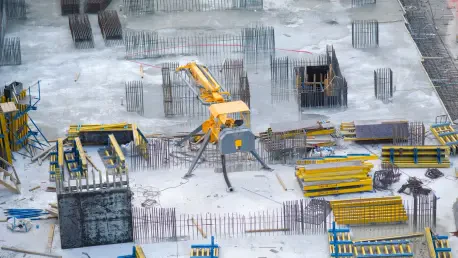

Construction sites have long been categorized as some of the most dangerous workplaces globally, where the combination of high-altitude tasks, heavy equipment, and unpredictable environmental factors creates a persistent threat to human life. Despite the presence of strict regulatory frameworks and safety protocols, the industry continues to grapple with high fatality rates that often stem from minor lapses in oversight or delayed reactions to emerging hazards. In this context, the traditional reliance on reactive safety measures is being replaced by a more robust, technology-driven approach that utilizes the Internet of Things to bridge the gap between policy and practice. By integrating smart sensors, wearables, and real-time monitoring systems into the daily workflow, construction firms can achieve a level of situational awareness that was previously impossible. This evolution is a fundamental shift in the culture of site management where the preservation of life is supported by a responsive and automated infrastructure.
The Limitations: Transitioning from Manual Audits to Real-Time Monitoring
Legacy systems of compliance frequently fall short because they are built on the assumption that a site remains static between scheduled inspections, ignoring the dynamic nature of a project. Manual reporting processes often result in data silos and delayed communication, where a hazard identified in the morning might not reach the decision-makers until an incident has already occurred. For example, if a worker is exposed to dangerous levels of silica dust, a manual audit conducted at the end of the week provides no protection for the health of that individual in the moment of exposure. These retrospective methods serve more as legal documentation than as active preventative tools, leaving a dangerous void in the safety net. The inability of paper-based or even basic digital spreadsheets to reflect real-time conditions means that safety managers often make decisions based on outdated information, which significantly increases the risk of fatalities on complex or fast-moving construction projects.
The integration of IoT technology addresses these systemic failures by providing a continuous stream of environmental and operational data that triggers immediate corrective actions. When a site is equipped with connected sensors, parameters such as air quality and structural vibrations are monitored every second, with alerts sent directly to supervisors’ smartphones the moment a threshold is breached. This creates a proactive loop where the environment itself “speaks” to the management team, allowing them to evacuate a zone or shut down faulty equipment before a catastrophic failure occurs. Furthermore, wearable devices can track the vital signs of workers and their proximity to moving machinery, adding a layer of personal protection that legacy systems could never offer. By moving the focus from historical compliance to instantaneous risk mitigation, construction firms can effectively eliminate the human error factor and ensure that the safety of every person on the site is managed with mathematical precision and reliability.
Smart Detection: Enhancing Personnel Safety and Site Security
Artificial intelligence and computer vision have become indispensable extensions of the IoT ecosystem, offering a sophisticated layer of smart detection that identifies risks humans might miss. High-definition cameras linked to AI algorithms can scan the entire construction site to ensure that every individual is wearing the required personal protective equipment, such as hard hats or high-visibility vests. These systems are capable of detecting if a fire exit has been inadvertently blocked by construction materials or if a worker is operating at an unsafe height without a tether. Instead of relying on a single safety officer to walk the perimeter and spot these issues, the digital eye of the AI provides total coverage, flagging deviations from safety protocols in real time. This automated oversight ensures that compliance is a continuous state of operation, drastically reducing the chances of falls and strikes, which remain the leading causes of death in the construction industry across most modern urban projects today.
Beyond the internal safety of the workforce, IoT-enabled site security plays a pivotal role in preventing fatalities involving unauthorized personnel or intruders who may enter a site after hours. Modern site security systems utilize thermal imaging and motion sensors to detect movement in restricted areas, providing immediate video verification to remote monitoring centers. This is particularly crucial in dense urban environments where curiosity or malicious intent can lead members of the public into dangerous areas like deep excavations or areas with unstable scaffolding. By securing the perimeter with smart technology, a firm protects itself from the legal and emotional fallout of an accident involving a civilian. Moreover, the presence of robust security hardware acts as a deterrent, ensuring that the site remains a controlled environment where only trained personnel are present. The synergy between worker safety and site security creates a comprehensive protection bubble that addresses both operational hazards and external vulnerabilities.
Strategic Evolution: Actionable Steps for Technological Integration
The transition to IoT-enabled compliance represented a fundamental shift in how the construction industry approached the preservation of human life on the job site. To capitalize on these advancements, firms prioritized the integration of modular sensor networks that grew alongside the project’s complexity. They established clear protocols for data response, ensuring that every automated alert was met with a swift and documented human intervention. Furthermore, the selection of vendor-neutral cloud platforms allowed for the seamless addition of new technologies as they emerged, preventing the stagnation that often hampered legacy systems. By treating safety data as a strategic asset rather than a regulatory burden, organizations successfully fostered a culture where technology and human intuition worked in tandem. This proactive stance not only protected the workforce from physical dangers but also stabilized the financial trajectory of projects during volatile periods, proving the efficacy of digital safety.
Future industry success required a total commitment to transparency and the adoption of unified data ecosystems that provided a “single pane of glass” view for all stakeholders. Firms that embraced these next steps eliminated informational silos, allowing compliance teams and supervisors to work from the same real-time information to satisfy regulators. They moved beyond simple incident reporting to predictive analytics, which identified potential failure points before they resulted in injury. Legal and economic resilience was achieved by grounding safety investments in tangible data, reducing insurance premiums and avoiding the massive costs of lost productivity. As safety standards became increasingly stringent, the ability to demonstrate technological compliance became a primary differentiator for winning high-value contracts. By integrating these actionable insights into daily operations, the industry finally moved toward a future where fatalities were no longer accepted as an inevitable cost of progress.