
The velocity of modern cyberattacks has rendered traditional perimeter defenses nearly obsolete, as automated scripts now execute multi-stage breaches in milliseconds. Bridging the gap between disparate data sources like system logs and packet captures is essential for tracing the origin and movement of complex security events. As adversaries increasingly utilize artificial intelligence to automate vulnerability discovery, the conventional reliance on human-speed responses has created a dangerous defensive lag. To address this, the industry is witnessing a pivot toward network-integrated intelligence, a paradigm where security is not a separate layer but is woven into the very fabric of global connectivity. By embedding real-time analysis directly into Tier 1 network backbones, organizations can finally address the “time problem,” shifting from a reactive posture that chases historical logs to a proactive stance that intercepts threats as they traverse the wire. This evolution represents a departure from isolated software tools, positioning the network itself as the primary battleground where the fight against sophisticated, machine-speed exploits will be won or lost in the coming years.
The Architecture and Mechanics of On-Net Defense
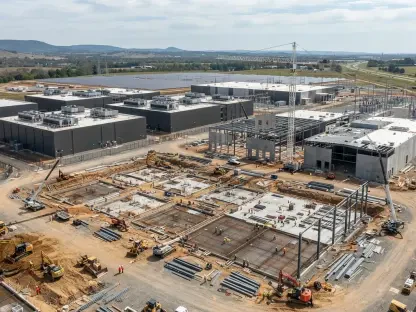
The fundamental advantage of network-integrated security lies in its physical and logical placement within the global infrastructure. Traditional security models typically follow a “ship-and-analyze” workflow, where data is collected from various edge devices, moved across the network—often incurring significant egress fees—and normalized in a centralized repository before analysis can even begin. This process introduces inherent latency that sophisticated attackers exploit to establish persistence before a single alert is triggered. In contrast, modern on-net defense strategies, such as those implemented through GTT Defense Halo, establish “AI factories” directly at major network hubs in cities like New York, London, and Prague. By processing telemetry at the source, these systems eliminate the delay associated with external data transfers, allowing security protocols to operate at “network speed.” This proximity ensures that visibility is not just a post-mortem forensic capability but a real-time defensive asset that can identify and neutralize threats before they move laterally through an enterprise environment.
Building on this architectural shift, the use of a single-tenant model for integrated AI ensures a level of security and customization that multi-tenant cloud environments often struggle to provide. In this dedicated setup, each organization receives an isolated instance where the AI can develop a granular, highly specific baseline of “normal” behavior tailored to that unique environment. This approach avoids the pitfalls of generic threat models, which often generate excessive false positives or miss subtle anomalies specific to a particular corporate culture or technical stack. Furthermore, maintaining data within the network backbone simplifies compliance with increasingly stringent data residency and privacy regulations. By keeping sensitive telemetry within a controlled, dedicated environment, companies can leverage advanced machine learning without exposing their internal traffic patterns to the risks associated with shared infrastructure. This dedicated architecture transforms the network into an intelligent, private fortress that learns and adapts to the specific needs of the business it serves.
Core Pillars of an Integrated Security Platform
A comprehensive network-integrated security platform is typically structured around three functional phases that address the entire lifecycle of a threat. The first phase, focused on proactive posture management or “recon,” involves the continuous analysis of firewall and device configurations across the entire global estate. By benchmarking these configurations against established security frameworks, the system can identify compliance gaps and misconfigurations before they are discovered by an external scanner. A critical innovation in this area is the ability to map known Common Vulnerabilities and Exposures (CVEs) directly to the monitored assets in real time. This provides security teams with a quantified risk score based on actual network exposure rather than theoretical severity. Instead of sifting through a list of thousands of unprioritized vulnerabilities, IT professionals can focus their remediation efforts on the specific assets that are currently visible to and reachable by potential attackers, significantly hardening the perimeter against opportunistic exploits.
The subsequent phases of detection and response move beyond static configurations to dynamic behavioral analysis. By establishing a baseline of standard user and device behavior, the AI can detect deviations that suggest a zero-day exploit or a sophisticated internal threat. Unlike traditional signature-based detection, which requires a known indicator of compromise to function, behavioral analysis identifies the “how” of an attack, such as unusual data staging or unauthorized lateral movement. When a threat is detected, the system transitions into the response phase, utilizing agentic runbooks—AI-driven workflows that can execute complex mitigation tasks instantaneously. These runbooks are designed to handle approved responses across managed environments, ensuring that the reaction to a verified threat is measured in seconds rather than hours. This rapid transition from detection to mitigation effectively neutralizes the attacker’s primary advantage of speed, allowing the network to defend itself autonomously while keeping human operators informed of every action taken.
Strategic Efficiency and the Role of Human Oversight
The practical benefits of integrating AI into the network fabric are most visible in the radical simplification of complex infrastructure management. Large enterprises frequently suffer from “firewall sprawl,” where a mix of legacy and modern hardware from multiple vendors creates a fragmented and inconsistent security policy. Managing this environment manually is not only labor-intensive but also prone to human error, which remains a leading cause of security breaches. Integrated AI platforms can automate the conversion and migration of these policies across disparate systems, reducing the time required for major infrastructure shifts from weeks to mere hours. For example, migrating over a hundred sites from cloud-managed firewalls to on-premises equipment can be accomplished with near-instantaneous accuracy when driven by an AI that understands the underlying network logic. This level of operational efficiency allows organizations to reallocate their most skilled security personnel from mundane administrative tasks to high-value threat hunting and strategic planning.
Despite the significant capabilities of automated systems, the industry has maintained a disciplined “human-in-the-loop” philosophy to ensure safety and accountability. While the AI is capable of processing billions of events and identifying subtle correlations at machine speed, the ultimate decision to execute high-impact mitigation remains under human control. This balanced approach prevents the risks associated with total autonomy, such as unforeseen conflicts between automated agents or the accidental disruption of critical business services. By presenting human operators with clear, evidence-based recommendations, the AI acts as a powerful force multiplier rather than a replacement for professional judgment. This transparency is essential for building trust in automated systems, especially in highly regulated sectors where every security action must be auditable. The goal is to combine the tireless, high-speed processing power of artificial intelligence with the nuanced understanding of business context and ethics that only human experts can provide.
Navigating Implementation and Organizational Shifts
The successful adoption of network-integrated AI required a fundamental shift in how organizations viewed the relationship between connectivity and protection. For years, Network Operations (NetOps) and Security Operations (SecOps) existed in separate silos, often working with different tools, budgets, and even competing priorities. The move toward an integrated model necessitated the convergence of these two disciplines, fostering a culture where the network was seen as the primary engine of defense. Leaders who successfully navigated this transition began by auditing the hidden costs of their legacy models, specifically the “latency tax” and the high egress fees associated with shipping massive amounts of telemetry to external cloud providers. By quantifying these inefficiencies, they built a compelling business case for moving security “on-net.” This organizational alignment was crucial, as it ensured that the deployment of intelligent network fabrics was supported by both the technical infrastructure and the human teams responsible for its daily operation.
During the initial phases of this industry-wide transition, organizations prioritized incremental testing on high-risk, low-complexity tasks to demonstrate immediate value. This often involved starting with automated firewall policy hygiene or the correlation of CVEs across the managed estate, which provided clear evidence of time and cost savings. As these early projects succeeded, the scope expanded to include more advanced behavioral detection and automated response workflows. In highly regulated sectors like finance and healthcare, the use of single-tenant, customer-isolated models became the standard for maintaining data integrity while benefiting from AI-driven insights. By the conclusion of these implementation cycles, the consensus among IT leadership was clear: the network could no longer be treated as a passive utility. Instead, it was recognized as an intelligent, integrated fabric that served as the first line of defense. This strategic shift not only lowered operational risks but also created a more resilient and agile digital enterprise capable of thriving in an increasingly volatile threat environment.