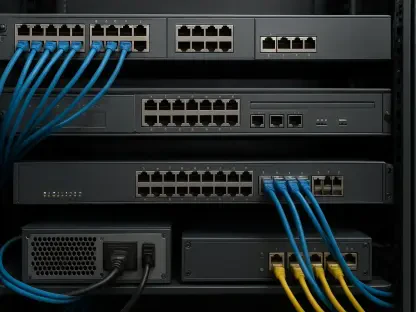

Sophisticated AI agents are now capable of monitoring systems and diagnosing complex issues across IT functions with minimal human oversight. This transformative shift, highlighted at the DTW Ignite 2026 conference in Copenhagen, represents a departure from the rigid automation of the past and a decisive move toward fully autonomous network operations. NVIDIA has introduced a specialized suite of trusted, 24/7 AI agents specifically tailored for the telecommunications sector. These intelligent layers are designed to manage the increasing density and complexity of modern connectivity while ensuring high service reliability. By integrating these agents, carriers can now bridge the gap between back-end IT functions and customer-facing business services. This initiative is not just about incremental improvements; it is about establishing a cognitive layer that understands the nuances of network traffic and hardware performance. The goal is to provide a seamless operational experience that scales naturally with demand. This evolution marks a significant milestone in the industry’s journey toward digital maturity.
Transitioning Toward Autonomous Network Management
Deploying Agentic Systems for Real Time Resolution
These newly deployed AI agents function as proactive participants within the network ecosystem rather than simple response scripts. Unlike traditional generative AI chatbots that merely provide information, these agents utilize advanced reasoning capabilities to execute predefined tasks within complex governance frameworks. For instance, when a localized network outage occurs, the AI agent can autonomously identify the root cause, initiate rerouting protocols, and notify maintenance teams without human intervention. This capability is critical as telecommunications companies face escalating data demands that outpace traditional manual management capacities. By utilizing specialized reasoning models, operators can maintain uptime even during peak usage cycles or unexpected hardware failures. The shift allows human engineers to focus on high-level strategic planning rather than repetitive troubleshooting tasks. This strategic reallocation of human resources is essential for maintaining a competitive edge in an increasingly hyper-connected global marketplace.
Simulating Network Environments for Risk Mitigation
Furthermore, NVIDIA has provided carriers with sophisticated simulation environments that serve as digital twins for the physical infrastructure. These virtual settings allow network engineers to test significant modifications and software updates before they are ever deployed in a live environment. By simulating thousands of variables and potential failure points, operators can significantly mitigate the risks associated with infrastructure upgrades. This proactive approach to network health ensures that service disruptions are minimized and that new features are rolled out with high confidence. The integration of these simulation tools with AI agents creates a closed-loop system where the AI learns from virtual scenarios to better handle real-world challenges. This evolution marks the move toward AI-native infrastructure, which is a fundamental prerequisite for the eventual rollout of 6G technology. The ability to predict and visualize network behavior under extreme stress is no longer a luxury but a necessity for modern operators who must ensure constant availability.
Overcoming Structural Barriers to Industry Scaling
Managing Data Sensitivity with Synthetic Modeling
A significant hurdle for the telecommunications industry has historically been the difficulty of utilizing sensitive customer and network data for AI training. Data privacy regulations and the risk of exposing confidential information often left operators with incomplete datasets, hindering the performance of their machine learning models. To address this, NVIDIA and its partners, including industry leaders like SoftBank and NTT Data, have introduced tools that generate privacy-safe synthetic data. This technology allows carriers to train high-performance models using data that mimics real-world patterns without containing any actual private information. By overcoming these data-related obstacles, operators can now refine their AI tools to be more accurate and responsive to the specific needs of their subscriber base. This development is a game-changer for the sector, especially as roughly 90% of operators reported that AI integration significantly boosted revenue or reduced costs from 2026 to 2028. The use of synthetic data ensures compliance with global standards.
Establishing Strategic Governance and Scalability Protocols
To maximize the benefits of these advancements, organizations prioritized the establishment of clear governance frameworks that defined the operational boundaries for autonomous agents. They recognized that while AI can handle the majority of diagnostic tasks, human oversight remained essential for high-stakes decision-making and ethical compliance. Leaders in the field implemented phased rollout strategies, starting with low-risk monitoring functions before expanding to active network management. This measured approach allowed teams to build trust in the AI systems while refining the synthetic data models used for continuous learning. Furthermore, companies invested in specialized training for their workforce to ensure that engineers could effectively collaborate with agentic systems. By focusing on the intersection of human expertise and machine efficiency, the industry successfully navigated the complexities of modern network demands. The focus shifted from merely adopting new tools to creating a sustainable culture of innovation that emphasized security.