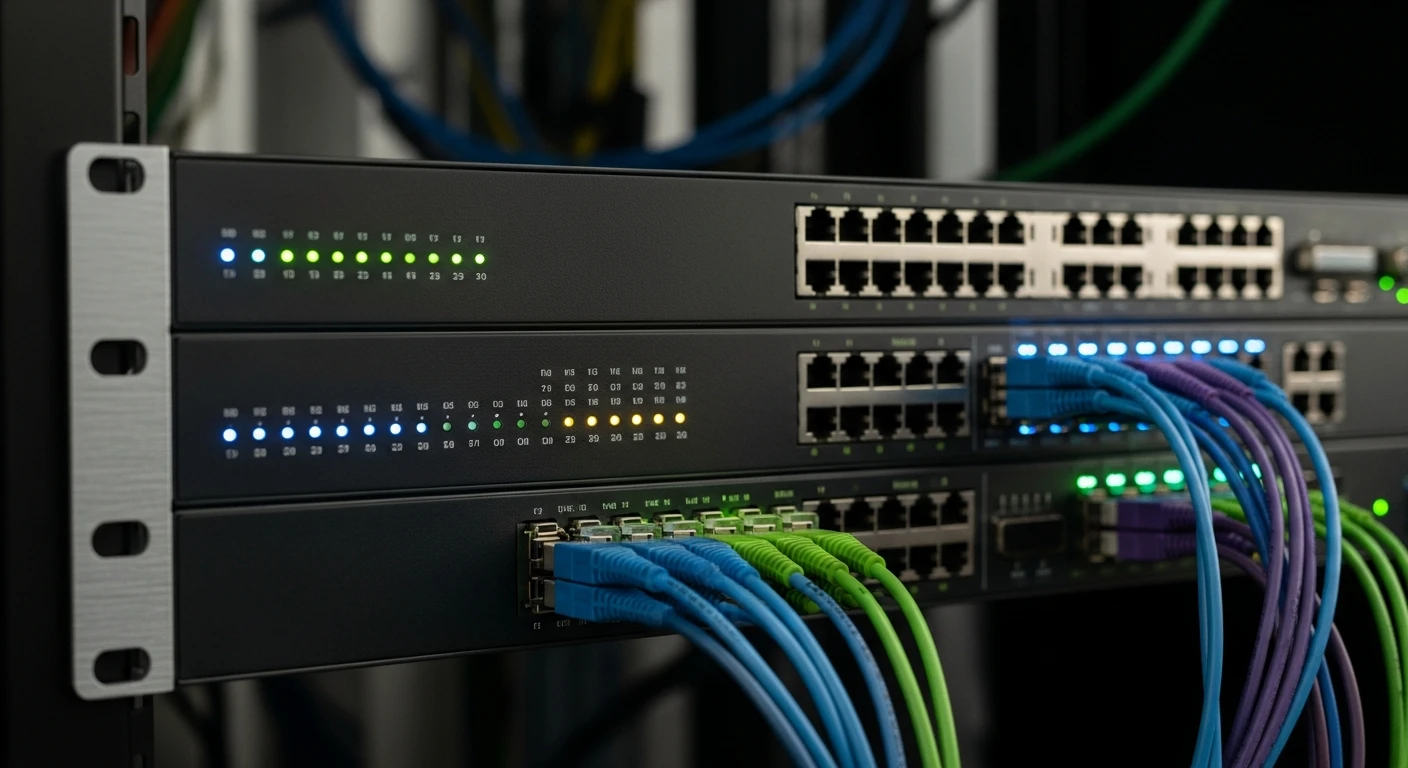

The explosion of generative AI models and massive datasets has fundamentally rewritten the requirements for data center networking infrastructure, pushing legacy systems to their breaking points. Modern AI clusters demand massive throughput and near-zero latency to maintain the efficiency of distributed training processes, which often involve thousands of interconnected GPUs working in parallel. Addressing this critical bottleneck, the introduction of the Teralynx T100 high-performance switch represents a significant leap forward in networking technology designed specifically for the rigorous demands of today. This silicon innovation targets the heart of the hyperscale environment, offering a robust solution for operators who are struggling to balance the competing needs of increased bandwidth and reduced power consumption. By optimizing how data moves between compute nodes, the hardware ensures that expensive processing cycles are not wasted on network congestion or inefficient packet routing protocols.
Architectural Innovations: Powering Next-Generation Throughput
At the core of the new platform lies a 51.2 Terabits per second switching capacity that effectively doubles the performance of previous iterations while maintaining a manageable thermal footprint for dense rack configurations. This massive increase in bandwidth is facilitated by high-density 1.6 Terabit Ethernet ports, allowing for fewer physical connections to handle a greater volume of traffic across the fabric. The design utilizes advanced SerDes technology to ensure signal integrity over longer distances within the data center, which is a crucial requirement for large-scale leaf-and-spine architectures that span multiple rows of server cabinets. Furthermore, the switch architecture minimizes jitter and tail latency, two factors that can severely degrade the performance of large language model training if not handled with precision. By providing a predictable and low-latency path for data packets, the T100 enables more efficient synchronization between GPU clusters during tasks.
Beyond raw speed, the Teralynx T100 focuses heavily on the sustainability of the data center by implementing sophisticated power management features that reduce the total cost of ownership for large-scale operators. The move toward specialized AI networking silicon has necessitated a focus on energy efficiency, as the cumulative power draw of networking equipment can rival that of the compute nodes themselves in modern facilities. Marvell has optimized the internal buffer management and packet processing pipelines to ensure that the switch consumes minimal power per bit of data transferred, setting a new benchmark for performance-per-watt in the industry. This focus on efficiency does not come at the expense of functionality; the silicon includes programmable telemetry features that allow for real-time monitoring of network health. These insights enable automated traffic engineering and rapid troubleshooting, which are essential for maintaining the high availability required by AI services.
Ecosystem Integration: Strategic Paths to Scalability
The integration of the T100 into existing environments is streamlined through comprehensive support for open-source networking software, most notably the Software for Open Networking in the Cloud (SONiC) operating system. This commitment to an open ecosystem allows data center architects to avoid vendor lock-in while leveraging a familiar set of tools for management and orchestration across heterogeneous hardware environments. By providing a unified software interface, the platform simplifies the deployment of advanced networking features like priority flow control and explicit congestion notification, which are vital for loss-less Ethernet configurations. These protocols are essential for AI workloads that rely on RDMA over Converged Ethernet (RoCE) to move data directly between memory spaces with minimal CPU involvement. The flexibility of the Teralynx architecture ensures that it can adapt to evolving industry standards and various experimental networking protocols as they emerge in the local field.
The introduction of the Teralynx T100 provided a clear roadmap for organizations aiming to modernize their network fabrics to support the next generation of artificial intelligence and high-performance computing. Decision-makers evaluated their current port density and power profiles to determine how these 51.2T switches could consolidate their existing infrastructure while increasing total capacity. It became evident that prioritizing low-latency silicon was the most effective strategy for reducing synchronization bottlenecks in multi-node training environments. Furthermore, technical teams focused on the seamless integration of telemetry data into their broader orchestration layers to enhance predictive maintenance capabilities and optimize traffic flow during peak usage periods. The shift toward high-bandwidth, energy-efficient networking was not merely a trend but a fundamental requirement for remaining competitive. Ultimately, adopting this technology enabled operators to scale their operations with confidence.