
Transitioning to high-density video conferencing and cloud-native applications requires a network architecture that treats connectivity as a foundational business asset rather than a simple utility. In the current operational landscape, small and medium enterprises often find themselves at a crossroads where legacy systems collide with the demands of an AI-driven, highly mobile workforce. The digital environment has matured into a complex ecosystem where high-resolution media streams and real-time data synchronization are standard requirements. Many organizations struggle because they approach infrastructure upgrades as a series of isolated hardware purchases rather than a unified strategic overhaul. This reactionary mindset often leads to a patchwork of mismatched technologies that fail to deliver the expected performance gains. By shifting the focus from individual components to a holistic architectural vision, businesses can avoid the common pitfalls that lead to stalled productivity while remaining flexible enough to adapt to new demands.
Technical Performance: Speed, Hardware, and Infrastructure
The Speed Trap: Overcoming the Illusion of Throughput
One of the most frequent mistakes is chasing headline speeds without considering the broader ecosystem. As Wi-Fi 7 becomes the standard in 2026, many SMEs will mistakenly believe that high-performance access points alone will solve connectivity issues. However, advertised throughput is often a theoretical maximum that remains unreachable if the backend infrastructure or device compatibility is lacking. Upgrading the wireless front end without addressing the internet pipe or wired uplink creates a futile imbalance that fails to deliver real-world performance gains. This discrepancy leads to frustration as users encounter latency during critical video calls despite having expensive new hardware installed. It is vital to audit the entire path from the user to the application server to identify hidden bottlenecks. Without this holistic view, the investment in high-speed radios is essentially nullified by legacy components further down the line, resulting in an inefficient and poorly performing network environment.
Building on the hardware aspect, the effectiveness of a network depends heavily on the quality of the installation and environmental optimization. SMEs often gain more from precise access point placement and interference reduction than from simply buying the fastest radio available. Ignoring the nuances of signal propagation can lead to dead zones and inconsistent user experiences, regardless of how much was spent on hardware. A professional site survey using current mapping tools is necessary to account for building materials and layout changes. For instance, shelving in a warehouse or reinforced walls in an office can drastically alter signal strength. By strategically locating radios and managing frequency overlaps, a business can achieve a stable connection that supports seamless roaming for mobile devices. A balanced approach ensures that every link in the chain, from the service provider connection to the individual user device, operates at a reliable standard throughout the entire facility.
Physical Foundations: Cabling and Power Management
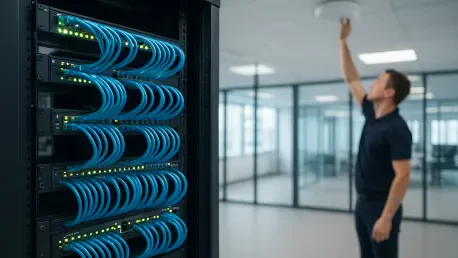
The most visible parts of a network, such as routers and access points, are only as reliable as the invisible infrastructure supporting them. A critical finding for 2026 is that older copper cabling often fails to support the high-speed data transfers required by modern standards like 10-Gigabit Ethernet. Furthermore, physical distance remains a factor; the traditional 100-meter limit for copper can derail performance in larger facilities or multi-story buildings. Transitioning to fiber optics or advanced hybrid designs is no longer a luxury but a necessity for ensuring consistent throughput across an entire property. When cabling is ignored during an upgrade, the newest hardware is forced to operate at a fraction of its capacity, leading to wasted financial resources. Investing in high-quality Category 6A or fiber backbones provides a clear path for expansion and ensures that the physical layer can handle the increased data loads of high-definition video and extensive IoT sensor arrays.
Modern network devices, including high-definition security cameras and sophisticated environment sensors, demand significantly more power than their predecessors. A common oversight in SME upgrades is neglecting the Power over Ethernet (PoE) budget of the central network switch. If the switch cannot provide the necessary wattage across all ports simultaneously, the network will experience intermittent failures that are notoriously difficult to diagnose. For example, a camera might reboot every time its infrared sensor activates at night, or an access point might drop connections under heavy load. Ensuring that the power supply matches the peak consumption of the connected hardware is vital for maintaining uptime and device health. Business leaders must calculate total power requirements before purchasing switches to avoid the need for expensive secondary injectors or mid-span power supplies. A robust PoE strategy prevents hardware instability and provides a reliable energy source for the entire digital ecosystem.
Operational Sustainability: Security, Lifecycle, and TCO
Resilience through Design: Segmentation and Support
Treating security as an afterthought or a simple plug-in is a dangerous trend that leaves smaller organizations vulnerable to increasingly sophisticated cyber-attacks. In 2026, the diversity of connected devices, ranging from employee smartphones to smart thermostats and automated manufacturing equipment, creates a massive attack surface. A modern network architecture must utilize segmentation to isolate different types of traffic effectively. By keeping guest Wi-Fi, internal business data, and IoT devices on separate virtual local area networks, businesses can prevent lateral movement during a breach. This means that if a single smart device is compromised, the attacker cannot easily move to the servers containing sensitive customer information or financial records. Implementing a zero-trust model where every device must be verified before gaining access to specific resources is a critical step in safeguarding the integrity of the business and maintaining compliance with data privacy regulations.
Security is a continuous process that relies on the ability of network hardware to receive regular firmware updates and security patches. SMEs often make the mistake of purchasing budget-grade hardware that loses manufacturer support shortly after installation, creating a significant future liability. As vulnerabilities are discovered, unpatched equipment becomes an easy target for automated hacking tools that scan the internet for weaknesses. Investing in enterprise-grade equipment with a clear lifecycle management plan ensures that the network remains protected against evolving threats. This approach safeguards the business’s reputation and its sensitive data while providing a predictable timeline for future replacements. It is essential to verify the support duration of any new equipment to ensure it aligns with the expected lifespan of the investment. A commitment to long-term manufacturer partnerships reduces the risk of sudden obsolescence and provides peace of mind that the digital perimeter is always defended.
Economic Value: Strategy and Long-Term Reliability
The final major pitfall is focusing solely on the initial sticker price rather than the Total Cost of Ownership (TCO). The cheapest quote often masks hidden expenses such as high energy consumption, complex manual configuration requirements, and expensive recurring software licensing fees. Equipment that offers centralized cloud management may have a higher upfront cost but often saves thousands of dollars over several years by allowing small IT teams to troubleshoot issues remotely. Financial realism requires accounting for these ongoing operational costs to avoid a budget-draining infrastructure that requires constant attention. Additionally, the time spent by staff dealing with slow connections or outages represents a significant indirect cost that is frequently overlooked. By evaluating the efficiency and manageability of a system, a business can choose a solution that provides the best long-term value. A well-planned investment reduces technical debt and allows the organization to allocate resources toward innovation.
For the modern SME, a network outage was not just an inconvenience; it represented a total stoppage of operations and a loss of customer trust. Strategic upgrades required a clear rollback plan and a prioritization of hardware known for its long-term reliability rather than its novelty. By viewing infrastructure as a competitive advantage rather than a burden, organizations built platforms that drove significant growth. The goal was to create a silent, invisible, and dependable network that allowed the workforce to focus entirely on customers and core operations without the distraction of constant connectivity issues. Successful managers implemented these changes by auditing their existing physical layouts and setting realistic performance targets before a single cable was pulled. This proactive stance ensured that the transition to modern standards was smooth and cost-effective. Ultimately, those who treated their network as a strategic asset found themselves better positioned to maintain a secure environment.