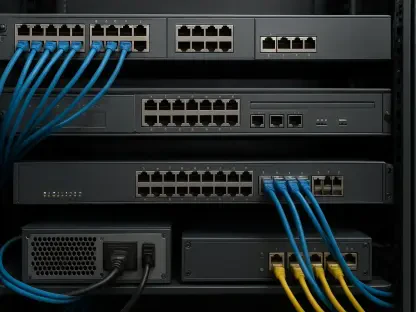

Researchers are exploring the potential of repurposing 141,000 abandoned oil and gas wells across the United States to function as ready-made thermal storage units. This endeavor seeks to solve a fundamental inefficiency in the digital economy: the massive discharge of thermal energy from data centers that currently goes to waste. While these facilities require intense cooling year-round, the heat they reject is only useful for surface-level space heating during the coldest months. During the summer, this energy is typically vented into the atmosphere, representing a significant loss of potential utility. To bridge this temporal gap, engineers are looking toward Seasonal Thermal Energy Storage (STES) technologies. By utilizing the Earth’s crust as a massive thermal battery, operators can capture the excess heat generated during the peak of summer and preserve it until winter. This approach shifts the paradigm from simple cooling to sophisticated energy management, transforming a problematic byproduct into a sustainable and long-term asset for power-hungry campuses.
Harnessing the Subsurface: Geothermal Storage Solutions
The healthcare software giant Epic Systems has pioneered this technology on its sprawling campus in Verona, Wisconsin, demonstrating the viability of underground storage at scale. Over the past two decades, the company has meticulously developed a geothermal network comprising approximately 6,100 wells drilled to depths ranging from 300 to 800 feet. This extensive infrastructure supports a 40-building complex by utilizing the waste heat from a 3.5-megawatt data center. Unlike traditional geothermal energy systems, which focus on extracting the internal heat of the planet to generate electricity, Epic’s model acts as a storage mirror image. Instead of pulling energy out, the system injects human-made thermal energy into the subterranean rock layers. This serves as a critical proof of concept for the industry, showing that the ground can act as a reliable buffer for thermal loads that would otherwise strain local power grids or contribute significantly to the formation of urban heat islands.
Maintaining this thermal reservoir requires a deep understanding of the ground’s natural properties, particularly its ability to provide a stable temperature baseline. At several hundred feet deep, the Earth typically maintains a constant temperature of approximately 50 degrees Fahrenheit, regardless of surface weather conditions. When data centers operate at high capacity, they generate water that is significantly warmer than this baseline. By pumping this heated water into the borehole field, the facility transfers thermal energy to the surrounding rock. Because rock is a relatively poor conductor of heat, the energy does not dissipate quickly across the landscape but remains concentrated near the injection pipes. This allows the subsurface environment to function as an insulated warehouse for energy. The goal is to maximize this thermal density, ensuring that the warmth remains accessible for months until the seasonal transition demands its retrieval for corporate heating or utility operations.
The Science: Thermal Inertia and Energy Recovery
The long-term retention of heat underground relies on a principle known as thermal inertia, which is effectively illustrated by the behavior of large snow piles in parking lots. Just as a massive mound of snow persists into the spring because heat can only penetrate its outer surface area, a large volume of heated rock retains its temperature because the interior remains shielded from rapid cooling. This surface-area-to-volume ratio is essential for Seasonal Thermal Energy Storage. When the summer sun drives temperatures up, the data center’s cooling system works in reverse, essentially depositing heat into the bank of the Earth’s crust. The rock absorbs this energy with minimal leakage into the surrounding environment, creating a localized thermal plume. This storage method bypasses the need for expensive chemical batteries or high-maintenance mechanical systems, relying instead on the inherent physical properties of the geological formations present beneath the campus.
As winter temperatures drop, the operational cycle of the system is reversed to recover the stored energy for practical use. Water is pumped back through the deep borehole network, where it absorbs the heat that was injected months earlier. Although the returning water typically arrives at the surface as lukewarm—often measuring around 59 degrees Fahrenheit—it provides a significant thermal head start compared to freezing ambient air or cold groundwater. Industrial-grade heat pumps then concentrate this recovered energy, elevating it to the temperatures required for sophisticated building systems. At the Epic campus, this reclaimed heat powers space heating for thousands of employees and provides hot water for massive dining facilities. Furthermore, the system energizes snow-melting loops embedded in sidewalks and roads, eliminating the need for chemical salts. This process allows buildings to operate with roughly 25% less energy than structures using traditional methods.
The Challenge: Managing Imbalance and Scaling
A significant technical hurdle in managing these underground systems is the risk of thermal imbalance, which occurs when more heat is injected during the summer than can be extracted in the winter. If the system is not carefully calibrated, the surrounding rock will steadily increase in temperature over several years, a phenomenon known as thermal saturation. Once the ground becomes too warm, it can no longer effectively absorb the waste heat from the data center at the designed efficiency levels. To mitigate this risk, engineers must design strategies to ensure the thermal bank is adequately emptied each year. This might involve expanding the field of boreholes to spread the thermal load across a larger volume of rock or finding additional winter applications for the stored energy. Sophisticated monitoring systems now track ground temperatures in real-time to ensure that the subsurface ecosystem remains a viable and sustainable heat sink for the long term.
While the 3.5-megawatt model has proven successful, scaling this technology to meet the demands of modern hyperscale data centers presents a logistical challenge. Current facilities designed for Artificial Intelligence workloads can exceed 100 to 1,000 megawatts, generating thermal loads that would require an immense footprint of new drilling. This is where the repurposing of existing infrastructure becomes a game-changer for the industry. Utilizing the 141,000 abandoned oil and gas wells across the United States could provide the necessary depth and volume without the prohibitive costs of drilling new boreholes. However, this transition is currently hampered by a legal vacuum, as existing regulations often categorize wells strictly for extraction rather than storage. Proponents are advocating for streamlined permitting processes that would allow these idle assets to be integrated into the green energy grid, providing a ready-made solution for the massive heat output of AI.
Strategic Implementation: Sustainable Digital Infrastructure
The urgency for such solutions is driven by the fact that data centers are projected to consume nearly 12% of all electricity in the United States by 2030. In high-density regions like Northern Virginia, these facilities already account for a quarter of total power consumption. Traditional cooling methods often rely on evaporative towers, which consume millions of gallons of fresh water and contribute to local utility strain. As communities increasingly push back against new developments due to water scarcity and rising energy costs, transitioning to underground thermal storage offers a path toward corporate and civic harmony. By treating waste heat as a valuable commodity rather than a byproduct to be discarded, operators can significantly lower their environmental footprint. This shift not only reduces the strain on the electric grid during peak periods but also aligns with global sustainability goals by creating a more circular approach to energy use.
The successful integration of underground thermal storage was achieved by re-evaluating the relationship between data processing and environmental geology. Moving forward, the industry prioritized the adoption of hybrid systems that combined local heat recovery with regional energy sharing. Developers looked toward site selection strategies that favored geological formations with high thermal retention capacities. Legislative bodies worked to establish clear frameworks for the conversion of orphaned oil wells, which simplified the administrative burden for technology firms seeking sustainable alternatives. Engineering teams emphasized the importance of designing AI campuses with integrated heat loops from the outset, rather than attempting to retroactively apply these solutions to legacy sites. These collective efforts transformed the perception of data center waste from a liability into a strategic energy asset. By embracing the Earth’s crust, the sector established a blueprint for future infrastructure.