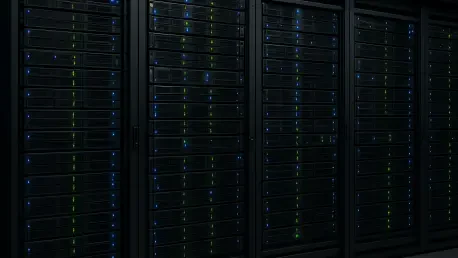

The integration of the IBM Storage Scale System 6000 provides 10 petabytes of high-performance storage to support massive GPU-based analytics. This robust foundation is essential for the ambitious $240 million partnership between IBM and Together AI, a multiyear agreement aimed at scaling the global infrastructure for open-source AI inference. The collaboration centers on building a massive computing cluster within IBM Cloud, powered by 2,000 NVIDIA Blackwell 300 GPUs. As the demand for sophisticated artificial intelligence grows, this expansion provides the necessary resources for businesses to deploy applications at a scale previously reserved for only the largest technology firms. Current projections indicate that the cluster’s capacity will be fully committed well before its operational debut in the first quarter of 2027, highlighting the urgency with which enterprises are securing high-performance compute. By combining IBM’s cloud expertise with Together AI’s specialized platform, the deal addresses the critical shortage of available AI power in 2026.
Scaling Infrastructure for the Intelligence Age
Hardware Synergy: Performance Gains via Blackwell Architecture
The architectural core of this new computing cluster features the NVIDIA HGX B300 architecture, a system specifically engineered to function as an “AI factory” for heavy enterprise workloads. Unlike previous generations of hardware, the Blackwell 300 GPUs utilize advanced interconnects and NVIDIA’s Spectrum-X Ethernet networking to facilitate massive data transfers with negligible latency. This configuration allows for a level of parallelism that was previously difficult to achieve, ensuring that the entire cluster operates as a single, cohesive unit rather than a collection of isolated servers. Performance benchmarks suggest that this specific synergy can deliver up to 30 times the output for certain AI tasks compared to architectures used just a few years ago. This leap in efficiency is crucial for organizations that need to process vast datasets quickly, as it significantly reduces the time required for complex computations while optimizing the power consumption per unit of work.
Integrated Systems: Storage Scale and Red Hat Synergy
To support these massive computational requirements, the cluster relies on integrated storage solutions that prevent the common issue of data starvation. The IBM Storage Scale System 6000 is designed to feed the Blackwell GPUs at speeds that match their processing capabilities, ensuring that the hardware is never left idle while waiting for information. This setup is further bolstered by Red Hat AI infrastructure, which provides a flexible software layer for managing containerized workloads across the cloud. By utilizing these integrated software and storage systems, IBM ensures that its clients have a complete ecosystem ready for immediate deployment. The inclusion of specialized enterprise consulting services also plays a vital role, helping organizations navigate the transition from legacy systems to high-performance AI environments. This holistic approach ensures that the raw power of the GPUs is matched by the agility of the software and the reliability of the storage backend.
Strategic Priorities: The Pivot Toward Model Inference
The technological landscape in 2026 has seen a definitive shift in priority from training large language models to performing inference at scale. While the initial years of the AI boom were focused on creating foundations, the current emphasis is on how these models handle live user requests in real-world applications. This pivot acknowledges that inference is now the primary driver of capacity demand, as companies integrate AI agents into everything from customer support to real-time financial trading. The cluster built by IBM and Together AI is purpose-built for this task, offering the high throughput and low latency required for consistent performance in production environments. As organizations move toward 2027, the ability to serve millions of prompts per second with high accuracy will define the success of digital transformation initiatives. This shift requires a different approach to infrastructure, focusing on reliability and cost-effectiveness rather than just raw training speed.
Data Integrity: Expanding the Sovereign AI Framework
A significant component of this strategy involves the expansion of the IBM Sovereign Core framework, which addresses the growing need for regional data residency. In an era where global regulations are becoming increasingly strict, government agencies and financial institutions require assurance that their data and AI workloads remain within specific borders. This sovereign AI approach ensures compliance with local laws while still providing access to the latest NVIDIA Blackwell hardware for complex reasoning tasks. By keeping processing local, organizations can mitigate the risks associated with international data transfers and satisfy the security requirements of highly regulated industries. This focus on sovereignty is not just a legal necessity but a strategic advantage, allowing enterprises to innovate within a secure and compliant environment. As these sovereign solutions become more widely available, they provide a blueprint for how global companies can balance the need for high-performance computing with data privacy.
Operational Excellence: Together AI’s Market Trajectory
Financial Milestones: Rapid Growth and Resource Expansion
Together AI has established itself as a formidable force in the industry, recently achieving a valuation of $8.3 billion following a significant $800 million funding round. This financial strength has allowed the company to secure over 500 megawatts of compute capacity independently, ensuring it can meet the rising demand for enterprise AI services. The company’s growth is reflected in its processing volume, which has increased from 30 billion to a staggering 400 trillion tokens per month in less than a year. This massive scale demonstrates the trust that enterprises place in the platform for their most critical AI operations. To maintain this momentum through 2028, the firm is continuing to invest in expanding its physical infrastructure and technical capabilities. By partnering with IBM, Together AI can leverage a global cloud footprint that complements its own specialized resources. This collaboration provides a stable and scalable environment for businesses that need to grow their AI capabilities without the capital expenditure of building data centers.
Innovation Drivers: Adopting Transparent and Secure Architectures
One of the primary goals of the collaboration is to establish open-source models like DeepSeek and MiniMax as the preferred choice for modern enterprises. Many organizations are increasingly wary of proprietary models that often lack transparency regarding data usage and training methodology. Open-source models offer a level of control and customization that is attractive to businesses with specific technical or ethical requirements. By hosting these models on high-performance Blackwell clusters, IBM and Together AI make them the obvious choice for companies looking to maintain sovereignty over their AI architectures. This move encourages a more diverse and competitive AI ecosystem, where innovation is driven by a broader community of developers and researchers. As these open-source options continue to improve, they provide a viable path for organizations that prioritize flexibility and data security. This push toward transparency is expected to redefine the enterprise AI market, making powerful models more accessible and easier to audit for compliance.
Service Delivery: Simplifying Access with Provisioned Throughput
To simplify the consumption of this massive computing power, Together AI utilizes a Provisioned Throughput service model. This approach allows customers to reserve guaranteed processing rates, measured in tokens per minute, rather than managing the intricate details of raw GPU clusters themselves. This API-driven experience mimics the simplicity of traditional software-as-a-service, lowering the barrier to entry for businesses that lack specialized hardware engineering teams. By providing a predictable cost structure and guaranteed performance, the model enables organizations to plan their AI deployments with greater confidence. This is particularly important for large-scale operations where fluctuating performance or costs can derail a project. As the industry matures toward 2028, these types of provisioned services are expected to become the primary method for accessing high-end compute. This shifts the focus from managing hardware to building value-added applications, allowing developers to iterate faster and deploy sophisticated AI features without delay.
Strategic Implementation: Actionable Steps for Enterprise Integration
Strategic leaders successfully navigated the complexities of this transition by prioritizing scalable and secure infrastructure solutions. The integration of high-performance Blackwell GPUs allowed organizations to handle unprecedented inference workloads, while the use of provisioned throughput models simplified the operational burden on technical teams. Decision-makers who moved early to secure capacity on these clusters avoided the shortages that hindered competitors during the rapid expansion of 2026. By focusing on sovereign AI and open-source models, these enterprises maintained greater control over their data and avoided the risks associated with proprietary vendor lock-in. Moving forward, businesses should prioritize the audit of their current AI workloads to identify opportunities for transitioning to more transparent and cost-effective architectures. Investing in integrated storage and software solutions proved to be a critical factor in maximizing the efficiency of hardware deployments. These actions established a solid foundation for the next phase of automation across the global enterprise sector.