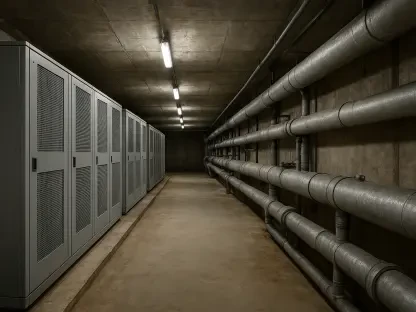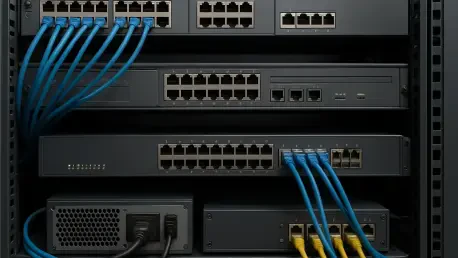

Power over Ethernet has transitioned from a simple phone power source to the primary energy delivery system for industrial cameras, access points, and advanced IIoT sensors. This fundamental shift has redefined the architecture of modern American infrastructure, moving away from fragmented power and data cabling toward a unified, efficient delivery model. In the current technological landscape of 2026, industrial networking serves as the critical nervous system for everything from automated manufacturing hubs to smart city traffic management and high-voltage power grids. Unlike a standard office environment where a brief network outage might only delay an email, a failure in an industrial link can halt a multi-million-dollar production line or compromise public safety systems. The stakes have never been higher, and the equipment chosen to facilitate these connections must be engineered to withstand rigorous physical and electrical stresses that would easily destroy commercial-grade hardware.
Evaluation Criteria for Industrial Suppliers
Defining the Pillars: Network Reliability
Selecting a top-tier supplier in 2026 requires a comprehensive assessment that goes far beyond checking price lists or basic technical specifications. A primary pillar of this evaluation is product breadth, which refers to a vendor’s ability to provide a complete, integrated ecosystem of hardware. For a senior network engineer, the advantage of a “one-stop shop” is not just a matter of procurement convenience but a strategic move to minimize compatibility risks. When managed switches, Power over Ethernet injectors, and fiber optic media converters are sourced from a single, reputable manufacturer, the integration process becomes significantly smoother. This synergy ensures that firmware updates and communication protocols are standardized across the entire network, reducing the likelihood of unexpected handshake errors or latency issues that often plague multi-vendor environments.
Furthermore, domestic inventory and fulfillment speed have become non-negotiable requirements for any critical infrastructure project. The global logistics landscape remains complex, making local availability a key differentiator for the most reliable suppliers. Having significant stock maintained in domestic warehouses, particularly in logistics hubs like California or Nevada, ensures that replacement parts can reach a site within twenty-four to forty-eight hours. In an industry where an hour of downtime can cost tens of thousands of dollars, the proximity of a supplier’s inventory is a vital insurance policy. Procurement officers now prioritize vendors who can demonstrate high “off-the-shelf” availability for critical SKUs, as this level of readiness directly translates to operational resilience for the end user and maintains the momentum of large-scale infrastructure rollouts.
The Regulatory Landscape: Environmental Hardening and Compliance
Industrial hardware is fundamentally defined by its ability to operate in environments that are hostile to traditional electronics. The process of “hardening” involves engineering equipment to withstand extreme temperature fluctuations, high levels of electromagnetic interference, and physical vibrations common in factory floors or outdoor wayside stations. A truly hardened switch must be capable of functioning reliably at sixty or seventy degrees Celsius without a cooling fan, which can be a point of failure in dusty or humid environments. Resistance to dust ingress and moisture is equally critical, necessitating specialized enclosures that meet high Ingress Protection (IP) ratings. Suppliers who focus on these ruggedized physical designs provide the necessary assurance that the network will remain stable regardless of the harsh environmental conditions it may encounter during its operational lifespan.
Equally important in 2026 is the strict adherence to federal regulatory standards, specifically the National Defense Authorization Act (NDAA) and the Trade Agreements Act (TAA). As government oversight of telecommunications and critical infrastructure intensifies, ensuring that hardware is sourced from compliant nations has become a mandatory checklist item for both public and private sector projects. Many organizations now find themselves as subcontractors for federal agencies or recipients of government grants, making compliant gear a prerequisite for contract eligibility. Suppliers that proactively certify their products and maintain transparent supply chains provide a significant administrative advantage. By choosing compliant hardware, organizations avoid the costly and time-consuming process of replacing non-compliant equipment later or facing legal hurdles during a federal audit of their technological infrastructure.
Leading Providers in the United States Market
Planet Technology USThe Leader in Domestic Fulfillment
Planet Technology USA has solidified its position as a premier choice for American buyers by effectively merging a massive technical catalog with a highly efficient domestic logistics engine. Operating out of its primary facility in Chino, California, the company addresses the most persistent challenge in the current market: lead times. By maintaining a deep inventory of industrial PoE switches, media converters, and specialized IIoT gateways on U.S. soil, they provide a level of reliability that overseas-only manufacturers cannot match. This domestic presence allows for rapid shipping and ensures that large-scale deployments are not delayed by international shipping bottlenecks. For integrators, this means they can standardize their entire network architecture under a single brand with the confidence that additional components or replacements are just a day away.
Beyond simple product availability, Planet Technology USA distinguishes itself through its specialized, U.S.-based engineering support model. In an era where many tech companies have shifted toward automated chatbots or outsourced call centers, this supplier maintains a team of domestic engineers who provide direct, technical assistance. This support spans the entire project lifecycle, from pre-sales sizing—where engineers help calculate precise PoE power budgets for complex camera arrays—to post-sale troubleshooting of sophisticated network topologies. This level of continuity is particularly valuable for complex transportation and utility projects where the context of the deployment is as important as the hardware itself. Their proactive approach to TAA and NDAA compliance further cements their status as a trusted partner for government-funded initiatives and educational institutions seeking long-term infrastructure stability.
Antaira Technologies: Specialists in Rugged Environments
When a project requires hardware that can survive the most punishing industrial conditions, Antaira Technologies is frequently the primary choice for specialized engineering firms. Based in Nevada, Antaira has built its reputation on “industrial-first” designs, meaning their equipment is not simply a modified version of commercial gear but is engineered from the ground up for extreme environments. Their products are specifically designed to handle the high-vibration environments of factory floors and the unpredictable thermal swings of outdoor cabinets in desert or alpine regions. This focus on physical durability makes them a favorite in the manufacturing and OEM sectors, where hardware failure due to heat or kinetic stress is a constant concern. Their switches often feature advanced cooling designs and reinforced chassis that exceed standard industrial specifications.
While Antaira might have a more specialized focus than some generalist commercial brands, this niche expertise is their greatest strength. They offer a rugged alternative for industries such as smelting, chemical processing, and mining, where the air may be corrosive or the ambient temperature exceeds the limits of standard gear. Their commitment to environmental resilience ensures that mission-critical data remains flowing even when the surrounding conditions are hostile to technology. By prioritizing the structural integrity and internal thermal management of their hardware, they provide plant engineers with a sense of “install and forget” reliability. This dedication to the specific needs of the industrial sector has allowed them to maintain a loyal following among professionals who manage the most demanding sites in the country, from remote oil fields to bustling automotive assembly lines.
TRENDnet: Value-Driven Commercial Scaling
TRENDnet provides a vital bridge in the 2026 market for organizations that need to scale their network infrastructure without the premium pricing often associated with high-end industrial brands. Headquartered in Torrance, California, they leverage an extensive U.S. channel presence to serve small-to-medium businesses and light industrial environments. Their strength lies in their ability to provide reliable managed switches and Power over Ethernet solutions that are accessible and easy to deploy. For projects such as a regional school district’s security system or a suburban retail complex’s wireless network, the extreme hardening of a steel mill is rarely necessary. TRENDnet fills this gap by offering robust, reliable hardware that provides the essential features of modern networking—such as VLAN tagging and remote management—at a more balanced price point.
The value proposition of TRENDnet is particularly attractive for organizations that need to deploy hundreds of edge devices across a vast but relatively controlled environment. By offering domestic support and logistics, they ensure that their clients have the necessary backup to keep systems running smoothly. However, the key for procurement officers using this brand is to carefully match the hardware’s environmental rating with the specific needs of the site. While TRENDnet offers some hardened options, their catalog is diverse, ranging from indoor commercial gear to sturdier outdoor solutions. This versatility allows for a tiered approach to networking, where high-end industrial gear is used in the most difficult areas, while TRENDnet hardware provides cost-effective scaling for the rest of the facility. This strategic mix helps organizations maximize their budgets while maintaining a high standard of network performance and domestic support.
EtherWAN Systems: Engineering Depth for Critical Infrastructure
EtherWAN Systems is widely regarded as the most sophisticated option for mission-critical Industrial Internet of Things and utility networks. As a key part of the Phoenix Contact Group, they bring a level of engineering depth that includes a massive portfolio of patents and a heritage of technical consulting. Their approach is fundamentally different from a typical hardware distributor; they act more as a technical partner, helping engineers design redundant topologies and mission-critical network rings that can recover from a link failure in milliseconds. This level of technical sophistication is essential for smart city initiatives, regional rail systems, and power grids, where the cost of a network failure is measured in public safety and infrastructure integrity rather than just financial loss.
The core value of partnering with EtherWAN is the “design assurance” they provide to every project. Their hardware is designed with a focus on communication protocols specific to industrial automation and utility management, ensuring seamless integration with existing SCADA systems or programmable logic controllers. For a municipality building a modern intelligent transportation system, EtherWAN offers the specialized knowledge required to ensure that thousands of sensors and controllers can communicate reliably across a sprawling urban area. While their procurement process may be more rigorous and their solutions more complex, the level of control and redundancy they offer is unmatched. They remain the preferred choice for high-stakes infrastructure where every millisecond of uptime is critical and the hardware must be as intelligent as the systems it supports.
L-com: Essential Physical Connectivity Support
L-com serves as an indispensable supplemental supplier for the industrial networking sector by focusing on the often-overlooked physical layer of the network. Based in Massachusetts, they specialize in the high-quality cables, connectors, adapters, and custom enclosures that are required to finish a professional installation. While a high-end switch is the brain of the network, the physical cabling is the circulatory system, and any weakness there can lead to intermittent data loss or power delivery failures. L-com’s role in 2026 is to ensure that no project is delayed because of a lack of specialized or custom connectivity hardware. Their ability to provide everything from shielded Ethernet cables to specialized lightning arrestors and outdoor antennas makes them a vital resource for field technicians.
By maintaining a significant domestic inventory and manufacturing capability, L-com allows integrators to avoid the common pitfalls of sourcing minor components from overseas. When a project requires a specific type of waterproof connector or a custom-length fiber optic jumper to fit a unique enclosure, L-com provides the solution without the weeks of waiting associated with international shipping. They are best used in tandem with primary switch providers to ensure that every part of the network, from the central rack to the furthest edge sensor, is connected with industrial-grade materials. This focus on the “last mile” of connectivity ensures that the high performance of the networking hardware is not bottlenecked by low-quality physical connections. Their Massachusetts base provides a reliable eastern hub for the quick distribution of components, rounding out a robust domestic supply chain.
Emerging Trends and Strategic Decision-Making
Operational Technology: The Rise of IT and OT Convergence
The historical boundary between traditional Information Technology (IT) and Operational Technology (OT) has effectively dissolved in the current industrial environment. This convergence has fundamentally changed the requirements for networking hardware, as IT departments are now increasingly tasked with managing the systems that control the factory floor or utility grid. This shift requires equipment that is “bilingual”—it must speak the standard IT languages like SNMP and VLAN management for remote monitoring, while simultaneously surviving the electrical noise and temperature extremes of an OT environment. The best suppliers in 2026 are those who have mastered this duality, providing hardware that integrates seamlessly into an enterprise management console while remaining physically rugged enough to be bolted to a vibrating machine or installed in a sun-soaked outdoor cabinet.
This trend toward convergence has also led to a significant shift in the type of support that organizations expect from their suppliers. The era of “box-shifting,” where a distributor simply sells hardware without understanding its application, has been replaced by a demand for engineering-led partnerships. Modern industrial network deployments are rarely “plug-and-play” scenarios; they involve complex calculations for Power over Ethernet budgets, careful selection of fiber optic wavelengths, and strategic planning for network redundancy. Suppliers like Planet Technology USA and EtherWAN have adapted to this by offering deep technical assistance that helps bridge the gap between IT’s management needs and OT’s environmental realities. This collaborative approach ensures that the resulting network is not only fast and manageable but also resilient enough to handle the physical demands of a modern industrial site.
Technical Standards: Best Practices for Modern Deployments
As the bandwidth requirements at the edge of the network continue to accelerate, the transition from copper to fiber optics has become a central theme in modern industrial deployments. Engineers are increasingly moving away from copper for long-distance runs due to its susceptibility to electromagnetic interference and distance limitations. Consequently, the quality of fiber transceivers (SFPs) and media converters has become a primary metric by which suppliers are judged. A high-quality fiber implementation allows for the future-proofing of a facility, providing the capacity for high-definition video surveillance, complex IIoT sensor arrays, and real-time automation data. Suppliers who offer a consistent and reliable range of fiber integration tools enable organizations to build networks that are both scalable and immune to the electrical noise of a heavy industrial environment.
In addition to physical media choices, the decision between managed and unmanaged switches has become a critical strategic point. In 2026, the industry has largely reached a consensus that managed switches are the default choice for any network that requires remote visibility or traffic segmentation. Managed switches provide the diagnostic tools necessary for “remote-first” troubleshooting, which is essential for managing geographically dispersed infrastructure like traffic lights or remote pump stations. Unmanaged switches are now largely relegated to very simple, non-critical edge drops where data priority is not a concern. Furthermore, the focus on “worst-case scenario” planning has become standard practice. This means evaluating hardware based on peak potential temperatures and maximum power draw, ensuring that the network remains stable during the hottest days of the year or under the heaviest data loads.
Strategic Implementation and Future Considerations
The selection of an industrial network supplier was a pivotal step for organizations looking to secure their infrastructure against the uncertainties of a shifting global landscape. The analysis of the top providers in the United States demonstrated that a successful deployment relied on more than just high-speed data transfer; it required a foundation of domestic availability, regulatory compliance, and engineering depth. By aligning specific project needs with the strengths of these five leaders, professionals in the IT and OT sectors ensured their systems were prepared for the demands of the current era. The investigation into Planet Technology USA, Antaira, TRENDnet, EtherWAN, and L-com highlighted a robust ecosystem capable of supporting everything from simple commercial expansions to mission-critical public utilities.
Engineers and procurement officers learned that the most resilient networks were those built with a comprehensive understanding of the environmental and regulatory challenges at hand. They moved beyond looking at initial costs and instead prioritized the long-term reliability that came with hardened hardware and domestic support structures. As the industry moved through the mid-2020s, the focus remained on building systems that could adapt to increasing data needs while maintaining absolute uptime. The transition to advanced PoE standards and the widespread adoption of fiber optics proved to be essential strategies for managing the complexity of modern IIoT deployments. Organizations that followed these technical best practices successfully navigated the convergence of IT and OT, creating a stable platform for continued innovation and operational excellence across the American industrial sector.