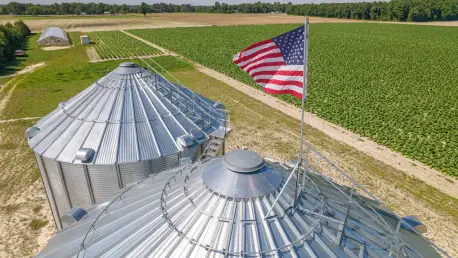

National Wildlife Federation projections indicate that the physical footprint required for data processing facilities will triple within the next five years, displacing traditional food production. This expansion of digital infrastructure into the American heartland has ignited a complex debate regarding the survival of rural livelihoods in the face of rapid technological growth. As artificial intelligence becomes an inescapable part of the global economy, the facilities that power it require massive amounts of land and resources that have historically been reserved for agriculture. This shift represents more than just a change in land use; it is a fundamental tension between the immediate demands of a high-tech society and the long-term necessity of maintaining a stable food supply. While developers highlight economic modernization, farmers and ranchers increasingly view these sprawling data centers as an industrial encroachment that threatens the viability of traditional operations across the nation.
Balancing Factual Integrity: The Role of Information
A significant portion of the discourse surrounding these developments addresses the role of misinformation within the agricultural community. Recent viral claims circulating on social media and among local political candidates suggested that the proximity of data centers causes reproductive failures in livestock, specifically stillborn calves. By scrutinizing these claims, industry analysts and veterinary experts have emphasized a commitment to factual integrity. Despite valid personal opposition to the expansion of data centers, it is critical to clarify that there is currently no verified veterinary data or third-party evidence to substantiate claims of biological harm to livestock caused by data processing facilities. This distinction remains crucial because it underscores a consensus that while the threats posed by Big Tech are real, they are primarily economic and environmental rather than mysterious biological phenomena that lack scientific backing or peer-reviewed validation.
The emphasis on factual accuracy ensures that the legitimate grievances of rural residents, such as the depletion of tangible resources, are not overshadowed by unsubstantiated rumors. Spreading unverified theories can undermine the credibility of agricultural advocates when they engage with policymakers or corporate entities. Instead, the focus has shifted toward the measurable impact of industrial growth on local utility grids and land availability. Addressing these systemic pressures requires a clear-eyed approach that prioritizes documented consequences over sensationalism. By grounding the conversation in environmental and economic data, the agricultural community can better articulate how the prioritization of digital storage affects long-term regional stability. This transition toward evidence-based advocacy allows rural populations to present a more formidable challenge to tech giants, ensuring that the dialogue remains focused on the preservation of land and water for future generations of producers.
The Geographic Migration: From Urban Hubs to the Heartland
A primary trend identified in the recent analysis of technology infrastructure is the strategic pivot of major companies—including Meta, Google, Amazon, and Microsoft—away from urban centers toward rural landscapes. Historically, data centers were concentrated in metropolitan areas to be near the primary users and fiber-optic hubs they served. However, current data suggests a massive shift is underway: while approximately 87 percent of existing facilities remain urban, roughly 67 percent of planned developments are now slated for rural areas, with the Midwest and the South serving as the primary targets for these massive projects. This migration is driven by the sheer scale of modern artificial intelligence requirements, which demand far more space than urban density can provide. These hyperscale centers are no longer just single buildings but sprawling campuses that require thousands of contiguous acres, fundamentally altering the rural topography and the traditional agricultural landscape.
The scale of these rural developments is often difficult to comprehend without comparing them to existing municipal infrastructure. These modern hyperscale sites are not merely storage facilities but intensive industrial complexes that require massive amounts of electricity to maintain constant computation and cooling operations. On average, a single large-scale data campus can consume enough power to support roughly 100,000 residential homes, placing an immense burden on rural electric cooperatives that were initially built to serve low-density farming communities. This influx of industrial demand can lead to necessary but expensive grid upgrades, the costs of which sometimes fall upon local residents or result in increased utility rates. Furthermore, the physical presence of these facilities creates a permanent shift in the rural character, as quiet farming counties find themselves hosting some of the most energy-intensive operations on the planet, often with minimal long-term job creation.
Resource Competition: Strategies for Rural Preservation
The entry of Big Tech into rural real estate has created an unprecedented resource crisis that extends far beyond the mere acquisition of land. With massive capital reserves at their disposal, technology developers can easily outbid local agriculturalists for available acreage, driving up property values to levels that are entirely unattainable for traditional farming business models. This competition is coupled with a staggering demand for water, as hyperscale data centers require millions of gallons daily for evaporative cooling systems. In water-stressed regions, this creates a zero-sum game where the digital infrastructure literally depletes the physical groundwater upon which farmers depend. However, this pressure also catalyzed a movement among local leaders to seek more balanced development models. As the agricultural community began to demand greater accountability, the focus shifted toward implementing protective measures that could mitigate these industrial impacts.
Stakeholders eventually determined that preserving the future of American agriculture required a more sustainable framework for technological growth. Local governments implemented stricter zoning laws that prioritized the protection of high-quality topsoil and limited the proximity of industrial complexes to essential watersheds. Advocacy groups successfully pushed for legislation that mandated the use of closed-loop cooling systems, which significantly reduced the daily water consumption of existing server farms. Furthermore, tax incentives were restructured to favor landowners who maintained their property for agricultural production rather than selling to industrial developers. These actions provided a clear path forward where technological progress did not necessitate the destruction of the rural economy. By focusing on resource transparency and community-led planning, residents ensured that the digital age supported rather than supplanted the nation’s food security. This collaborative approach proved that rural resilience depended on vigilant protection of local assets.