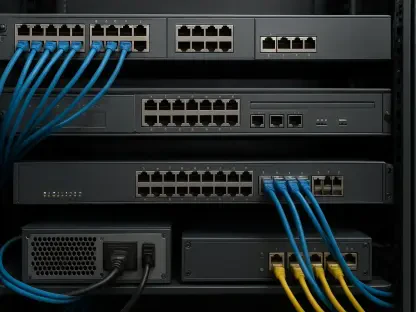

The completion of this extensive edge computing network allows data processing to happen at the source rather than in distant, centralized data centers across the continent. This shift represents a fundamental change in how digital infrastructure operates within the Iberian Peninsula, as Telefónica has successfully deployed seventeen high-performance nodes across major urban centers and regional hubs. By integrating cities like Madrid, Barcelona, Valencia, Seville, and Bilbao into a unified low-latency fabric, the company has established a robust foundation for what it terms technological sovereignty. This initiative ensures that critical data remains within national borders while providing the speed necessary for real-time applications. The project does not merely exist as a theoretical framework but operates as a fully functional commercial ecosystem designed to support the increasing demands of a hyper-connected society. As Spain solidifies its position as a leader in European digital capacity, this rollout serves as a blueprint for other nations seeking to balance global connectivity with localized control and efficiency.
Strengthening National Connectivity and Performance
The architectural backbone of this new network relies on the strategic distribution of nodes that bridge the gap between local device generation and the massive elasticity of the cloud. By placing these operational centers in locations such as Santiago de Compostela and Mérida, Telefónica has eliminated the traditional bottlenecks associated with long-distance data transmission. This proximity is particularly vital for the performance of 5G and FTTH fiber optics, where even a few milliseconds of delay can degrade the user experience or disrupt industrial processes. The infrastructure utilizes a modular platform that integrates advanced cybersecurity measures directly into the processing layer, ensuring that every byte of information is protected as it moves through the edge. This localized approach allows for a more resilient network architecture that can withstand regional disruptions without affecting the entire national system. Furthermore, the deployment supports a higher density of concurrent connections, which is essential for the growing number of IoT devices in urban environments.
Building on this technical foundation, the network facilitates a drastic reduction in latency that traditional centralized models simply cannot match. For instance, high-bandwidth services like augmented reality and mass communication systems now benefit from a responsive environment that processes information almost instantaneously. This capability is not just a convenience for consumers but a necessity for the precision required in modern healthcare and public safety operations. By decentralizing the computing load, Telefónica has enabled a scalable architecture that can grow alongside the needs of the market from 2026 through the end of the decade. This ensures that the digital ecosystem remains performant even as data volumes continue to explode across the continent. The transition to this edge-centric model reflects a broader industry trend toward distributed intelligence, where the network itself becomes an active participant in the computing process rather than a passive pipe for data. This shift fundamentally alters the value proposition for enterprises looking to optimize their digital workflows.
Advancing Sovereignty and Industrial Innovation
A significant driver behind this massive rollout is the pursuit of technological sovereignty, a concept that emphasizes the importance of maintaining control over digital assets and infrastructure. This project is structured as a Project of Common European Interest, or IPCEI, and operates under the coordination of the European Commission to ensure alignment with continental strategic goals. By developing these local nodes, the initiative aims to reduce Spain’s dependence on cloud service providers that are headquartered outside the European Union. This move is critical for sectors like public administration and national security, where data residency and security are paramount. The modular platform offered by Telefónica provides businesses with a suite of sovereign digital services that incorporate artificial intelligence and cloud computing within a secure domestic framework. This ensures that sensitive information is processed according to local regulations and standards, fostering a sense of autonomy and trust that is often missing in globalized cloud environments.
Beyond the realms of security and policy, the deployment acts as a vital catalyst for the widespread adoption of Industry 4.0 applications across various sectors. The low-latency environment is particularly transformative for advanced use cases such as digital twins, where real-time simulations of physical assets require constant data synchronization. In logistics and port management, the ability to process information at the edge allows for more efficient tracking and automation of complex supply chains. Moreover, the network provides the necessary infrastructure for assisted driving and autonomous vehicle communication, where millisecond-level reaction times are a matter of safety. By bridging the gap between localized hardware and remote cloud resources, this edge computing network provides the high availability and reliability needed for mission-critical tasks. This technological leap enables Spanish enterprises to innovate at a faster pace, utilizing tools that were previously restricted by the limitations of centralized computing. The result is a more competitive industrial landscape.
Strategic Implementation and Future Considerations
The successful completion of this network established a new standard for regional digital infrastructure and offered a clear path forward for both public and private entities. Stakeholders recognized that the move toward edge computing was not merely a technical upgrade but a strategic necessity for maintaining operational resilience. Moving forward, organizations prioritized the migration of latency-sensitive workloads to these local nodes to maximize the benefits of the new architecture. It became evident that those who integrated these capabilities early gained a significant advantage in areas like automated manufacturing and real-time data analytics. Engineers and IT leaders worked to develop new protocols that took full advantage of the proximity to data sources, ensuring that software stacks were optimized for a distributed environment. This proactive approach allowed the industry to move beyond the limitations of the past, focusing instead on building a secure and highly responsive digital future.
Furthermore, the strategic focus shifted toward the integration of artificial intelligence at the edge, where local nodes provided the computational power necessary for instantaneous decision-making without the overhead of cloud round-trips. This development was crucial for the evolution of smart cities, where traffic management systems and environmental sensors required immediate processing to function effectively. Industry experts recommended that future infrastructure investments focus on enhancing the interoperability between these edge nodes and existing legacy systems to ensure a seamless transition for traditional businesses. By establishing a standard for high-performance connectivity, the project paved the way for a more decentralized internet architecture that prioritized user privacy and data locality. This transformation underscored the importance of localized infrastructure in a world where speed and security became the primary drivers of economic success. The transition concluded with a robust framework that allowed for continuous innovation.