
Cloud-based integration with platforms like SeeHawk Central facilitates a seamless transition from field testing to professional network design and troubleshooting. In today’s high-density urban landscapes, the demand for ubiquitous indoor connectivity has surpassed the capabilities of traditional, fragmented testing methods. Modern facilities must simultaneously support commercial 5G cellular, mission-critical public safety radio, and enterprise-grade Wi-Fi 6E. This convergence creates a significant technical hurdle for engineers who previously relied on a patchwork of specialized tools. By centralizing these requirements into a single software-driven ecosystem, the industry has shifted toward a more holistic approach to spectrum management. This evolution addresses the inherent challenges of signal interference and coverage gaps that occur when multiple technologies occupy the same physical space. Through sophisticated data processing, technicians can now visualize the entire radio frequency environment, ensuring that building owners can guarantee reliable performance for every occupant.
Consolidation: The Single-Pane-Of-Glass Approach
A primary advantage of this unified platform is the elimination of disparate workflows that once forced field technicians to carry excessive amounts of specialized hardware. Historically, the process of auditing a building required separate walkthroughs for cellular signal strength, public safety compliance, and Wi-Fi performance metrics. This redundancy often led to data silos, making it difficult to correlate how various signals interacted within a single environment. The current solution integrates these data streams into a single Android-based interface, allowing for real-time analysis across the full spectrum. This consolidation not only reduces the physical burden on the technician but also minimizes the time required to complete a comprehensive site audit. By capturing all necessary metrics in one pass, organizations can drastically improve operational efficiency while maintaining the high levels of accuracy required for modern network deployments.
The hardware transition plays a pivotal role in this streamlining process, specifically regarding the move away from cumbersome external Wi-Fi dongles and multiple peripheral attachments. By leveraging the internal radio capabilities of modern tablets in conjunction with high-performance scanning receivers like the IBflex and Gflex, the system achieves a degree of portability previously unavailable to professional engineers. This streamlined configuration is especially critical in tight indoor environments, such as utility tunnels or mechanical rooms, where mobility is essential for accurate data collection. The integration ensures that high-fidelity measurements are captured across the 2.4 GHz, 5 GHz, and 6 GHz spectrums without the risk of hardware disconnects or calibration errors associated with legacy equipment. This professional-grade synergy between software and hardware provides a stable foundation for identifying complex interference patterns that might otherwise be missed during a standard sweep.
Precision: Methodology for Diverse Wireless Standards
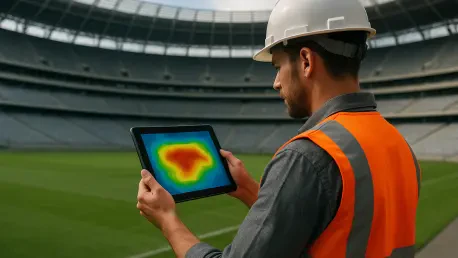
Effective in-building testing requires more than just raw data; it demands specific methodologies tailored to the unique requirements of different industries and building codes. The software supports both grid-based and path-based testing to ensure that every square foot of a facility meets the necessary performance benchmarks. Grid-based testing has become a mandatory component for public safety and Emergency Responder Communication Enhancement Systems (ERCES) commissioning. In this mode, the floor plan is divided into specific zones, requiring engineers to verify that signal strength and quality meet the stringent requirements of local fire codes. Conversely, path-based testing offers the flexibility needed for commercial optimization in large venues such as stadiums or corporate headquarters. By allowing for continuous data collection along a walked route, this methodology helps engineers pinpoint specific dead zones and optimize access point placement to ensure seamless connectivity throughout the entire structure.
Deep technical integration of Wi-Fi 6/6E capabilities represents a significant advancement for engineers managing modern heterogeneous networks where devices frequently transition between different signal types. As the 6 GHz band becomes the standard for enterprise connectivity, measuring specific metrics such as signal-to-noise ratios and channel congestion in this frequency range is vital. The software provides granular insights into the noise floor, allowing for a more precise understanding of how Wi-Fi interference might impact cellular performance and vice versa. This holistic view is essential for troubleshooting handovers between 5G small cells and private Wi-Fi access points, where even a slight delay in signal acquisition can disrupt critical business operations. By synchronizing these disparate data points, the platform enables a comprehensive diagnostic process that goes beyond simple coverage maps, offering a detailed look at the underlying health of the radio frequency ecosystem.
Implementation: Future-Proofing Network Infrastructure
The synergy between professional-grade software and advanced receivers like the Gflex has expanded the boundaries of what is possible in private wireless and Industry 4.0 applications. With support for sub-8 GHz and mmWave frequencies, the platform is uniquely equipped to handle the high-capacity demands of automated factories and smart warehouses. These environments often utilize Non-Terrestrial Networks and dedicated private spectrum that require a higher level of sensitivity than standard consumer-grade tools can provide. The ability to monitor these advanced deployments ensures that critical infrastructure remains operational under the most demanding conditions. Furthermore, the compatibility with multiple frequency bands allows organizations to validate the latest generation of wireless hardware as it is deployed, providing a future-proof solution for a rapidly changing technological landscape. This level of versatility is a key differentiator for companies looking to maintain a competitive edge in network reliability and performance.
Engineers who adopted this unified testing methodology successfully reduced their onsite operational costs and streamlined their reporting pipelines. The transition from manual data entry to cloud-synchronized analysis allowed teams to focus on high-level troubleshooting rather than administrative overhead. Moving forward, stakeholders should prioritize the integration of these tools into their standard operating procedures to ensure compliance with evolving safety regulations. It was established that utilizing professional-grade scanning receivers provided a level of data integrity that consumer devices simply could not replicate. Decision-makers were encouraged to invest in training programs that emphasized the importance of 6 GHz spectrum management as Wi-Fi 6E deployments became more widespread. By leveraging the advanced reporting features and cloud-based design tools, organizations moved closer to achieving a fully optimized wireless environment that supported both commercial growth and public safety mandates.