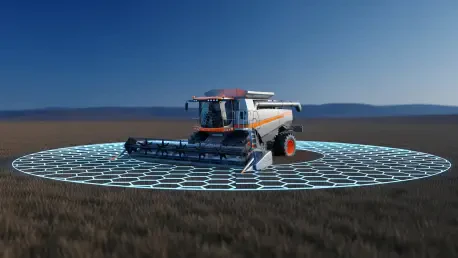

A multi-million dollar excavator operating in a remote copper mine typically loses its connection to the digital world the moment it moves beyond the limited range of local cellular infrastructure, creating dangerous information blackouts for project managers. This pervasive issue is meeting its match through a strategic collaboration between Iridium Communications and SKYWAVE, a prominent subsidiary of ORBCOMM. By embedding Iridium’s Short Burst Data services directly into SKYWAVE’s satellite IoT terminals, the partnership establishes a dependable hybrid solution for the global heavy equipment sector. This initiative utilizes Iridium’s extensive low Earth orbit network alongside the versatile OGx IoT platform to ensure that mission-critical telemetry remains accessible regardless of geography. OEMs can now provide continuous monitoring capabilities that were previously hindered by the physical limitations of terrestrial towers, marking a fundamental change in machine management across the globe.
The Connectivity Challenge: Addressing the Industrial Mobility Gap
Industrial machines used in heavy-duty sectors like mining, large-scale construction, and specialized agriculture often function in harsh, off-grid environments where standard signals simply do not exist. When these massive assets transition between urban development zones and isolated job sites, they frequently encounter connectivity gaps that result in isolated data silos. Such interruptions effectively blind fleet managers, preventing real-time monitoring of engine health and delaying responses to critical fault detections or remote diagnostics. These technical hurdles create a significant barrier to maintaining consistent industrial operations, leading to unplanned downtime and increased operational costs. Without a steady stream of data, the ability to predict mechanical failures becomes nearly impossible, forcing teams to rely on manual inspections that are both time-consuming and prone to error. This lack of reliability has long been a frustration for firms seeking unified fleet management across varied terrains.
In the modern industrial market, digital visibility has transitioned from being an optional luxury to a core requirement for equipment owners who demand high levels of productivity. Customers now require constant access to precise asset health metrics and location data to ensure safety protocols are followed and project timelines are strictly met. By eliminating these long-standing communication blind spots, the Iridium-SKYWAVE partnership ensures that original equipment manufacturers can deliver a consistent service experience across every region. This level of connectivity allows for the implementation of advanced safety features, such as geofencing and automated emergency alerts, which are vital in hazardous working conditions. Furthermore, providing a reliable data link empowers OEMs to offer enhanced maintenance contracts that are based on actual usage rather than estimated hours. Consequently, the integration of satellite technology fosters trust between manufacturers and end-users, as reliability is backed by operational data.
Technical Synergy: Seamless Integration and Intelligent Routing
A significant technical innovation of this partnership lies in the deep architectural integration of satellite capabilities directly into the SKYWAVE hardware suite. Unlike many traditional reseller agreements that simply bundle disparate services, this approach allows the Iridium LEO network to function as a native component of a unified connectivity framework. For engineering teams at major manufacturing firms, this integration simplifies the entire design process by offering a single, managed architecture that facilitates communication across multiple channels. The system is designed to intelligently toggle between satellite, cellular, and Wi-Fi networks depending on which signal provides the best performance and cost efficiency at any given moment. This level of abstraction means that developers do not have to write separate code for different communication protocols, significantly reducing the time-to-market for machinery. Hardware ensures that the data path remains optimized for the specific needs of the industrial environment.
The hybrid approach adopted by these companies emphasizes the concept of “right-sizing” data flow to maximize both technical efficiency and long-term cost-effectiveness. While high-bandwidth cellular networks remain the ideal choice for massive software updates or detailed video diagnostics, Iridium’s Short Burst Data is specifically engineered for compact payloads. These payloads typically include essential information such as GPS coordinates and engine temperature alerts, which require low latency but minimal data volume. This strategic division of labor ensures that essential machine status updates are prioritized and transmitted reliably across the most appropriate communication channel available. This method prevents the congestion of satellite bandwidth with non-essential data, preserving the network for critical alerts. Moreover, the cost structure becomes more predictable for fleet operators, as they are no longer paying for high-bandwidth satellite airtime to transmit routine telemetry that can be handled via Iridium’s specialized SBD service.
Industry Evolution: The Future of Global Asset Management
This collaboration signals a much broader shift in the Internet of Things landscape, moving away from niche satellite applications toward integrated hybrid orchestration for all assets. Satellite connectivity is no longer viewed by industry leaders as a last-resort fallback or an expensive luxury, but as a standard component of a robust industrial service fabric. This evolution allows organizations to modernize both their brand-new machinery and their existing legacy fleets with a single, cohesive technological approach. By shifting the focus from individual network availability to the overall continuity of global asset data, the industry is entering a new phase of operational maturity. Companies can now focus on the insights derived from their data rather than the mechanics of how that data is retrieved from the field. As more OEMs adopt this integrated model, the standard for “connected equipment” will inevitably include global coverage as a baseline feature, driving a convergence between telecom and satellite services.
The implementation of this partnership effectively addressed the fragmented nature of industrial connectivity and established a clear path for future fleet management strategies. Stakeholders recognized that waiting for terrestrial network expansion was no longer a viable strategy for maintaining a competitive edge in global markets. By adopting integrated satellite solutions, organizations successfully bridged the gap between remote operations and central management hubs. Moving forward, the industry transitioned to a model where data consistency was prioritized over hardware-specific limitations. Fleet operators were encouraged to audit their existing communication protocols to ensure they met the new standard of continuous global visibility. Manufacturers who integrated these hybrid terminals into their designs observed a notable increase in machine uptime and customer satisfaction. The industry shifted its focus toward advanced predictive analytics, utilizing the uninterrupted data streams provided by the Iridium-SKYWAVE alliance to optimize performance.